David Adam Stott
“Rather than feeling liberated from (Dutch) colonial rule, Papuans have felt subjugated, marginalized from the processes of economic development, and threatened by the mass influx of Indonesian settlers. They have also developed a sense of common Papuan ethnicity in opposition to Indonesian dominance of the local economy and administration. These pan-Papuan views have become the cultural and ethnic currency of a common Papuan struggle.” Chauvel (2005)
“Papuans have less access to legitimate economic opportunities than any group in Indonesia and have experienced more violence and torture since the late 1960s in projects of the military to block their political aspirations than any other group in Indonesia today.” Braithwaite et al (2010)
Introduction
West Papua is the name most widely used by its indigenous population for the western, Indonesian-controlled half of New Guinea island.1 To the east of the 141st meridian is the self-governing country of Papua New Guinea (PNG). West Papua’s incorporation into Indonesia in the 1960s was ostensibly overseen by the United Nations but remains controversial due to the deeply flawed process that accompanied it. Since then, the territory has witnessed a large influx of internal migrants from elsewhere in the enlarged state, settlers who quickly came to dominate urban centres and commercial enterprise. As such, many observers have characterised West Papua’s integration and subsequent development as a case of colonisation by Indonesia since the colonised territory is very rich in gold, copper, natural gas, forests and fisheries from which the indigenous population has seen little benefit. It is also sparsely populated whilst the core territories of Indonesia are subject to heavy population pressures, enabling Indonesia to mould the territory in its own image. In contrast to most ethnic groups in the archipelago, most indigenous Papuans do not identify with the Indonesian state and see themselves as racially and ethnically very distinct from all other regions in the country. For its part, Indonesia justifies its rule by claiming to raise the living standards of the ‘primitive’ Papuans. However, the prevailing attitude of many Indonesian officials since Dutch colonial times has been contempt for a lazy and backward people.
The case of South Sudan, in which an African majority voted overwhelmingly in a recent referendum to secede from their Arab-dominated country, has many parallels with West Papua and Indonesia, and has again propelled the issue of greater self-determination for persecuted peoples into the popular media. The current situation in Kosovo also provides momentum to those who support the Papuan independence cause. Whilst the plight of indigenous Papuans has received more academic and mainstream coverage since the fall of President Suharto in 1998, it is still shrouded behind the bigger story of Indonesia’s democratic transition and the fight against terrorism. The last 18 months have witnessed a rise in political violence in the territory and louder calls for a proper referendum on its status.

Map showing the territory’s division into two provinces (Papua and West Papua) |
Given that Indonesia’s other long-running secession problems appear settled – independence in East Timor’s case and greater autonomy within Indonesia for Aceh – West Papua remains the most important outstanding internal issue confronting the territorial integrity of the Unitary Republic. This paper will present an overview of the key factors behind Indonesia’s most acute remaining secessionist struggle in West Papua. First, it will briefly examine the Cold War realpolitik which resulted in West Papua’s incorporation into Indonesia. Thereafter, the paper will focus on the four key factors which are driving Papuan nationalist sentiment and resentment with Indonesia. These are a feeling of historical injustice that Dutch plans for its independence were betrayed; frustration at economic marginalisation by the mass influx of Indonesian migrants who now constitute the majority; anger at an undisguised resource grab by foreign and Indonesian capital that has brought displacement and destruction but few actual benefits; and resentment over widespread human rights abuses which have continued largely unabated since the Indonesian takeover in 1963.
Indonesia and West Papua?
Until the establishment of the Netherlands East Indies, as the colony was known, the whole Indonesian archipelago had never been unified under a single government. As such, Indonesia is a classic example of a post-colonial ‘successor state’ in which the former colonial boundaries are retained by the newly independent state. As no other Dutch colonial possessions had existed in Southeast Asia since Malacca, in contemporary Malaysia, was ceded to the British in 1826, Indonesian nationalists were able to successfully claim all of the sprawling territory of the Netherlands East Indies for just one successor state. Whilst similar to the smaller archipelago of the Philippines, this was markedly different to the situation in Indochina, India and in Indonesia’s near neighbours Malaysia, Singapore and Brunei, which formed separate states upon independence.
The result is that Indonesia is one of the most ethnically diverse and heterogeneous countries in the world, being home to as many as 500 indigenous ethnic groups. Even within such diversity, West Papua remains something of an exception. Indeed, New Guinea and its smaller satellite islands contain almost 1000 languages, with a reported 267 on the Indonesian side, and around one-sixth of the world’s ethnicities.2 Racially and ethnically distinct from the Austronesian ethnic groups, such as the Javanese, who comprise the vast majority of the Indonesian population, indigenous Papuans are a Melanesian people similar to those of the neighbouring Pacific countries of Papua New Guinea, Solomon Islands, Vanuatu and Fiji. Indeed, in contemporary West Papua both Indonesian migrants and indigenous Papuans view the distinct differences in skin tone, hair type and even diet as symptomatic of the intrinsic differences between each other.3 The Dutch cited these physical and cultural differences, and the apparent wishes of the Papuan people, when refusing to transfer sovereignty over their most eastward territorial possession in West New Guinea to Indonesia. Therefore, between 1949, when the rest of the Dutch East Indies formally became Indonesia, and 1962, West Papua was known as Netherlands New Guinea (Nederlands Nieuw Guinea) and officially remained an overseas territory of the Kingdom of the Netherlands.

Dani men from the Central Highlands |
In the early 1960s, the new John F. Kennedy administration in the United States began to apply increasing pressure on the Dutch to transfer sovereignty to Indonesia. Jakarta had launched seven unsuccessful insurgencies into the territory in tandem with an unsuccessful diplomatic campaign at the United Nations. However, it was the increasing influence of the Indonesian Communist Party, at the time the third largest in the world after those in the Soviet Union and mainland China, that most concerned Washington. In the aftermath of Mao’s victory in China in 1949, the Korean War of 1950-53 and the rising tensions in Vietnam, Washington policy makers became transfixed by the domino theory which posited that communist regimes would gain power throughout Asia in a gradual domino effect. Deepening ties with the Soviet Union lead to fears that Jakarta might secure Soviet support for a further military campaign to seize the territory.4 A gifted politician, Indonesia’s first president, was able to secure Indonesian control over West New Guinea by skillfully playing major foreign powers off each other. After Soviet Premier Nikita Khrushchev’s ten-day visit to Indonesia in February 1960, Kennedy became convinced a sovereignty transfer would build goodwill with Sukarno’s Indonesia and prevent it becoming a Soviet ally. Sukarno’s decision to celebrate his June 1961 birthday in Moscow, where he met many of the top leadership, raised the urgency in Washington. Moscow also furnished Jakarta with a US$450 million soft loan to purchase Soviet bloc military hardware. Indeed, by 1962 Indonesia had received credits exceeding US$1.5 billion, making it the biggest non-communist recipient of Soviet bloc assistance.5 This enabled Sukarno to spend around US$2 billion on military equipment between 1961 and 1963, approximate to 50% of Indonesia’s entire national budget, to secure West New Guinea.6
Having previously supported a continuing Dutch presence in West New Guinea as a prelude to independence, Australia and Britain both became persuaded of the American position during 1962. This isolated the Dutch, already very vulnerable to US pressure by large American loans to support post-World War II rebuilding. As a result, The Hague was forced to cede Netherlands New Guinea to a transitional United Nations authority in October 1962, with the Indonesian takeover to follow in May 1963. The Dutch had also negotiated a face saving clause into the New York Agreement of August 1962, which formed the legal basis of the sovereignty transfer. This stipulated that the territory be incorporated into Indonesia pursuant to a United Nations-sponsored referendum which specified, ‘The eligibility of all adults, male and female, not foreign nationals to participate in the act of self-determination to be carried out in accordance with international practice’.7 When the Agreement went before the General Assembly on 21 September 1962 it passed by 89 votes to none with 14 abstentions. Saltford notes that the only voices of dissension came from Francophone Africa who objected to “Negro Papuans” being traded from country to country without being consulted. Serious doubts also remain about the legitimacy of the process and the extent to which the referendum held in 1969, known as the Act of Free Choice, was ever truly representative. Moreover, a sudden drop in living standards once the Dutch left, exacerbated by poor Indonesian conduct from the outset of its 1963 takeover, soon prompted the emergence of a poorly equipped but symbolically important armed resistance, which continues to this day.
Historical Injustice
 |
Supporters of secession movements often base their case on real or perceived historical injustices, and this association is largely accepted by the international community. For example, East Timor, a former Portuguese colony, was never part of the Netherlands East Indies and its invasion and annexation by Indonesia in 1975 was never recognised by the United Nations. The Indonesian occupation thus had little legal basis, and foreign pressure combined with the indigenous resistance to weaken Indonesian resolve to keep the half island in the Unitary Republic. Similar levels of foreign support for West Papua have not been forthcoming, despite the territory’s weaker geographic ties to Indonesia than East Timor. Indeed, since the UN was instrumental in the Indonesian takeover, West Papua has thereafter been regarded largely as an internal issue for Indonesia, and the UN has shown little appetite to re-open the matter. The Netherlands also quickly washed its hands of West Papua once its officials started to leave the territory in 1962.9 Other additional factors coalesced to keep attention on the Timorese plight, which have been lacking in West Papua’s case. These included the existence of a charismatic leadership in Xanana Gusmao and Jose Ramos-Horta, the killing of western journalists during the Indonesian invasion, the highly publicised Santa Cruz massacre of 1991 and Ramos-Horta’s persistent diplomatic campaign at the UN which resulted in his receipt of the Nobel Peace prize. However, the main reason why East Timor could secure its independence is that Indonesian President Habibie, seeking re-election by demonstrating his reformist credentials, calculated that the small province was not crucial to his and Indonesia’s future.10 The relative economic and strategic unimportance of East Timor meant that Timorese secession was much easier to contemplate than that of West Papua. However, the political damage this decision inflicted on Habibie mitigates against similar outcomes being countenanced in Jakarta.
Nevertheless, those who advocate a new referendum on West Papua’s independence still build a compelling case around historical events and precedents. The Act of Free Choice is the chief rallying call for those who support greater self-determination for West Papua. The 1969 Act itself fell far short of the standards set out in the New York Agreement, which specified that Papuans would have the right to ‘exercise freedom of choice’. Whilst the wording of the Agreement was left deliberately vague, its unambiguous meaning was to confirm or reject continued Indonesian rule. Indonesia was to withdraw from the United Nations in 1965, and President Sukarno thus disavowed any responsibility to hold the vote. However, by 1967 General Suharto had overthrown Sukarno and was desperate for foreign aid and investment to shore up his military regime and bolster the country’s tottering economy. Having rejoined the UN, the new regime felt compelled to hold the vote but, given that Suharto himself had commanded Indonesia’s final military campaign into West New Guinea, any rejection of Indonesian rule was unthinkable. The result was the Act of Free Choice held in August 1969.
Preparations for the Act were handled by the Indonesian military and supposedly supervised by a small group of UN observers. In practice however, the military was able to restrict the authority and movement of the UN staff since the observers did not have their own aircraft or even translators.11 Most controversially, the Indonesian authorities carefully selected 1,026 Papuan representatives to vote on behalf of around 700,000 people. Coerced by threats of violence and persuaded by sweeteners to vote for Indonesia, all but one did so.12 Any prominent Papuans likely to protest were either eliminated or detained. Despite the vote being held under its auspices, the UN did not object to this flagrant disregard of both the spirit and the letter of the New York Agreement. Instead, it was relieved that any vote had occurred at all, and West New Guinea became legally part of Indonesia in 1969 with barely a whimper from the international community. Chakravarthi Narashiman, a former UN Under-Secretary-General, admitted in 2001 that the Act was a sham.13 One month before the Act Frank Galbraith, the American ambassador in Jakarta, wrote on July 9, 1969 that “possibly 85 to 90%” of West Papua’s population “are in sympathy with the Free Papua cause”.14
The prevailing mood within the General Assembly at this time was that newly independent states should closely resemble the borders of the colonial territories which they superseded, otherwise known as uti possidetis juris.15 Such thinking was predicated on the basis that the leaders of new states feared ethnic secession movements within their own borders and wanted to avoid such scenarios at home. Furthermore, Sukarno was a charismatic and skilled politician who aspired to lead the non-aligned anti-colonial movement. His standing within this cohort of newly independent states helped him to successfully portray West New Guinea as an indivisible part of the Dutch colonial territories which Indonesia had superseded. Ironically, whilst it was Sukarno’s adroit skill at manipulating the United Nations which secured the ‘liberation’ of West New Guinea, it was General Suharto who would eventually gain the most political capital from it. Having commanded the final failed Indonesian operation into West New Guinea, which was soon followed by the New York Agreement, both Suharto and the military were able to claim a propaganda victory and bolster their own status vis-à-vis their rivals. In Suharto’s case, this was to prove especially useful three years later when he led a military coup which deposed Sukarno and murdered hundreds of thousands of suspected communists. Suharto subsequently ruled Indonesia until May 1998, during which time he was feted at home and abroad as Indonesia’s ‘father of development’. Much of this development was made possible by an influx of foreign capital to exploit Indonesia’s natural resources, most notably West Papua’s gold and copper reserves.
Collusion between Indonesia and the United States assured a compliant United Nations in the takeover. Despite Indonesian denials, US government documents show the outcome was fixed in advance between the two administrations.16 At no time did the wishes of the local population ever gain any traction. While reports to the United Nations noted the unmistakable beginnings of Papuan nationhood, the UN turned its back on West Papua. The New York Agreement on Papuan incorporation was the first, and arguably the most crucial, stage in reconstructing Indonesia from a chaotic potential Soviet ally to a key American partner in Southeast Asia, and a bulwark of stability within the US sphere when other regional states were struggling with communism and conflict. The price of Jakarta’s friendship and greater regional stability was Indonesian rule over “a few thousand miles of cannibal land”, in the words of a 1962 memo from a Kennedy administration staffer.17 The growing awareness of West New Guinea’s mineral potential was another consideration for American policy makers, and the Indonesian takeover allowed US mining firm Freeport to benefit enormously from the territory’s gold and copper reserves. In 1967, in one of the first acts of Suharto’s presidency, Indonesia sold a 30 year license to US mining firm Freeport to tap West Papua’s gold and copper resources. It has since emerged that Indonesia’s new foreign investment laws were drafted by the new Suharto regime, with close assistance from the US Central Intelligence Agency, to specifically enable Freeport access to West Papua’s gold and copper.18 Having supported Suharto’s coup against Sukarno, and the bloody pogroms against suspected Indonesian communists which followed in 1965-66, closer ties with Indonesia thus strengthened American interests throughout the archipelago.
In addition to the betrayal of the Act of Free Choice, other precedents buttress support for a proper referendum. Within the plethora of small states in the Pacific, all of West Papua’s Melanesian neighbours are self-governing former colonies with the exception of New Caledonia (under French rule). In essence, the territory had even been a largely self-governing part of the Netherlands East Indies since only 15 Dutch administrators were in residence by 1938.19 West New Guinea assumed a new significance with the Japanese advance into Southeast Asia and the Pacific. In mid-1944 Hollandia (present day Jayapura, the territory’s biggest urban centre) became the headquarters for General MacArthur’s push into the Philippines, with some 140,000 Allied troops being temporarily stationed in West New Guinea.20 Infrastructure such as military bases, roads, bridges, airstrips and hospitals were constructed for the first time, and in the process initiated many Papuans into the modern market economy. Thousands of Papuans also perished in the fighting. Therefore, it might have been expected that the subsequent US push for decolonisation and self-determination for subjugated peoples would extend to West New Guinea. However, other geopolitical realities trumped any residual feeling of gratitude, and the lack of a strong local independence movement did not help the Papuan cause.
In contrast to major centres elsewhere in the Netherlands East Indies, no comparable independence movement emerged in West New Guinea during the Japanese occupation. Compared with much of Indonesia, the Japanese occupation period was shorter and more geographically limited, covering only the northern coast and nearby islands. No significant local elites existed in the territory, and thus cooperation between them and the occupying Japanese did not destabilise Dutch rule in West New Guinea after the Dutch return in September 1945. Furthermore, Christian missionaries were also able to make significant headway in West New Guinea, further strengthening ties with the Dutch administration. For their part, Indonesian nationalists argued that the revolution would be incomplete until this last Dutch colony was transferred to their control. Prior to World War II, the colonial administration had relied heavily on migrants from eastern Indonesia to run the territory, with most of the teachers, officials and professionals being Christians from the nearby provinces of Maluku and North Sulawesi.21 Official figures showed that around 14,000 Indonesian migrants were living in Dutch New Guinea in 1959, with around 8,000 being from the neighbouring Maluku archipelago.22 Since many of these middle-ranking officials subsequently served the brutal Japanese occupying regime, the seeds of Papuan resentment towards Indonesian settlers were thus sown.23 Upon their return to West New Guinea, the Dutch reversed course and forced the departure of many Indonesian functionaries to prevent the spread of Indonesian nationalist sentiment.
Despite historic links to eastern Indonesia, The Hague argued that West New Guinea was a distinct geographic, linguistic and ethnic entity with divergent national characteristics to the rest of the colony. Keen to maintain a colonial presence in the East Indies, the Dutch envisaged that an independent West Papua was likely to be dependent on the Netherlands well into the future for investment, technical help and development aid. West New Guinea was increasingly seen as a last bastion for the Dutch and their local supporters as they were thwarted in their attempts to re-establish colonial rule over the entire colony. There was also the expectation that the territory’s hitherto untapped resource wealth could be exploited. In 1936 gold and copper deposits had been discovered at Ertsberg, a mountain near Timika, but were not developed. In March 1959 the New York Times reported that alluvial gold had been found gushing into the nearby Arafura Sea and that its source was being sought by the Dutch government. New Orleans mining firm Freeport dispatched its own team to survey the area, which confirmed the huge deposits in 1960. In 1967, in one of the first acts of Suharto’s presidency, he rewarded American support by selling Freeport a 30-year license to tap Ertsberg’s gold and copper resources.
Dutch policy towards West New Guinea prior to their return in September 1945 had largely been benign neglect, since in the 1930s only 15 of their countrymen were actually stationed there as administrators.24 Most of the other Europeans living in the territory, who totalled fewer than 200, were missionaries. Under military and diplomatic pressure elsewhere in the East Indies, The Hague accelerated educational and technical preparations for Papuan self-governance. By 1950 European residents made up around 8,500 people, which increased to some 15,000 by 1961.25 The colonial government’s development agenda targeted greater Papuan participation in the organs of state, with a training and education programme in the civil service and police among the first initiatives. The number of indigenous civil servants rose from 1,290 in 1956 to 2,192 by 1960, occupying mostly low-ranking posts. By 1960 more than 9,000 indigenous Papuans were working in the public sector and almost 7,000 in the private sector, including in Sorong’s oil fields where Papuans took over jobs that had been held by European settlers.26 The Hague also markedly expanded the reach and span of its colonial administration, establishing a presence throughout West New Guinea including the hitherto untouched central highlands and Bird’s Head regions. The result was the dramatic expansion of government facilities, health care, education, vocational training and job creation schemes.27 Then as now, however, coastal Papuans enjoyed the lion’s share of these new opportunities, whilst those in the highlands and the south remained relatively neglected by the Dutch reforms.
The Hague also set about creating a local political consciousness. Papuan representatives for local council elections were elected in 1955, and in 1960 The Hague announced its road map for an independent Republic of West Papua, earmarked for December 1, 1970. National legislative elections in January 1961 installed 28 councillors, 22 of whom were Papuan, in the inaugural New Guinea Council. Officials from Australia, Britain, France, the Netherlands and New Zealand attended the parliament’s opening in April 1961, although no US officials attended as part of their diplomatic pressure on the Dutch to cede the territory to Indonesia. On December 1, 1961, the Morning Star flag was unveiled to represent an independent West Papua, and a new national anthem accompanied its unfurling. As a result of the dramatic increase in the territory’s development budget West New Guinea’s economic and political progress had began to surpass that of PNG, its Australian-administered neighbour.28 By 1957 around 30% of government positions were filled by Papuans, a higher rate of local participation than in the Australian colonial government in PNG, and by 1961 Papuans held 4950 of some 8800 positions in the Dutch administration including some in the upper and middle ranks of government.29 Thus, the stated goal of 95% by independence in 1970 seemed attainable. The reversal of these policies by the incoming Indonesian administration was one of the first triggers of anti-Indonesian sentiment among the fledgling Papuan elite.
The Dutch policies were driven by a desire to cultivate a pro-Western Papuan political class that could ward off Indonesia’s irredentist claim to the territory, and most were graduates of Dutch educational institutions in the coastal towns and cities. In addition to safeguarding Dutch interests in West New Guinea, these efforts were also designed to repair the damage to the Dutch reputation wrought by its abortive military campaign to restore its colonies elsewhere in Indonesia. Evidence from the early 1960s suggests little Papuan support for Indonesian rule and an overwhelming preference for eventual independence.30 Indeed, most of the newly established political parties in the territory opposed any union with Indonesia. Dutch policy thus raised expectations among the Papuan elite but despite the noted success of the preparations, the international political tide had turned against the Dutch and the Papuans.
In marked contrast to the progress achieved in the last years of the Dutch era, the early years of Indonesian rule brought hardships for the Papuan elite. The United Nations-administered transition period of October 1962-May 1963 effectively began the Indonesian takeover which resulted in many Papuan civil servants being replaced by Indonesian settlers, mostly Javanese. The United Nations administration blatantly favoured the Indonesian side during the transition period and all Papuan nationalist symbols, such as the anthem and the flag, were banned. The democratically-elected New Guinea Council, which had opposed union with Indonesia, was abolished in 1963, to be replaced by a body consisting wholly of Indonesian appointees, and seven Papuan political parties were also dissolved in December 1963.31 Whilst the first Governors were indigenous Papuans, neither the Governor nor the provincial council had any authority to make budgetary decisions or pass provincial legislation during the Suharto period (1966-98). This policy created deep resentment among educated Papuans, and many were forced to return to a subsistence lifestyle in their home villages. Others went into exile, and it was a similar story for many educated Papuans working in the private sector. The looting and food shortages which accompanied the Indonesian takeover only made things worse, and has ensured that the Dutch colonial period of 1945-62 is remembered with fondness among the Papuan elite since it compares so favourably with what has followed.
The harsh new realities of Indonesian control exacerbated Papuan resentment over stillborn independence, and these grievances continue to feed the Papuan nationalist discourse. Since Papuans residing in the highlands and the south were largely unaffected by the expansion of colonial work and education opportunities, it was the Dutch-educated coastal elite who initially lost most in the Indonesian takeover, and it was this cohort that was to lead the campaign for an independent West Papua. The Papuan Volunteer Corps (PVK) defence force established by the Dutch would become the first organisation to physically resist the Indonesian takeover, and thus began Indonesia’s heavy handed security approach to running the territory which has resulted in a litany of human rights abuses. This approach continues today, despite the various regime changes in Jakarta from Sukarno’s left-leaning Guided Democracy (1957-66) to Suharto’s military-dominated New Order (1966-1998) and thereafter under successive democratically-elected neo-liberal governments. In tandem with these repressive measures, Jakarta has encouraged large numbers of Indonesian migrants to move to West Papua thereby tying it closer to the Indonesian state and making Papuan secession much more difficult. As such, it is difficult to view Indonesia’s conduct since its takeover as anything less than colonisation.
Demographics and Deprivation
The evolving demographic makeup of West Papua is another huge concern for indigenous Papuans, who have longed feared becoming a minority in their own land, and a very sensitive topic for the Indonesian authorities keen to keep a lid on unrest. One of the reasons originally cited by Papuans reluctant to join Indonesia prior to the Dutch retreat was that West New Guinea would be swallowed up, a view shared by foreign observers at the time, among them Sir Garfield Barwick, Australia’s Minister for External Affairs (1961–64).32 Although migration levels remained relatively modest until the 1980s, they have steadily risen as transport connections have improved and Indonesia’s population has increased, with a dramatic impact on West Papua’s demographic makeup. It now appears that Papuan fears about being swamped by migrants have finally become reality. Moreover, these migrants invariably head to areas of economic opportunity in the coastal towns and cities, crowding out indigenous Papuans and again creating the impression of Indonesian colonisation.

Prior to the handover to Indonesia there were an estimated 700,000 people in Dutch New Guinea, although the difficult terrain made it impossible to know the real figure. Whilst there was an influx of Indonesian civil servants and security personnel after the takeover in 1963, the territory’s population grew reasonably slowly throughout the 1970s. Indeed, when Jakarta officially opened up West Papua to large-scale migration in 1970 migrants initially seemed reluctant to re-locate there in large numbers, not surprising given the province’s remote location and recent incorporation into the nation state.
In 2003 the central government passed a law dividing Papua into three provinces as part of a process which has also resulted in many new provinces being created across Indonesia. The official reason for dividing Papua was to improve living standards since delivering services across such a large and remote area has always been problematic. Another rationale was to more evenly spread economic opportunity and to improve the representation of rural areas. But the division has been controversial, with Jakarta accused of colonial-style divide and rule tactics.34 The creation of the third proposed province of Central Irian Jaya was subsequently blocked as an Indonesian court ruled the divisions violated Papua province’s Special Autonomy status. The carving out of West Papua province was allowed to stand, however, as it had already been created. This paper treats the provinces as one entity.
The 2010 census suggests that the combined population of the territory’s provinces has jumped remarkably in the last decade. The census found there were now 2,852,000 in the rump Papua province and 760,855 in the new province of West Papua. The latest census calculated the annual rate of national population increase at 1.49%, but the annual rate of increase for Papua province was 5.48% and for West Papua province it stood at 3.72%, making them the fastest and fourth fastest growing provinces of Indonesia respectively. The combined yearly growth rate of the two provinces was 5.09% between 2000 and 2100, meaning that since 2000 the combined population increased 64%, more than any other province in Indonesia. Anecdotal evidence suggests that the pace of growth by 2010 had surpassed the yearly average of 5.09%, meaning that the rate of migration into West Papua could be continually rising.35 Given West Papua’s relatively small population in comparison with Indonesia as a whole, even relatively low levels of migration from other regions can result in dramatic demographic change.
Much of this increase is due to rising levels of Indonesian migration into both provinces, although the latest census also counted the fertility rate at 2.9 higher than the national average of 2.3. A major difference between the 2010 census and the previous one in 2000 is the lack of information regarding the ethnic and religious composition of each province. The omission of such data stokes Papuan fears that the central government is trying to hide such sensitive figures since they would confirm the widely held view that indigenous Papuans are now, or will soon be, in the minority across the territory. Extrapolating population growth rates for both groups and applying them to the results of the 2010 national census provides the figure in the table below, and applying these same growth rates further projects the West Papua population in 2020.36 Alternative statistics compiled by the Papuan provincial authority put the total population of both provinces in 2005 at 2,664,489 and estimated migrants to total 41% of the population, a figure projected to rise to 53.5% by 2011.37 Considering that in 1971 migrants only accounted for around 4% of the population, the last forty years have seen remarkable demographic change, with two different strands of migration behind the increase.

Many of the first wave of Indonesian migrants to West Papua arrived as part of the so-called transmigration programme, which began slowly in February 1966 when a hundred Javanese families set sail for the territory.39 This policy was first instituted by the Dutch colonial administration in the early nineteenth century to provide a plantation workforce on Sumatra. Although the scheme wound down in the twilight years of the colonial era it was revived by Sukarno, and then expanded by his successor Suharto to new frontiers such as West Papua. Then as now Indonesia has an unbalanced population with parts of the country subject to intense population pressure, with others covered by vast tracts of forest. The politically dominant island of Java houses some 58% of Indonesia’s population within only 7% of its landmass, and its six provinces have the highest population densities in the country. By contrast, the outer islands account for around 90% of the country’s landmass but contain only around 42% of the population. In West Papua’s case, it makes up 22% of Indonesia’s land area but until recently contained less than 1% of the country’s total population. Moreover, since much of Indonesia’s resources in land, minerals and fossil fuels are found in West Papua and the other outer islands, these areas became attractive targets for the resettlement of landless poor from the densely populated inner islands. Formerly sponsored by the World Bank and Asian Development Bank, large-scale official transmigration came to a halt in August 2000 but still continues on a smaller scale. At its height between 1979 and 1984, some 535,000 families, or almost 2.5 million people, took advantage.

Indonesia’s largest islands with population figures (2010 census) |
For Suharto’s New Order regime, the transmigration programme had many facets. These included alleviating poverty in the core islands by distributing ‘empty’ land in the remoter regions; exploiting the various and abundant natural resources of these outer islands; inculcating a shared Indonesian identity by bringing together the different ethnic groups; and consolidating central control over distant peripheral regions such as West Papua. As a result, many transmigrants to West Papua were encouraged to settle in the corridor next to the PNG border since this largely unpatrolled area has long been a sanctuary for both Papuan refugees and the resistance movement. Of these early transmigrant families, many were reportedly headed by former military men.40 Other transmigration sites were often located near forestry and mining concerns, in a pattern reminiscent of Dutch colonial policy.41
In West Papua’s case however, the number of ‘official transmigrants’, who moved as part of a government programme, is now dwarfed by ‘spontaneous transmigrants’ who migrated internally with little or no government help. This constitutes two separate patterns of migration since many of the largely Muslim Javanese official transmigrants were originally settled in rural areas where few other migrants ventured. The self-funded migrants originate mainly from eastern Indonesia, mostly Muslims and Christians from Sulawesi and Maluku who usually settle in urban areas along the coast.42 It is these self-funded migrants whose numbers are rising the most. In addition to spontaneous economic migration, other drivers of contemporary Indonesian migration into West Papua are the expansion of the bureaucracy that accompanies the national decentralisation process and large-scale agricultural ventures such as palm oil plantations and the proposed Merauke Integrated Food and Energy Estate. Indeed, plans to convert even more land to palm oil and other plantation crops will likely increase the rate of migrant population growth. By contrast, the indigenous Papuan population is unlikely to grow much faster in light of poor healthcare in rural areas and much higher rates of HIV among indigenous Papuans than Indonesian migrants.
The coastal areas contain most of West Papua’s industries and work opportunities in the formal economy, thereby attracting better-educated Indonesian settlers who invariably secure the best private sector positions. For instance, it has been estimated that these migrants possess more than 90% of all trading jobs in the territory, and they also dominate the manufacturing sector.43 As migrants continue to arrive they consolidate existing ethnic networks, which are vital for gaining choice employment in Indonesia. Given the relative paucity of the indigenous business class, such ethnic networks work against Papuan job hunters, with the result that Papuans continue to work mainly in farming, much of it subsistence farming. Exacerbating this divide is the fact that migrants have also achieved greater success in commercial agriculture, allowing them to take control of local markets.
West Papua has thus effectively become a land divided into two realms – of the (mostly coastal) towns and cities, where migrants constitute the majority and dominate all commercial activity; and the rural interior, which is overwhelmingly Papuan, employed in subsistence farming and often only loosely connected to the modern, cash and international economy. For example, data from the 2000 census shows that in Mimika regency, where the Freeport mine operates, those born outside of the regency made up some 57% of the population and in Jayapura regency, the territory’s biggest urban centre, they constituted 58%.44 The result is that whilst the towns and cities are relatively prosperous by Indonesian standards, the countryside is populated by an underclass of indigenous tribes who suffer the worst living standards in Indonesia. Furthermore, migrant domination of the coastal towns and cities has crowded out indigenous Papuan migration to urban areas, thus reducing their employment opportunities in the formal, cash economy. Papuan rural to urban migration in search of employment actually predates the Indonesian takeover since it began during the Allied war effort and increased with the Dutch expansion of government after their return in September 1945. Wage labour for the war effort and subsequently the Dutch colonial administration was the major form of employment prior for almost twenty years but such opportunities became scarcer for indigenous Papuans after the Indonesian takeover, forcing many back into a subsistence lifestyle.

Indonesian colonisation of West Papua |
One of the reasons for the disparity between migrants and indigenous Papuans is that West Papua has had the lowest per capita expenditure on education in the country. This is despite having the highest per-capita revenue of all six Indonesian regions thanks to its resource earnings and small population.45 In 2006 it was reported that West Papua also had the worst participation rates in education, with enrolment for primary education at 85%, dropping to 48% for secondary school and 31% for high school.46 Furthermore, some 56% of the population had less than primary education and 25% remained illiterate.47 These figures cover both migrants and indigenous Papuans across both provinces, and are exacerbated by an unequal distribution of educational resources, concentrated in the coastal towns and cities at the expense of rural areas. Indeed, figures from 2005 indicate that the average distance to junior secondary schools in densely populated Java was 1.9 kilometres whilst in West Papua it was 16.6 kilometres.48 Government data from 2008 indicated that only 17.63% children in rural Yahukimo District had completed their primary education. Moreover, even indigenous urban residents are still twice as likely as migrants to have little or no formal schooling, a disparity that was first recorded in the 1970s.49 Newer figures from the UN Children’s Fund (UNICEF) suggest that secondary school enrolment in Papua province is only 60% compared to the Indonesian national average of 91%.
In the first decade of Indonesian rule low levels of indigenous educational attainment could be attributed to the Dutch colonial legacy, and the Indonesian takeover did coincide with a rise in school enrolment and literacy levels. Dutch records indicate that there were 40,615 Papuans enrolled in school in 1961.50 In 1964 there were a reported 71,426 students enrolled in West Papua, which rose steadily to become 125,120 in 1971, representing an annual rise of 8.3% during this eight year period,51 Although much of this increase was due to the increasing numbers of Indonesian migrants, the number of state schools rose markedly in the early years of Indonesian rule in order to spread official state values and ideology. Moreover, the incoming Indonesian administration also established the territory’s first university in 1963, Universitas Cenderawasih in Jayapura, although the institution has mainly served to educate migrant civil servants and their offspring. Eight years after its founding, only 92 males born in the territory prior to Indonesian rule had tertiary education, less than male migrants from Central Java (367), East Java (229), West Java (179), North Sumatra (157) and Yogyakarta (100), at a time when migrants made up only 3.9% of the population.52
This reluctance to extend tertiary and vocational training to the indigenous population meant that by 1979 migrants with a technical profession outnumbered their indigenous counterparts three to one. In marked contrast to the last years of the Dutch period, indigenous Papuans held only around 20% of government positions, whilst untrained indigenous labourers outnumbered their Indonesian migrant counterparts four to one.53 Despite the fact that migrants only constituting around 10% of the population during this period, indigenous labourers reportedly even lost ground to untrained Indonesians in the towns and cities.54 Indeed, whilst overall education levels continued to rise throughout the Suharto period (1966-98) the disparity between urban and rural areas in terms of literacy rates and educational attainment also widened.55 For instance, in 1990 males residing in urban areas were more than ten times more likely to be literate than their rural counterparts, and only 4% of males deemed illiterate lived in towns and cities.56
Since the migrant-dominated coastal urban areas enjoy much better education and work opportunities than the interior, the divide between Indonesian migrant and indigenous Papuan is ever widening. Data from 2002 found that whilst in the larger population centres literacy was more than 95% in rural areas it can be as low as 32%.57 Indeed, the literacy rate for indigenous Papuan women was a paltry 44% as opposed to 78% in Indonesia as a whole, and for indigenous men it was 58% compared to 90% nationwide.58 Many Papuan parents in rural areas take their children out of school in order to marry or work since the school year coincides with planting or harvest periods when families and villages require children’s participation. The long distances between many villages and schools, in particular at secondary level, and financial costs involved, also mitigate against rural Papuans gaining a meaningful education. Even when rural children do attend school, often the teachers do not. That is, absenteeism among teachers is rife with many of those posted to rural areas frequently returning to the towns and cities, seemingly unable or unwilling to settle in the deprived countryside.59 Anecdotal evidence suggests that many of the schools in the territory’s interior are therefore staffed by unqualified teachers and Papuan parents are often not satisfied with quality of education on offer. This is exacerbated by the fact that the school curriculum is often unresponsive to local conditions, and instruction is in Bahasa Indonesia which not all rural children understand.
Such poor standards of education result in migrants being more than twice as likely as indigenous Papuans to have graduated from secondary school, and five times more likely to have post-secondary qualifications.60 Consequently, settlers who gained an education outside the territory, or in West Papua’s coastal areas, dominate the territory’s burgeoning market economy. Even when ambitious Papuans move to coastal towns and cities, the presence of better-educated settlers frequently prevents them from securing meaningful employment. Only one in five who move to the coastal towns and cities arrive from another part of West Papua, with the vast majority coming from elsewhere in Indonesia.61 Combined with the loss of ancestral land to development projects and migrant settlements, such realities feed indigenous Papuans’ siege mentality towards Indonesia and its settlers. As Upton states, “The influx of migrants has blocked the advancement of indigenous people in the political, social and economic fields, creating jealousy and distrust of the newcomers”.62 On the other hand, Jakarta policy makers argue that West Papua’s population density remains low and Indonesian migration facilitates knowledge spillover to indigenous residents. Nevertheless, the prevailing attitude of many Indonesian officials since Dutch colonial times has been that “Papuans are too lazy, they live for the day with no planning for the future, and are ignorant of the modern world”.63
Poverty is another key measure of deprivation and West Papua suffers from Indonesia’s highest poverty levels. Data collected in 2002 reported that the territory’s poverty rate was 38.7%, compared to the country’s second worst of 26.1% in the eastern Nusa Tenggara & Maluku region and the national average of 16.7%.64 By 2007 the poverty rate in West Papua was still the highest in the country, and it had risen to 40.8%.65 Government data from 2010 indicated that around 35% of the territory’s population still lived below the poverty line, compared to the national average of around 13%, with income disparities also the widest among Indonesia’s six regions. In 2002 a mere 34% had access to clean water and 28% to adequate sanitation, whilst just 46% were on the electricity grid, the lowest level in all of Indonesia.66 In 2005 Indonesia’s State Ministry for the Development of Disadvantaged Regions classified 19 of 20 regencies across Papua province as underdeveloped.
West Papua also continues to post the lowest human development index (HDI) scores in Indonesia, along with the country’s widest variation in district HDIs.67 For instance, in 2004 the central highland regency of Jayawijaya had Indonesia’s lowest HDI classification of 47, whilst the port city of Sorong scored 73. In 2009 the new district of Nduga in the deprived central highlands scored 47.45, compared to 74.56 in Jayapura, the territory’s biggest city. The HDI also assesses how economic growth in GDP (gross domestic product) translates into improvements in human development by comparing average per capita GDP in each province with its HDI ranking. In 2004 Papua province scored worse than any other Indonesian province since it ranked third in terms of GDRP (gross domestic regional product) but only 29th (out of 30 total provinces at the time) in HDI. Newer data compiled by Statistics Indonesia in 2009 produced a similar outcome, and ranked Papua province as 33rd out of 33 provinces and West Papua province 30th.68 Whilst it can be argued that much of this disparity is due to the Dutch colonial legacy and the difficulties in delivering basic services in remote areas, the UNDP concluded that these figures are “a clear indication that the income from Papua’s natural resources has not been invested sufficiently in services for the people”.69 For its part, Indonesian government officials blame the ‘uncivilized’ indigenous population for the disparity.70
Given the wide cleavage between the migrant-dominated coastal urban areas and the deprived, overwhelmingly indigenous interior, such disparities in human development become even more marked. The UNDP definition of poverty uses factors such as illiteracy, access to health services and safe water, underweight children and the likelihood of people not reaching 40. Under this definition, the HDI research found that within Papua province some 95% of all poor households resided in rural areas, markedly worse than the national average of 69% and a clear indicator that poverty was concentrated in the indigenous population. The UNDP also found that only 40% of poor households had in excess of five family members, again under the Indonesian average, which reflected higher than average infant mortality rates.71 Indeed, among children aged under five and classified as poverty stricken, over 60% were malnourished, as opposed to only 24% of poor children in the Java/Bali region.72 Of these poor households in West Papua, some 69% lacked access to safe water, 90% suffered inadequate sanitation at home and over 80% had no electricity. Half of all poor households in the territory lived in villages accessible only by dirt road, hampering the rural poor’s access to markets. At the same time, some 90% of poor households lived in villages with no telephone, 84% lived in villages without a secondary school and 83.5% lacked access to bank or credit facilities.73
Whilst both provinces in the territory continue to post HDI outcomes well below the Indonesian national average, their scores since 1999 have shown an upward trend, although how much of this is the product of rising rates of in-migration is difficult to quantify. For instance, Papua province’s HDI rose from 58.80 in 1999 to 64.53 in 2009, whilst that of West Papua province was 63.7 in 2004 and 68.58 by 2009. By contrast, the Indonesian national average was 64.3 in 1999, and had risen to 71.76 in 2009.74 Over the border in PNG, the HDI figures have been consistently less than those of West Papua with worse results in all the key indicators of life expectancy, literacy and per capita GDP. Nevertheless, the existence of large rural to urban variations and high numbers of migrants in West Papua make any direct comparisons between the indigenous populations of PNG and West Papua difficult.
Health indicators also paint a vivid picture of Papuan deprivation. Despite having the highest per-capita revenue of all six Indonesian regions thanks to its resource earnings, in 2004 West Papua conversely had the lowest per capita expenditure on public health in the country.75 As a consequence, indigenous Papuans also suffer the lowest health standards of any Indonesian citizens. In results published in December 2010, Pegunungan Bintang district in Papua province placed last in the Ministry of Health’s Community Health Development Index, which measures health care across all 440 districts and municipalities in Indonesia. Indeed, of the lowest 20 districts across the country 14 are found in eastern Indonesia, mostly in Papua province. The quality of these health care rankings are based on 24 indicators such as the per capita ratio of doctors, immunisation rates, access to clean water and the incidence of mental health problems.76 Whilst geographic inaccessibility is undoubtedly a factor in such discrepancies, it appears that the government has little motivation to improve the health care of rural Papuan residents. Nevertheless, a perennial challenge for the central government is that although per capita poverty rates are much higher in eastern Indonesia, the country’s population imbalances ensure that most of Indonesia’s poor live in densely populated Java and surrounding islands.
As with education, health services in rural areas remain very poor, with only a minimal government presence outside of areas with military bases. Whilst health centres have been established in all sub-regencies, these clinics remain poorly staffed and equipped. For instance, in 2006 it was reported that in Papua province the average distance of a household to the nearest public health clinic was 32 kilometers, whereas in Java it was 4 kilometers.77 Such inadequate primary health care affects life expectancy, already the lowest in Indonesia. West Papua also has highest HIV/AIDS rates in the country. The UNDP Report for 2010 notes that the territory has the highest per capita rate of HIV/AIDS infection in Indonesia at 2.4%, well above the national average of 0.2%, with aid agencies critical of the government’s lack of response. Malaria and tuberculosis rates exceed national figures also.
Economics and Resources
The likelihood that huge natural resources existed in West New Guinea has been known by the Dutch and other major powers since the start of the twentieth century. Oil was first discovered in 1907 by a Dutch geological survey exploring the island’s northern coast and Japanese interests also prospected for oil prior to World War II.78 By 1935 there was even speculation that West New Guinea’s oil fields might be the largest in the world.79 Indeed, access to the territory’s resources was the major factor driving Dutch, Indonesian and American policy towards West New Guinea after 1945. Sukarno was not interested in the territory’s people but in the riches their land contained, an attitude replicated in the United States. For their part, the Dutch also foresaw a West Papua that could eventually be financially self-sufficient after a period of heavy subsidy and tutelage. This expectation prompted the Dutch to dramatically increase the territory’s development budget after their return in September 1945. Consequently West New Guinea’s economic and political progress soon began to surpass that of PNG, its Australian-administered neighbour.80 Dutch policy thus raised expectations among the Papuan elite, but in the early years of Indonesian rule the territory actually went backwards economically as Jakarta could not afford to continue the costly development initiatives started by the Dutch. As the Papuan economy became linked to that of inflation-wracked Java, the gross mismanagement of the Indonesian economy under Sukarno was soon being replicated in West Papua.
The result is that economics and resources have been at the heart of Papuan grievances since the Indonesian takeover in 1963. Indonesian rule began badly with widespread looting by incoming civil and military personnel of resources left by the Dutch.81 Even the modern medical equipment in Jayapura’s hospital was shipped out of the province.82 This was soon followed by corruption and inflation, and within two months shortages of food and consumer goods were being reported.83 Combined with the displacement of educated Papuans from the modern economy, this new reality exacerbated Papuan resentment over union with Indonesia, and economic grievances continue to feed the Papuan nationalist discourse. Indeed, the exploitation of natural resources, particularly forest and mineral concessions, has been a major cause of tension between indigenous peoples and settlers across Indonesia’s outer islands. However, in West Papua’s case it has fed the nationalist discourse given the Dutch promise of independence, the Papuan lack of identification with Indonesia and its isolation from the Indonesian nationalist struggle of 1945-49.
Under Indonesia’s new foreign investment law of 1967, the Suharto government reversed Sukarno’s polices by encouraging foreign investment in Indonesia’s resources. US government documents show substantial American input into the drafting of these new laws and the first to sign a contract with Jakarta under them was American mining firm Freeport. Encouraged by a change in government policy opening up the province to settlers, migrants were soon drawn to West Papua. The territory’s low population, abundance of natural resources and the relative lack of competition for jobs continue to attract Indonesian settlers to this last frontier. West Papua’s natural resources are controversial with Papuan nationalists, who insist that very few actual benefits seep down to indigenous Papuans. Instead, there has been a loss of indigenous tribal lands and widespread environmental damage as a result of an influx of Indonesian migrant labour. Moreover, reports of human rights abuses in areas of resource extraction are rife as the military and police supplement their meagre incomes by providing protection services to resource concessions.
In essence, resource commodities in West Papua can be divided into four major groups: the huge Freeport operation near Timika, the largest gold mine and the third largest copper mine in the world; the Tangguh gas fields and processing plant in Bintuni Bay, which started exporting liquefied natural gas (LNG) in 2009; logging, both legal and illegal, which occurs across the territory; and palm oil plantations. To varying degrees, all of these resources increase the marginalisation of indigenous Papuans since ownership rests in the hands of multinational giants and the labour force consists overwhelmingly of Indonesian settlers.
The jewel in the crown of Indonesia’s resource portfolio is the Freeport mining operation in Papua province. Two years before the Act of Free Choice sealed West Papua’s formal incorporation into Indonesia, American firm Freeport signed a contract with the Indonesian central government to exploit the territory, the first foreign company to do so under the new foreign investment law drafted with CIA connivance.84 The company was not required by the Suharto regime to pay any compensation or royalties to the local tribal people for alienating their land, and received a three-year tax holiday upon mining commencement.85 The firm’s original mining operation at Ertsberg provided average annual revenues of approximately US$300 million for Freeport through its yield of approximately 32 million tonnes of copper, gold, and silver.86 As the Ertsberg mine approached exhaustion in 1988, Freeport Indonesia announced it would develop the even richer Grasberg mine, three kilometres away. The Indonesian government stake in Freeport Indonesia is currently 9.36%. The firm is believed to be Indonesia’s largest taxpayer, accounting for an estimated fifth of the country’s entire tax base, and it is anticipated that Grasberg will last for at least another 30 years. The company officially provided US$33 billion in direct and indirect benefits to Indonesia from 1992 to 2004, which amounted to some 2% of Indonesia’s gross domestic product (GDP) in this period.87 Earnings from Grasberg were thought to account for approximately 55% of West Papua’s GRDP during the same period. Little of this wealth has been invested back in West Papua, however. For example, in 1997 less than 12% (US$28 million) of all the taxes paid by Freeport Indonesia were spent in the territory.88
The Special Autonomy Law for Papua, implemented in January 2002, was designed to rectify that. It specifies that the Papuan provincial authority can keep 70% of its oil and gas royalties, and 80% of mining, forestry and fisheries royalties. However, much of this windfall has been squandered on expanding the civil service. Indeed, since these reforms were implemented the territory has had the highest per capita expenditure on civil service in Indonesia without much evidence that performance has been improved. Indeed, in 2005 the World Bank found that in parts of Papua province the amount spent per capita on civil servant salaries was 60% above the Indonesian national average.89 A leaked American diplomatic cable from September 2009 claimed that, “Most money transferred to the province remains unspent although some has gone into ill-conceived projects or disappeared into the pockets of corrupt officials.”90 Another cable from March 2006 cites a senior official of the Freeport mine as telling the Embassy that “average Papuans see few benefits from the royalty and tax payments by Freeport and other extractive industries that should go to the province under the Special Autonomy Law”.91 A September 2009 cable also reveals that, “Many central government ministries have been reluctant to cede power to the province. As a result, implementation of the Special Autonomy law has lagged and Papuans increasingly view the law as a failure”.92
Freeport Indonesia has long been the largest employer in West Papua, and has greatly assisted Jakarta in its ‘Indonesianisation’ of West Papua by providing jobs for settlers from elsewhere in Indonesia. On the other hand, the firm claimed in 2006 that 2,400, or 27%, of the 9,000 people it employs are indigenous Papuans.93 Nevertheless, indigenous Papuans only rarely graduate from the lowest-ranking positions. Freeport has often faced accusations of dispossessing locals and facilitating human rights abuses by its military guards. Indeed, this area of West Papua has been the scene of the most frequent clashes between indigenous Papuans and the security forces. Since the 1990s the company has made increasing efforts to gain the support of the indigenous Papuan community, itself swelled by indigenous migrants drawn to the mine. However, such efforts, and the accompanying development spending, have exacerbated ethnic and social tensions among the different indigenous tribes, and difficult relations are the norm between the company, its military guards and local residents.
The company has effectively replaced the state as the chief developer and administrator of the area. By providing essential services and infrastructure it effectively serves as a surrogate state, in addition to providing significant financial and material support to the Indonesian military who guarantee mine security. Whilst both Ertsberg and Grasberg has brought immense wealth for Freeport Indonesia and the central government, for most of the local tribal people the mines have brought poverty, pollution, displacement and militarisation to many locals. Indeed, in Mimika regency where Freeport Indonesia operates the Grasberg mine, as many as 28,000 of the 45,000 families live below the poverty line without access to health care, education, proper clothing and food in 2007.94
Freeport Indonesia’s environmental practices have also been widely criticised since the Ertsberg development started, with the concession area being home to rare equatorial glaciers. The main issue remains the dumping of mine waste into the river system and national park with catastrophic effects. Freeport’s lack of action on the issue prompted the Government Pension Fund of Norway, the world’s second largest pension fund, to remove parent company Freeport-McMoRan from its investment portfolio in 2006. The Fund cited long-standing concerns over the environmental damage and concluded that it is ‘extensive, long-term and irreversible.’95 Officials in Indonesia’s Ministry of the Environment have long been exasperated with the company’s conduct but have taken action given the mine’s importance to Indonesia and their Ministry’s relative weakness vis-à-vis other government bodies.
 |
West Papua is also thought to hold considerable oil and gas reserves. Crude oil was discovered during a 1916 exploration survey on the northern coast of West New Guinea.96 During the occupation period, the Japanese also tried developing the fields without success. The Dutch commenced drilling in 1958 but relinquished the licence when the territory was ceded to Indonesia in 1963.97 In 1996 gas fields were discovered in nearby Bintuni Bay, prompting the development of the Tangguh LNG project by main shareholder British Petroleum (BP).
Tangguh is a timely find for Indonesia since it recently lost its position as the world’s largest producer of LNG after declining production at its major gas fields. To meet this shortfall, Indonesia has been forced to buy spot LNG cargoes to satisfy long-term export commitments to Japan, South Korea and Taiwan. Thus, the Tangguh plant in West Papua is a key asset for the Indonesian economy at a time when soaring domestic demand has also contributed to Indonesia struggling to meet its export contracts. Such demands have been exacerbated by record oil prices, prompting Jakarta to shift its export focus and use more gas for domestic purposes to substitute for costly oil fuel. BP signed a 25-year contract in 2002 to sell 2.6 million tonnes (MT) per year to fellow shareholder CNOOC, China’s largest offshore oil and natural gas producer, in addition to 20-year purchase agreements with Korean firms POSCO and K-Power to supply 1.15 MT per annum signed in 2004. American firm Sempra Energy has also committed to buying 3.7 MT per annum, although some of this will be sold on to Japanese utility Chubu Electric. The Tangguh LNG plant started shipping to these customers in 2009.
In addition to West Papua’s mineral wealth, New Guinea contains the world’s third largest tropical forest, surpassed by only the Amazon and Congo Basins. As such, it is home to the last undisturbed large-scale forest in the Asia-Pacific. The logging potential in West Papua is immense, and as commercial timber stocks in Sumatra and Kalimantan (Indonesian Borneo) are increasingly depleted the Indonesian logging industry has turned its attention towards the territory. Kalimantan has been hit particularly hard by both logging and forest clearances. For instance, forest cover in Central Kalimantan officially stood at 84% in the mid-1970s but satellite imagery revealed that only around 56% of the province’s forests remained by 1999.98 In response President Suharto’s announced his Look East policy in January 1990, encouraging the logging industry to move into West Papua after having already decimated Indonesia’s other large islands.99 In addition to the environmental costs, logging has also been behind large-scale communal violence in Kalimantan as indigenous and migrant groups have fought over the spoils, and the prospect of similar horizontal conflict in West Papua remains high.

Pristine forests near Manokwari in West Papua |
Indeed, logging has the largest geographical impact of any industry in West Papua, with concessions covering around 30% of the territory. However, since little of the log processing takes place in West Papua, the main beneficiaries are almost always non-Papuans. Whilst still relatively rich in forests compared to other islands in Indonesia, it is estimated that logging production in the territory increased more than tenfold in the decade up to 1996.100 The Ministry of Forestry in Jakarta issued 40 concession licences across West Papua between 1989 and 1997, with the annual permitted cut in the territory increasing from 732,000 cubic metres in 1991 to 2.3 million cubic metres by 1998.101 By 2007, government data indicated that over 14 million hectares in legal timber concessions had been granted, almost a third of West Papua’s total landmass, with many of these concessions traceable to military foundations.102 A senior official at the Ministry of Forestry conceded in 2010 that around 25% of West Papua’s forests have been felled since the late 1990s, with the forested area consequently falling from 32 million hectares to 23 million hectares.103
Such a dramatic rate of deforestation has been one unintended consequence of the territory’s Special Autonomy legislation. Its implementation since 2002 has bequeathed swathes of overlapping and contradictory regulations issued at the national level, provincial level and district level, facilitating the increase of both legal and illegal logging via the many loopholes. For instance, when the Ministry of Forestry in Jakarta banned the export of valuable merbau hardwood logs in October 2001, the Papua governor responded by issuing a conflicting decree permitting the export of merbau logs.104 Moreover, in 2003 logging permits for three million cubic metres of timber were issued by provincial authorities, double the volume permitted by Jakarta.105 Local timber elites therefore take advantage of the regulatory confusion by issuing many small-scale licenses, ostensibly to benefit local residents, but in actuality for the profit of timber firms. These elites can include Papuan community leaders, politicians, civil servants, military and police officers. These same local elites are also thought to be responsible for the increase in illegal logging in the western part of the territory, sometimes in collusion with the various Korean, Malaysian and Chinese logging companies now present in West Papua. China, having already reduced its own logging due to environmental concerns, is the biggest market for Papuan timber.106 The Ministry of Forestry estimated in 2004 that over seven million cubic metres of timber were being smuggled out of West Papua annually, equivalent to 70% of the total volume of timber leaving Indonesia illegally each year.107
The military is heavily involved in legal and illegal logging in West Papua, and it is a particularly lucrative sideline since even the lowest ranks can earn money from it. Indeed, several forestry concessions are part-owned by military foundations, among them PT Hanurata, which controls five concessions in Jayapura and Sorong and shares an office in Jayapura with troops from Kopassus, the army’s Special Forces.108 As with Freeport, military personnel are frequently employed as security for both legal and illegal logging operations, and abuses are widespread, particularly in the Sorong region. Locals are often deceived and exploited into giving up their land, and the military and police have also been known to pressure village chiefs into felling trees. Having managed the land for thousands of years, local people are also subject to intimidation and harassment from the security forces if they complain about the logging companies’ disregard for environmental sustainability. Conflict and violence often results as many indigenous Papuans, whilst not opposed to resource extraction per se, resent the logging companies’ operating methods. Leaked US Embassy cables reveal the private concerns of American officials over the military’s role in West Papua, with an October 2007 US Embassy cable quoting an Indonesian foreign affairs official that, “The Indonesian military (TNI) has far more troops in Papua than it is willing to admit to, chiefly to protect and facilitate TNI’s interests in illegal logging operations.” The same official added that Papuan Governor Barnabus Suebu “had to move cautiously so as not to upset the TNI, which operates as a virtually autonomous governmental entity within the province.”109 An earlier cable from 2006 cites a PNG government official as saying that the TNI is “involved in both illegal logging and drug smuggling in PNG.”110
Earmarked as a cornerstone of Indonesian national development strategy, palm oil is another controversial resource that threatens to cause widespread environmental damage and local resentment. Southeast Asia is attractive for palm oil developers because of its suitable climate, relatively low labour costs, cheap land rents and government support through attractive legal conditions, low interest loans and other financial incentives. Palm oil is being heavily promoted by the Indonesian government for both export and domestic use. Furthermore, palm oil plantations turn over high profits in regions of little other economic activity. At the January 2011 price of US$1240 per metric tonne of palm oil, a mature plantation can reap almost US$5,000 per hectare in a large holding. Thus, in Indonesia oil palm plantations have increased exponentially from 600,000 hectares in 1985 to around 10 million hectares by 2010. Indonesian palm-oil production jumped from 157,000 metric tonnes in 1985 to more than 20.9 million tonnes in 2009, with exports rising from 126,000 metric tonnes to 16.2 million metric tonnes over the same period.111 Indonesia surpassed Malaysia as the world’s biggest producer in 2007.
Whilst palm oil plantations have lead to the decimation of virgin rainforests across Sumatra and Borneo, their impact on West Papua has been relatively small until now. However, in 2007 the Forestry Ministry identified around 9 million hectares of forest across West Papua for possible conversion to palm oil plantations. The biggest potential player is Indonesian conglomerate Sinar Mas, who in January 2007 signed memorandums of understanding with the district governments of Merauke, Mappi and Boven Digoel to develop around 200,000 ha in each district. Each plantation will require some 60,000 workers, and the firm stated that most of the labour would be brought in from outside the territory. In Boven Digoel’s case these migrants alone would account for more than the district’s entire population.112 It now appears that most of these plans have been put on hold with the company instead claiming in 2008 to have the largest ‘land bank’ in the world, at 1.3 million hectares. Since then Sinar Mas, Indonesia’s biggest palm oil producer, has reportedly lost major clients Unilever, Kraft and Nestle after damning evidence of its illegal forest clearances in Borneo was revealed on British TV in 2010.113 Activists fear a repeat of its environmentally unsustainable practices in West Papua, in addition to conflicts between villagers and plantation companies which have happened in Sumatra.
Sinar Mas is also involved in the proposed Merauke Integrated Food and Energy Estate, which promises to dramatically alter the demographic and physical landscape of West Papua. By establishing large agricultural estates in remote areas of West Papua and Borneo, Jakarta envisages Indonesia becoming self-sufficient in food production and thereafter a major exporter. The Merauke scheme is slated to be a 480,000 hectare integrated production zone where food would be grown, processed and packaged, transforming the area into Indonesia’s bread basket. Indeed, the government initially estimated that Merauke’s population could rise from about 175,000 to 800,000 in supplying the required labour force to work crops such as rice, maize, sugar, coffee, soybeans and palm oil. Foreign investment is being sought with incentives like tax breaks and lower customs duties. Research commissioned by the Ministry of Public Works found in May 2010 that only 4.92%, or 235,176 hectares, of Merauke’s total area of 4.78 million hectares is non-forested, with the remaining 95%, some 4.55 million hectares, still forested. The report recommended beginning development in non-forested areas prior to any forest conversions.114
In addition to the dramatic changes to vegetation and local ecosystems wrought by such widespread forest clearances, the expansion of oil palm and other plantations brings other risks and costs. Large-scale developments like these require a major reallocation of land and resources, huge investment in new infrastructure and often a shifting of human settlements, all of which negatively impact local communities. These issues frequently result in tenurial conflict between locals and companies as the widespread feeling among local communities is that their lands have been stolen from under them. Although Special Autonomy introduced greater recognition of traditional land rights, it has not been applied retroactively and land transfer remains problematic. This is because local leaders are often manipulated and deceived into making sales where even the modest compensation payments promised are simply not forthcoming. In addition, other common problems include plantations being established without a government license; communities not receiving salient information; consensus agreements not negotiated; promised benefits reneged upon; smallholders left unfairly in debt and their lands not allocated or developed; environmental sustainability ignored; lands cleared but left undeveloped within the specified time frame; and community resistance crushed through force and human rights abuse, committed by the military or the police.
As a result, across West Papua and Indonesia some groups affected by oil palm plantations have been taking collective action to regain lands forcibly confiscated from them. These have taken the form of reoccupying land, damaging company facilities, burning plantations and scaring workers away. Such actions risk military retaliation and exacerbate communal violence, sometimes referred to as horizontal conflict, which has plagued post-Suharto Indonesia. A weak and corrupt justice system, combined with inadequate formal mechanisms to resolve land disputes, is often at the heart of such problems, and it is feared that the expansion of palm oil plantations across Indonesia will result in further conflict. This is particularly the case in West Papua where the influx of Indonesian migrants continues apace, and the industrial development of the region threatens to unleash both horizontal conflict and wider confrontation between indigenous peoples and the authorities. Such cases often involve conflict between the Brimob paramilitary police and the military over control of the local timber industry, with local villagers caught in the middle as they try to secure compensation for the use of their ancestral lands.
Human Rights
The large military presence in West Papua has resulted in a litany of human rights abuses since the takeover in 1963. Resistance to Indonesian rule began with takeover, to which the Indonesian military (Tentara Nasional Indonesia, TNI) has responded with indiscriminate reprisals against the civilian population designed to stifle Papuan calls for greater self-determination. Despite the various regime changes in Jakarta abuses still frequently occur and major military operations are still conducted in the highlands and around the Freeport mining operations. Nevertheless, repression is generally less widespread than in the 1960s, 1970s and early 1980s.115 However rights abuses have probably touched most indigenous Papuan families in the territory and it is thought that around 100,000, roughly 10% of the indigenous population, have been killed by the Indonesian security forces since 1963. Whilst some refugees claim this is a fraction of the true figure, others put indigenous deaths in the tens of thousands. The real figures will likely never be known. Eliezer Bonay, the first governor under Indonesian rule, testified in May 1981 at the Tribunal on Human Rights in West Papua that around 30,000 Papuans were killed in the period from 1963 to the 1969 Act of Free Choice.116

Conflict and displacement in West Papua (October 2010) |
Since 1963 the Indonesian authorities have tightly controlled the flow of information out of West Papua and unbiased sources are somewhat thin on the ground. Therefore, it can be difficult to gain a true picture, especially given the tight restrictions on access to the territory for overseas parliamentarians, diplomats, researchers, journalists, aid workers and human rights organisations. It is possible to visit both provinces in the territory on a tourist visa, although travel permits (surat jalan) are also required of every foreign national wishing to visit many areas, and they are rarely granted to anyone in the above categories. The travel permit must list all the areas the traveller plans to visit, in effect requiring visitors to report their own movements to local intelligence agencies. Anecdotal evidence suggests that getting the travel permit has become easier of late. Some areas, however, for example around mining operations, are completely off-limits to foreigners unless guests of the company or the government.
Despite this long-standing policy of isolating the territory from prying eyes, irrefutable evidence of abuse periodically reaches overseas. In October 2010, two graphic videos depicting members of the Indonesian military torturing indigenous Papuans received wide international coverage. The first video shows two hog-tied men, Telengga Gire and Anggen Pugu Kiwo, being hit around the face and threatened with knives before being suffocated with a plastic bag and having their genitals repeatedly burnt with a burning stick. The second video shows a group of seated and bound Papuan men being kicked in the head by uniformed soldiers. At first, Jakarta denied the veracity of the footage, with officials hinting it had been doctored to strengthen the Papuan separatist cause. A few days later, Indonesia’s security minister left a cabinet meeting to concede that the videos were real and to promise an inquiry. On January 24, 2011, the Jayapura Military Court subsequently sentenced three of the soldiers involved to 10, 9 and 8 months in prison respectively for insubordination, not for torture. It seems that the three soldiers are not being discharged, and such light sentences are standard practice for lower ranking military personnel when international pressure forces some measure of accountability on Jakarta.
This first video supports research published earlier in 2010 by a team from the Australian National University, which found that state-sponsored terror against indigenous Papuans is often extremely sexualised in nature. A recurring component of such military repression is the mutilation of both male and female genitals whilst other residents are forced to watch.117 The researchers argue that, ‘The most sexually sadistic side of humanity has a use in conflicts where the desire is not to kill people on a large scale and to avoid becoming a priority on the UN human rights radar’.118 Indeed, these two videos were not the first of their kind to emerge in 2010 as Yawan Wayeni, a known separatist, was also videoed by security forces as he lay dying after being disembowelled. He was recorded being taunted by his captors as his intestines seeped from a gaping wound in his abdomen. No details have subsequently emerged about the promised inquiry, underlining how Indonesia’s difficult transition to democracy continues to be beset by military and police impunity.
Although Jakarta ratified the UN Convention Against Torture in 1998, serious human rights abuses perpetrated by the security forces since then across the archipelago still go unpunished. The National Commission of Human Rights complains that its efforts are hampered by a lack of official co-operation and the intimidation of witnesses. The recent decision by the Obama administration to overturn a 10-year ban on military assistance to Kopassus (the Indonesian Special Forces), instituted in response to the 1999 razing of East Timor, is seen as tacit acceptance of continuing impunity. Indeed, the Indonesian military may actually have more confidence in getting away with human rights abuses due to a shift in US focus from human rights towards fighting terrorism. Nevertheless, since the police in West Papua have now assumed responsibility for many of the duties once the domain of the military, there seems to be a growing awareness that repression and abuse do little to quell separatist sentiment. The result seems to be that more indigenous Papuans taken in for questioning are subsequently released without charge.
Whilst civil society groups have become more visible since 1998, the most potent and enduring symbol of resistance to Indonesian control is the Free Papua Movement (Organisasi Papua Merdeka, OPM), which has conducted a low intensity but persistent guerrilla separatist campaign since the mid-1960s. By the mid-1970s, scattered pockets of resistance had morphed into a popular revolt across much of the central highlands, to which the military responded with large-scale ground operations and an indiscriminate bombing campaign. Whilst the OPM retains broad support among indigenous Papuans it remains chiefly a symbol of resistance rather than an effective fighting force. It has never threatened Indonesian territorial control of West Papua, and in 2006 the Indonesian military estimated its strength at less than 100. The movement controls no territory and is still armed mainly with traditional bows, arrows and spears.119

The Free Papua Movement with traditional weapons |
In recent years the OPM has placed greater emphasis on applying diplomatic pressure on Indonesia through international forums such as the United Nations, the Non-Aligned Movement and the South Pacific Forum. It also appears that some individual OPM commanders have renounced armed struggle aware that they cannot win a military victory against the TNI. Nevertheless, encounters between indigenous Papuans and the security forces, especially in the area around the Freeport mine and the border with PNG, have been frequently reported since the end of the Suharto period in 1998. OPM involvement in such skirmishes is often not clear, however.
Although the OPM has long been a very marginal domestic actor, its existence continues to justify a heavy Indonesian military presence. In response to the ‘Papuan spring’ of 2000, in which civil society was galvanised by East Timor’s secession and instability in Jakarta to push for greater self-determination, additional troops have been deployed to the territory. Moreover, the nationwide formation of new districts tends to feed the creation of new military district commands, and troop numbers have also increased along the border with PNG. It was reported in 2006 that the TNI had over 12,000 troops spread across both provinces, in addition to unknown numbers of special forces (Kopassus), military intelligence personnel and other special units. Moreover, some 8,200 police were known to be stationed in West Papua, with between 2,000 and 2,500 being from the paramilitary Brimob unit infamous for rights abuses across Indonesia. Neither the military nor the police have many indigenous officers. The TNI announced in March 2010 plans to deploy thousands of additional troops to deal with increasing unrest, although exact numbers are not yet known. Visitors to the territory are struck by an overwhelming security presence which extends even to small villages.
Since the OPM is incapable of seriously engaging the Indonesian security forces, the military in West Papua spend much of their time shadowing indigenous civil society figures. This is worrying given the previous murders of high profile civilian leaders such as West Papua’s leading anthropologist Arnold Ap (1984) and Papuan Presidium Council Chairman Theys Eluay (2001). The killers of Theys Eluay were subsequently lauded as national heroes by the head of the army. Leaked intelligence documents indicate that monitoring of prominent Papuan civil society members is ongoing, among them Papuan cultural figures, church leaders, human rights activists, local politicians and even American church elders resident in the territory.120
Whilst most of Indonesia has enjoyed increasing civil liberties since Suharto’s fall in 1998, political trials are still regularly conducted in West Papua. Raising the Morning Star flag, especially on the December 1 anniversary of still-born independence, is the prime way of expressing public disapproval with Indonesian rule. The military has often responded with heavy violence towards such flag raisings, including the shooting on sight of those participating. Physical abuse, rape and extended prison terms have also long been the currency of the authorities trying to dissuade further episodes. For example, Former civil servant Filep Karma and student Yusak Pakage were sentenced to 15 and 10 years in prison, respectively, for organising a flag raising ceremony on December 1, 2004.121 More recently, Buchtar Tabuni was arrested in December 2008 on charges of subversion and later sentenced to three years in jail for demanding a referendum on independence. Human Rights Watch reports there are currently around 100 Papuan political prisoners in the territory, almost all serving time for peaceful protest and raising the Morning Star. Video evidence backs up claims that abuse and ill treatment are still the norm for Papuan political prisoners.

The Morning Star flag in Port Vila, Vanuatu, March 2010 |
Other markers of Papuan cultural identity have been suppressed. For instance, upon the Indonesian takeover in 1963, singing in local languages was forbidden and prized artworks destroyed. Indonesian names have replaced the traditional names of places, mountains and rivers, and any criticism of Indonesian government policies in West Papua has been suppressed.122 Every indigenous Papuan is suspected of being a separatist or supporter of secession and Indonesian security forces stationed in West Papua see themselves surrounded by enemies of the Indonesian state. Since their purpose is to protect Indonesia’s territorial integrity, the military believes it is justified in killing Indonesia’s enemies, and the killers are usually protected or even feted. One result is that West Papuan refugees have been crossing the largely unpatrolled border into PNG since the Indonesian takeover in 1963. The Indonesian Ambassador to PNG estimated in December 2004 that there were some 19,000 Papuan refugees living in PNG.123
The increasing willingness of the international community to pursue leaders of countries which flout human rights conventions is causing anxiety within Indonesia. In October 2010, President Yudhoyono cancelled a visit to the Netherlands at the very last minute, concerned that a group from Maluku had requested a court in The Hague to arrest him on charges of human rights abuse. A number of countries, among them Australia and the UK, permit such cases when states like Indonesia fail to prosecute gross human rights violations within their own borders.124 However, the issue of responsibility is complex since declassified documents show that knowledge of human rights abuses in West Papua, and indeed throughout Indonesia, has long existed at the very highest levels in the US, UK and Australia. Moreover, such knowledge did not prevent American firms from supplying the vast majority of Indonesia’s military hardware during the 1970s and 1980s, arms used to commit countless abuses in West Papua, East Timor and Aceh.125 Indeed, US backing has always been crucial in giving Indonesia free rein for operations such as the takeover of West Papua, the pogroms of leftists in 1965-66 and the invasion of East Timor in 1975.
Conclusion
The Indonesian takeover in 1963 began badly with widespread looting, empty shelves, reduced civil liberties, human rights abuses and the displacement of the fledging Papuan elite that had been preparing to rule an independent West Papua. Since then the main drivers of the indigenous secession movement in West Papua have been historical memory of these independence preparations; a perceived lack of economic opportunities within a booming resource-based economy; resentment over the large-scale migration of Indonesian settlers; and violent Indonesian repression which has fostered the creation of a pan-Papuan identity that has little parallel over the border in PNG. Resistance to Indonesian rule has existed from the very start as Dutch efforts at creating an independent Papuan elite succeeded in undercutting any support for union with Indonesia which might have existed. Dutch policy also raised expectations among the Papuan elite which the incoming Indonesian administration was unable or unwilling to meet. West Papua’s isolation from Indonesia’s nationalist movement of 1945-49 has also contributed to making the territory’s integration problematic. Nevertheless, these obstacles might have been overcome if the Indonesian government had started in 1962/63 by treating Papuans more like citizens than subjects. Instead, the Indonesian takeover brought a decline in living standards for the Papuan elite and brutalisation of Papuans of all classes. The takeover’s security operations have since become an entrenched way of running the territory.
Jakarta argues that its rule raises the living standards of a ‘primitive’ people. Whilst Indonesian rule has brought some degree of material improvement for residents of West Papua, the main beneficiaries have been Indonesian migrants since almost all of the most lucrative private sector positions are filled through ethnic networking. Even though Special Autonomy has expanded indigenous participation in the civil service, the results still seem to lag behind Dutch efforts more than forty years earlier.126 Despite posting higher economic performance figures than the Indonesian national average due to its resource exports, West Papua has the lowest life expectancy and some of the worst educational standards in Indonesia, and per capita spending on health and education has been the lowest in the country. As a result, indigenous Papuans struggle to find work in the private sector as they compete against healthier migrant workers who have benefitted from a superior education often gained elsewhere in the archipelago. The Indonesian state meanwhile has benefitted greatly from the territory’s gold, copper, natural gas, forests and fisheries, which have bankrolled the whole country’s development. Most of West Papua’s indigenous population has seen little benefit from these natural resources however, and in many cases their development has harmed traditional lifestyles. Therefore it is difficult to view Indonesia’s conduct since its takeover as anything less than colonisation.
As seen from the indigenous point of view, West Papua is controlled by a foreign government (Indonesia) in which their human rights are generally not respected. Large-scale Indonesian migration to the territory has made indigenous Papuans a minority in their homeland and instead of inculcating a shared Indonesian identity, migration into West Papua has sharpened pan-Papuan identity among the many disparate indigenous tribes. Compounding this siege mentality, many indigenous Papuans have seen their traditional lands confiscated with little or no compensation for logging concessions, palm oil plantations, mining operations and transmigration settlements. Whilst large-scale Indonesian migration and land disputes have also affected other Indonesian provinces, in West Papua’s case they have fed the nationalist discourse given the Dutch promise of independence, the Papuan lack of ethnic identification with Indonesia and the territory’s isolation from the Indonesian nationalist struggle of 1945-49. Thus, for many indigenous Papuans, independence is the answer, with such sentiment stronger along the northern coast and the central highlands than in new West Papua province and along the southern coast.127
Whatever the changes in Indonesian politics since Suharto’s fall in 1998, the overriding security approach towards West Papua has not changed since 1963, a period that has encompassed the Sukarno, Suharto and post-Suharto regimes. This is demonstrated by the heavy military presence and large swathes of the territory remain under de facto military control. Indeed, the military retains an official presence throughout the archipelago through its territorial system, which runs a parallel administration down to the village level. In West Papua, far from central control in Jakarta, this system feeds abuse, exploitation and environmental catastrophe for the indigenous population, and makes a mockery of the territory’s Special Autonomy. At its most fundamental, the modern relationship between Indonesia and West Papua began as a military operation and has continued largely in that vein. The prevailing mentality among the military occupiers of West Papua is that indigenous Papuans are traitors to the Indonesian nationalist cause. Further conflict, even civil war, appears inevitable unless the indigenous population can enjoy greater human rights and more of the benefits from resource earnings.
David Adam Stott is an associate professor at the University of Kitakyushu, Japan and an Asia-Pacific Journal associate. His work centers on the political economy of conflict in Southeast Asia, Japan’s relations with the region, and natural resource issues in the Asia-Pacific. From April 2010 he has been on research leave at the University of Adelaide.
Recommended citation: David Adam Stott, Indonesian Colonisation, Resource Plunder and West Papuan Grievances, The Asia-Pacific Journal Vol 9, Issue 12 No 1, March 21, 2011.
Notes
1 After formally consolidating its control of the western half island in 1969, Indonesia renamed the territory Irian Jaya province, which was changed to Papua province in 2001 in accordance with local wishes. Papua is another common name which has often been used to refer to all of West New Guinea. In 2003, Indonesian New Guinea was divided into two provinces when the smaller province of West Irian Jaya was carved from the rump of the original Papua province. Confusingly, this new smaller province was subsequently renamed West Papua. For clarity, this paper will use West Papua to cover the entire territory of Indonesian New Guinea since 1963.
2 Duane Ruth-Hefferbower, ‘Indonesia: out of one, many?’, The Fletcher Forum of World Affairs, 26: 2, 2002, p. 228.
3 Upton, Impact of Migration on the People of Papua, Indonesia, PhD thesis, 2009a, p.456.
4 Wies Platje, ‘Dutch sigint and the conflict with Indonesia 1950–1962’, Intelligence and National Security, 16:1, 2001, pp. 285–312
5 John Saltford, The United Nations and the Indonesian Takeover of West Papua, 1962–1969, RoutledgeCurzon, London, 2003, p.7
6 Robin Osborne, Indonesia’s Secret War: The Guerilla Struggle in Irian Jaya, Allen and Unwin, Sydney 1985, p.23
7 Article 18d, the New York Agreement
8 Saltford 2003, p.26
9 Osborne 1985, p.31
10 John Braithwaite, Valerie Braithwaite, Michael Cookson and Leah Dunn, Anomie and Violence, Non-truth and reconciliation in Indonesian peacebuilding, Australian National University, Canberra, 2010, p.99
11 Osborne 1985, p.46
12 Eduard Hegemur, the lone dissenter, was later arrested and tortured. See Japp Timmer, ‘A brief social and political history of Papua, 1962–2005’ in A.J. Marshall and B.M. Beehler (eds), The Ecology of Papua, pp. 1098-1123. The Ecology of Indonesia Series Volume VI, Periplus Editions, Singapore, 2007
13 S. Lekik, ‘Historic vote was a sham: ex-UN chief admits’, Sydney Morning Herald, November 23, 2001.
14 Jim Lobe, ‘Secret Papers Show Papuan Self-Determination Sacrificed to U.S. Courtship of Suharto’, OneWorld US, July 12, 2004.
15 Saltford 2003, p.8
16 Lobe 2004.
17 Cited in Osborne 1985, p.27
18 Bradley Simpson, Economists With Guns: Authoritarian Development And U.S.-Indonesian Relations, 1960-1968, Stanford University Press, California, 2010
19 Jacques Bertrand, Nationalism and Ethnic Conflict in Indonesia, Cambridge University Press, Cambridge, 2004, p.145
20 Ross Garnaut and Chris Manning, Irian Jaya: The transformation of a Melanesian Economy: Australian National University Press, Canberra, 1974. P.12
21 C.L.M. Penders, The West New Guinea Debacle: Dutch Decolonisation and Indonesia, 1945-1962, Adelaide: Crawford House, 2002, p.89. Christians from these areas generally had a much closer association with the colonial administration than other ethnic groups in the Netherlands East Indies.
22 Rodd McGibbon, Plural Society in Peril: Migration, Economic Change, and the Papua Conflict, East-West Center, Washington, 2004
23 Penders 2002, p.135
24 Rodd McGibbon, Plural Society in Peril: Migration, Economic Change, and the Papua Conflict, East-West Center, Washington, 2004
25 Ross Garnaut and Chris Manning, Irian Jaya: The transformation of a Melanesian Economy: Australian National University Press, Canberra, 1974 p. 13, and Osborne 1985, p. 19.
26 Penders 2002, p.392
27 Jan Pouwer, ‘The Colonisation, Decolonisation and Recolonisation of West New Guinea’, The Journal of Pacific History 34:2, 1999, p.167
28 PNG became independent from Australia in 1975. See Osborne 1985, p.18-20.
29 Osborne 1985, p.20 and Justus M. van der Kroef, ‘West New Guinea: the uncertain future’, Asian Survey, 8: 8, 1968, pp. 694
30 Saltford 2003, p.10
31 Richard Chauvel, Constructing Papuan Nationalism: History, Ethnicity and Adaption, East-West Center Washington, Washington, 2005, p.34
32 Osborne 1985, p.31
33 Data for West Papua in 1961 uses Dutch figures, whilst West Papua in 1971 uses figures from Chris Manning and Michael Rumbiak, ‘Irian Jaya: Economic Change, Migrants, and Indigenous Welfare’ in Hal Hill (ed), Unity and Diversity, Regional Economic Development in Indonesia since 1970. Oxford University Press, Oxford, 1991, p.90. All other data comes from Indonesia’s national census.
34 In justifying the division Indonesian officials cite the case of PNG, almost similar in size to West Papua, which consists of 20 provinces and a population of 5.2 million people.
35 Jim Elmslie, ‘West Papuan Demographic Transition and the 2010 Indonesian Census: “Slow Motion Genocide” or not?’, 2010.
36 Elmslie 2010
37 Upton, ‘A disaster, but not genocide’, Inside Indonesia 97, 2009b.
38 Figures from Jim Elmslie, ‘Demographic transition in West Papua and claims of genocide,’ 2008. Elmslie uses the national data for 1971 and 1990 and the provincial authority data for 2005. He extrapolates the breakdown between indigenous and non-indigenous for 1971 and 1990 on the basis of language use.
39 Osborne 1985, p.37
40 Osborne 1985, p.58
41 Upton 2009a, p.25
42 Upton 2009b
43 Upton 2009b
44 Upton 2009a, p.298. In this case migrant means born outside of that regency, the vast majority of whom were born outside of West Papua since indigenous migration around the territory is relatively insignificant.
45 World Bank, Indonesia Poverty Analysis Program, 2006.
46 World Bank 2006
47 World Bank 2006
48 World Bank 2006
49 Upton 2009a
50 Cited in Pouwer 1999, p.169
51 Upton 2009a, p.262
52 Upton 2009a, p.265
53 Cited in Pouwer 1999, p.171
54 Cited in Pouwer 1999, p.172
55 Upton 2009a, p.266
56 Upton 2009a, pp.267-68
57 United Nations Development Program (UNDP), Indonesia Human Development Report 2004, 2004
58 UNDP 2004
59 It was reported in March 2007 that many teachers assigned to the countryside in the new West Papua province were still effectively absent without leave in the provincial capital Manokwari. See Kompas, Banyak Guru Pedalaman Justru Tinggal di Kota, March 16, 2007.
60 Upton 2009b
61 Upton 2009b
62 Upton 2009a, p.26
63 Stuart Upton, ‘A cultural carnival? Observing social change in Papua’, Inside Indonesia 86, 2006
64 UNDP 2004
65 World Food Programme (WFP), Food Security and Vulnerability Atlas 2009, link.
66 UNDP 2004
67 Badan Pusat Statistik Papua (Statistics Papua), link.
68 BPS Papua, link.
69 UNDP 2004
70 Leslie Butt, ‘“Lipstick Girls” and “Fallen Women”: AIDS and conspiratorial thinking in Papua, Indonesia’, Cultural Anthropology, 20:3, August 2005, p.420
71 UNDP 2004
72 UNDP 2004
73 UNDP 2004
74 Badan Pusat Statistik Republik Indonesia (Statistics Indonesia), link.
75 UNDP 2004
76 Elisabeth Oktofani, ‘Magelang Scores High, Papua Low In Health Survey’, The Jakarta Globe December 1, 2010
77 World Bank, Indonesia Poverty Analysis Program, 2006, link.
78 Carmel Budiardjo and Liem Soei Liong, West Papua: The Obliteration of a People, Tapol, Thornton Heath, UK, 1988, p.3
79 Osborne 1985, p.8
80 PNG became independent from Australia in 1975. See Osborne 1985, p.18-20.
81 Osborne 1985, pp.33-34
82 Pouwer 1999, p.171
83 Upton 2009a
84 Simpson 2010
85 Osborne 1985, p.119
86 Denise Leith, ‘Freeport and the Suharto Regime, 1965-1998’, The Contemporary Pacific 14:1, 2002
87 Jane Perlez and Raymond Bonner, ‘Below a Mountain of Wealth, a River of Waste’, New York Times, December 27, 2005
88 Agus Sumule, “Protection and empowerment of the rights of indigenous people of Papua(Irian Jaya) over natural resources under special autonomy: From legal opportunities to thechallenge of implementation”, Resource Management in Asia Pacific Working Paper 30, 2002
89 World Bank, Papua Public Expenditure Analysis, 2005, link.
90 Cited in West Papua Report January 2011, link.
91 Cited in West Papua Report January 2011, link.
92 Cited in West Papua Report January 2011, link.
93 Freeport also states that it indirectly created 10,700 jobs in 2006, such as for contract workers or employees at partner firms.
94 Mimika Statistics Agency (BPS) 2007 figures. Markus Makur, ‘More than half Mimika population lives in poverty’, Jakarta Post, September 26, 2007
95 Norway Ministry of Finance press release, June 6, 2006, link.
96 Jack Wold and Ramsay Barrett, ‘Irian Jaya stranded gas accumulation revived after 42 years’, Offshore Magazine 60:4, 2000.
97 ibid
98 ICG, ‘Communal Violence in Indonesia: Lessons From Kalimantan’, Asia Report 19, June 27, 2001
99 Jim Elmslie, Irian Jaya Under the Gun: Indonesian Economic Development Versus West Papuan Nationalism, University of Hawaii Press, Honolulu, 2003, pp. 85-86
100 Elmslie 2003, p.85
101 Environmental Investigation Agency (EIA) and Telapak, The Last Frontier: Illegal Logging in Papua and China’s Massive Timber Theft, 2005, link.
102 EIA and Telapak 2005
103 EIA and Telapak, Rogue Traders: The Murky Business of Merbau Timber Smuggling in Indonesia, 2010, link.
104 ibid
105 Jakarta Post, Papua Refuses to Revoke Logging Licences, March 25, 2003
106 EIA and Telapak 2005
107 South China Morning Post, Indonesia: Illegal Loggers Turn to Papua, November 14, 2004
108 Damien Kingsbury, Power Politics and the Indonesian Military, RoutledgeCurzon, London, 2003 p.197
109 Cited in West Papua Report January 2011, link.
110 Ibid
111 See Butler, Rhett and Sarah Conway. ‘Could peatlands conservation be more profitable than palm oil?’, Jakarta Post, August 22, 2007 and more recent data here.
112 ICG, ‘Indonesian Papua: A Local Perspective on the Conflict’, Asia Briefing 66, July 19, 2007
113 AFP, ‘Palm oil giant hits back at Greenpeace’, The Age, August 10, 2010.
114 Takeshi Ito, Noer Fauzi Rachman and Laksmi A. Savitri, Naturalizing Land Dispossession: A Policy Discourse Analysis of the Merauke Integrated Food and Energy Estate, presented at the International Conference on Global Land Grabbing April 6-8, 2011, link.
115 ICG, ‘Indonesia: Resources and Conflict in Papua’, Asia Report 39, September 13, 2002, p.2
116 Neles Tebay, Interfaith Endeavours for Peace in West Papua, Human Rights Office, Missio, Aachen, The Netherlands, 2006, p5
117 Such accounts are not new. See Osborne 1985.
118 Braithwaite et al 2010, p.63
119 International Crisis Group (ICG), ‘Papua, Answers to Frequently Asked Questions’, Asia Briefing 53, September 5, 2006, p.4
120 Such surveillance could also be used to justify the policy of closing West Papua to foreigners.
121 Yusak Pakage earned an early release in July 2010. Filep Karma is still in prison.
122 Irian Jaya was the official name of the province from 1973 to 2002, and means Victorious Irian in Indonesian (Irian being another name for New Guinea). Catherine Scott and Neles Tebay, ‘The West Papua conflict and its consequences for the Island of New Guinea: Root causes and the campaign for Papua, land of peace’, The Round Table, 94: 382, 2005, p.603
123 Catherine Scott and Neles Tebay, ‘The West Papua conflict and its consequences for the Island of New Guinea: Root causes and the campaign for Papua, land of peace’, The Round Table, 94: 382, 2005, p.600
124 Jeff Waters, ‘Torture In West Papua: The Video Verdict Is In’, Australian Broadcasting Corporation (ABC) News, October 27, 2010
125 Noam Chomsky, Understanding Power, The New Press, New York 2002, p.295
126 This is based on a statement by Papua’s governor in 2002 that 40% of civil servants were indigenous. See ICG 2002, p.8
127 ICG, ‘Papua, Answers to Frequently Asked Questions’, Asia Briefing 53, September 5, 2006, p.4

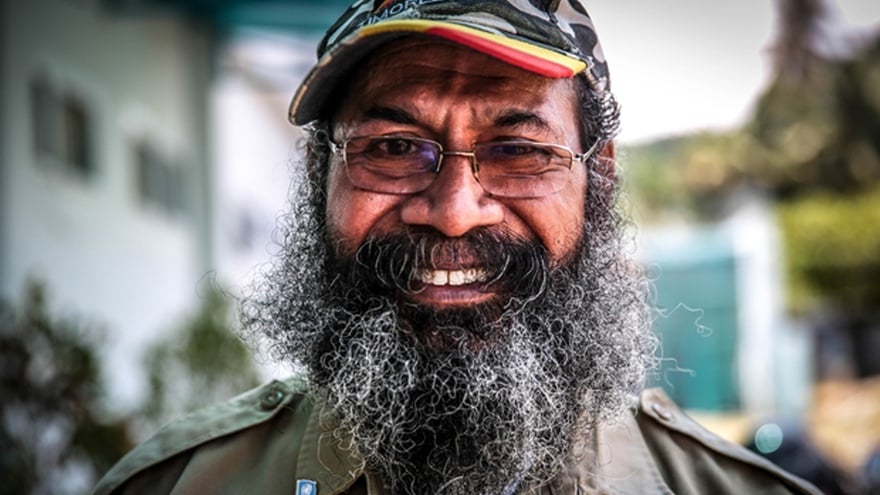


 Oleh : I NGURAH SURYAWAN


 Papua Merdeka News