NZ MPs want action on West Papua mission

5:11 pm on 15 June 2016, Radio NZ International

New Zealand politicians want the government to press for progress on a high level fact-finding mission to Indonesia’s Papua region.

The Pacific Islands Forum leaders agreed at last year’s summit in Papua New Guinea to consult Indonesia over how to monitor and investigate human rights abuses in Papua.

New Zealand Greens MP Catherine Delahunty
New Zealand Greens MP Catherine Delahunty is pushing for an independent fact-finding mission to West Papua. Photo: RNZI

The New Zealand government indicated on several occasions that Indonesia was opposed to the idea but Greens MP, Catherine Delahunty, who leads a now 20 strong group of New Zealand parliamentarians, said this country had to do more.

“We will be writing a collective letter to Murray McCully as Minister of Foreign Affairs calling on him to make a comment on this lack of progress,” she said.

“Because it was already agreed. It is clear from the past year that there continue to large numbers of human rights abuses and there is a need for a fact finding mission. So we are going to push our government because they signed up to this, they should be standing up for it.”

Meanwhile, hundreds of West Papuans have today been demonstrating again in Jayapura, Papua’s provincial capital, calling for freedom from Indonesian rule.

Reports from Papuan media sources indicate Indonesian police arrested dozens of activists since the weekend for organising the demonstration.

One one day alone in early May, around 2000 Papuans were arrested for participation in another large demo.

West Papua gets international support

Image: Andrew West with West Papuan independence leader Benny Wenda and Joe Collins from the Australia West Papua Association, (Nadyat El Gawley)

ABC.net-A few weeks ago, we heard from Catholic nun Susan Connelly who helped lead a church fact-finding mission to the Indonesian province of West Papua. Her report included allegations of widespread torture and harassment by Indonesian police and troops and even a “slow-motion genocide” of indigenous West Papuans.

The West Papuan independence leader Benny Wenda has been in Australia this week meeting supporters and a handful of politicians. Benny Wenda had an almost action-movie style escape from an Indonesian jail and he now lives in exile in Britain.
So why should the churches in particular, care about the fate of his people?

Supporting Information

Subscribe to The Religion and Ethics Report on iTunes, ABC Radio or your favourite podcasting app.

Ketua MSG Sogavare Desak PBB Turun Tangan Soal Papua

Sabtu, 14 Mei 2016 | 09:47 WIB

TEMPO.CO, Port Vila- Ketua Melanesian Spearhead Group (MSG) Mannasseh Sogavare mengatakan MSG mendesak Perserikatan Bangsa-Bangsa untuk turun tangan terhadap masalah di Papua Barat (Papua).

Sogavare yang saat ini menjabat Perdana Menteri Kepulauan Solomon menjelaskan, sejak Papua mendapatkan status pengamat di MSG tahun lalu, situasi Papua di wilayah Indonesia menjadi lebih tegang dan masyarakat adat Papua dalam situasi “diambang kepunahan.”

Selain meminta PBB segera melakukan intervensi seperti dilansir radionz.co.nz, 13 Mei 2016, Sogavare juga telah mendeklarasikan dukungan negaranya kepada Persatuan Pergerakan Pembebasan untuk Papua Barat (United Liberation Movement for West Papua-ULMWP) yang mengajukan diri untuk menjadi anggota penuh MSG.

Permintaan ULMWP untuk diterima sebagai anggota penuh di MSG, menurut Sogavare, akan dibahas dalam pertemuan tingkat tinggi MSG pada Juni ini.

Sogavare berada di Port Vila, Vanuatu saat menjelaskan tentang desakannya agar PBB turun tangan dalam kasus Papua dan agenda pembahasan status ULMPW di MSG.

Di Port Vila, Sogavare bertemu rekannya Charlot Salwai, Perdana Menteri Vanuatu. Keduanya memberikan dukungan kepada ULMWP untuk mendapatkan keanggotaan penuh dalam pertemuan tingkat tinggi MSG Juni nanti di Port Moresby, Papua Nugini.

Meski pertemuan tinggi MSG baru berlangsung Juni nanti, namun 3 anggota MSG dipastikan mendukung ULMWP mendapat status anggota penuh, yakni Kepuluan Solomon, Vanuatu dan Kanak Kaledonia Baru. Dua anggota lainnya, Fiji dan Papua Nugini belum memberikan sinyal yang jelas.

Awal tahun ini, Sogavare telah menawarkan diri kepada Presiden Joko Widodo (Jokowi) sebagai mediator dialog antara pemerintah Indonesia dengan rakyat Papua. Namun Jokowi menolak tawaran itu.

MSG juga telah menerima laporan dari sejumlah lembaga hak asasi manusia tentang situasi yang dihadapi rakyat Papua. Sehingga menurut Sogavare, dalam pertemuan tingkat tinggi MSG nanti mengagendakan permintaan kepada PBB untuk melakukan aksi terhadap masalah genosida sebagai kejahatan kemanusiaan yang dilakukan Indonesia terhadap rakyat Papua.

RADIONNZ.CO.NZ | MARIA RITA

Socratez: RI Tolak PM Solomon Justru Percepat Papua Merdeka

JAYAPURA, SATUHARAPAN.COM – Tokoh Papua, Pendeta Socratez Sofyan Yoman, menilai penolakan Presiden Indonesia Joko Widodo terhadap permintaan pertemuan dengan Perdana Menteri Kepulauan Solomon, Manasye Sogavare, untuk membahas masalah Papua Barat justru dapat mempercepat Papua Merdeka.

“Kalau Ketua Melanesian Spearhead Group (MSG) ditolak, untuk apa Indonesia menjadi anggota MSG? Dengan alasan-alasan seperti ini Indonesia semakin memberikan legitimasi dan kekuatan lobby-lobby ULMWP di dunia Internasional. Akibatnya, Indonesia sendiri mempercepat Papua Merdeka,” kata Socratez dalam pesan singkat yang dikirim ke satuharapan.com, hari Jumat (26/2).

Ketua Umum Badan Pelayan Pusat Persekutuan Gereja-Gereja Baptis Papua (PGGBP) itu juga menilai, bahwa “memang sangat berat dan rumit bagi pemerintah Indonesia menghadapi masalah Papua.”

Dia mencontohkan Undang-Undang Nomor 21 Tahun 2001 Tentang Otonomi Khusus Bagi Provinsi Papua merupakan awal kemenangan bagi Pemerintah Indonesia. “Tapi sayang, pasal demi pasal dan ayat demi ayat yang dalam UU Otsus itu tidak dilaksanakan dengan sungguh-sungguh bahkan kenyataannya Otsus telah gagal total.”

Untuk memperbaiki itu, kata Socratez, pemerintah provinsi Papua sudah mengajukan Otsus Plus tapi itu juga ditolak pemerintah.

“Permintaan untuk smelter dibangun di Papua juga tidak digubris Jakarta. Lebih parah lagi penembakan 4 siswa di Paniai 8 Desember 2014, yang dilakukan aparat keamanan tidak ditangkap dan diadili pelakunya.”

Lebih lanjut, Socratez yang berada di Jayapura, menilai lebih fatal lagi bagi pemerintah Indonesia yang menolak Tim Pencari Fakta dari Pasific Island Forum (PIF) ke Papua dan menolak menerima kunjungan ketua MSG PM Salomon Islands untuk pertemuan dengan Indonesia sebagai anggota MSG.

“Pemerintah Indonesia jangan persalahkan rakyat Papua tapi introspeksi diri baik-baik demi kebaikan Indonesia,” katanya.

Jokowi Tolak Bertemu PM Solomon

Sebelumnya, Presiden Indonesia Joko Widodo telah menolak permintaan pertemuan dengan Perdana Menteri Kepulauan Solomon, Manasye Sogavare, untuk membahas masalah Papua Barat.

Hal itu diungkapkan Sogavare di Noumea, New Caledonia, pada hari Jumat (19/2), dalam pertemuan dengan para pejabat dari Front de Liberation Nationale Kanak et Sosialis (FLNKS). Ini merupakan perjalanan 13 hari Sogavare sebagai Ketua MSG di ibu kota MSG. Sedangkan FLNKS merupakan anggota MSG.

“Perjalanan saya saat ini ke ibu kota MSG seharusnya telah berakhir di Jakarta,” kata Sogavare kepada rekan-rekan FLNKS seperti dikutip solomonstarnews, hari Senin (22/2).

“Ini adalah untuk membahas kemungkinan mengatur pertemuan antara Indonesia dan anggota United Liberation Movement of West Papua (ULMWP), yang menginginkan kemerdekaan bagi Papua Barat.”

Tapi Sogavare mengatakan: “presiden Indonesia telah mengindikasikan dirinya tidak tertarik untuk membahas masalah Papua Barat.”

Keputusan dari presiden Indonesia menimbulkan banyak pertanyaan, mengapa Indonesia menjadi anggota MSG jika tidak mau bekerja sama dalam menangani isu-isu yang menjadi perhatian MSG.

“Namun demikian, pemerintah Kepulauan Solomon di bawah kepemimpinan saya dan MSG di bawah pimpinan saya akan terus mengejar isu Papua Barat,” kata Sogavare.

Editor : Eben E. Siadari

Samoa looks into supporting West Papua

Samoa says it will be looking into supporting a West Papua request for membership in the Pacific Islands Forum.

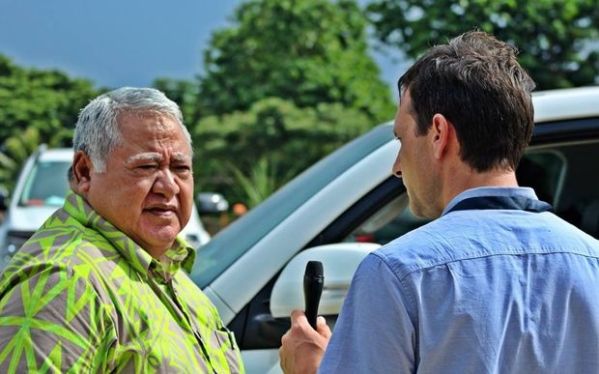
RNZI reporter Johnny Blades interviewing Samoa's Prime Minister Tuilaepa Sailele Malielegaoi
RNZI reporter Johnny Blades interviewing Samoa’s Prime Minister Tuilaepa Sailele Malielegaoi Photo: Govt of Samoa

The Samoa Observer reports that Prime Minister Tuilaepa Sa’ilele Malielegaoi made the assurances to the general secretary of the United Liberation Movement for West Papua, Octovianus Mote last week.

Mr Mote who the Observer reports is in Fiji this week to lobby for support ahead of West Papua’s upcoming bid for membership to the Melanesian Spearhead Group also met with Tautua leaders and the Council of Churches in Samoa who also expressed their full support for West Papua.

According to Mr Mote, when West Papua gained independence in 1961, Samoa was one of the few countries represented at the celebrations.

United Liberation Movement for West Papua secretary-general Octo Mote.
United Liberation Movement for West Papua secretary-general Octo Mote. Photo: Supplied

Speaking to the Observer, Mr Mote said that the population of indigenous West Papuans, which was once 1.5 million, is down by 48 percent and his people are a minority in their our land.

He said should the trend continue, in 2020, the population will be less than 23 percent.

Source: http://www.radionz.co.nz

Mosi Tidak Percaya Terhadap PM Joe Natuman Mulai Diperdebatkan Dalam Sidang Parlemen Vanuatu

Jayapura, Jubi – Sidang anggota Parlemen Vanuatu untuk sesi pertama di tahun ini telah dimulai di ruang sidang Parlemen Vanuatu yang bertempat di ibukota Port Vila, Vanuatu, Senin (8/6/2015). Pada sesi ini, anggota parlemen akan memperdebatkan gerakan mosi tidak percaya terhadap Perdana Menteri Joe Natuman.

Sesi ini sempat tertunda dari jadwal semula pada Maret 2015, yang disebabkan hancurnya negara pulau itu oleh badai tropis Topan Pam.

Wartawan Radio New Zealand, Johnny Blades, melaporkan bahwa pihak oposisi telah mengajukan mosi tidak percaya terhadap perdana menteri Joe Natuman.

Blades mengatakan, sebuah gerakan tentang mosi tidak percaya itu telah ditandatangani oleh 21 anggota parlemen dan telah diajukan kepada pembicara pada pekan lalu. Mosi tidak percaya yang sudah ditandatangani itu akan diperdebatkan dalam sidang perlemen oleh 52 kursi, pada Kamis (11/6/2015).

Puluhan tanda tangan itu termasuk dua orang anggota parlemen yang telah ditunjuk menjadi menteri oleh PM Joe Natuman, pekan lalu. Salah satunya adalah MP dari Luganville, Kalfau Moli. Ia telah ditunjuk menjadi menteri luar negeri baru, menggantikan Sato Kilman yang dipecat oleh Perdana Menteri setelah ia menunjukkan dukungannya bagi gerakan membangun mosi tidak percaya itu.

Blades mengatakan, pemecatan itu dipahami bahwa Sato Kilman adalah kandidat oposisi alternatif perdana menteri.

“Ini masih harus dilihat bagaimana tiga anggota parlemen pemerintah lainnya terkait dengan gerakan mosi tidak percaya akan memilihnya. Tapi, setelah ditopang sejumlah orang seperti Kalfau Moli dan menteri kehakiman baru Osea Nevu, pemerintah Natuman yang sedang memimpin yakin bahwa ia memiliki dukungan mayoritas,”

kata Blades. (Yuliana Lantipo)

Source: TabloidJubic.com, Diposkan oleh : Yuliana Lantipo on June 8, 2015 at 11:36:54 WP [Editor : ]

MERDEKA! Struggle and survival in West Papua

International, Ben Hillier, 29 January 2015
Simon Degei sat amid the ground cover, a gaping hole in his right shoulder obscured by a bloodied tank-top, and his face covered in dirt. It is difficult to tell from the picture precisely how long he had left. But Degei is looking to the sky and his gaze is distant; these are his last moments. The 18 year old reportedly bled to death somewhere near the Enarotali airport, Paniai regency, in West Paua’s central highlands.

It was 8 December last year. Indonesian security forces had opened fire on a peaceful demonstration at Karel Bonay football field, near the local police station. They were protesting against army violence. Four other teenagers died from gunshot wounds at the scene. A sixth victim died in hospital two days later. At least 17 others, including five primary school children, were wounded, according to reports.

A number of inquiries have been announced, but the 1997 Law on Military Courts blocks civilian investigators from interviewing military personnel. According to Phelim Kine, deputy Asia director at Human Rights Watch, there also is a “climate of fear … [that] inhibits local people from publicly discussing security force abuses”.

Indonesia maintains strict control over reporting from West Papua. Foreign journalists are banned; local reporters face intimidation. Yet the government can’t stop the flow of information about the atrocities being committed. Those with mobile phones now document events and distribute the images via social media to international solidarity campaigners and media outlets.

In January, there was another crackdown. More than 100 people were arrested, some tortured, and scores chased from their burning homes in Utikini village, in the Timika region south of Grasberg Mountain – the largest gold mine in the world. In another village, Banti, Indonesian soldiers burned down homes and chased locals into the nearby jungle.

The following day, a young man in Mapurujaya village (also Timika region) was attacked. “He was stabbed in the head with a sharp instrument and his cerebellum was pierced”, reported the Free West Papua campaign on 15 January. “He is now in a coma in hospital.” Survival International, an NGO that advocates for the rights of tribal people, has received reports that another man, Jekson Waker, was shot in the feet to “keep him still”.

The number of dead has mounted during Indonesia’s 50-year occupation. Sydney University researchers John Wing and Peter King estimate that at least 100,000 have been killed. Exiled independence leader Benny Wenda claims that the number is half a million. They are victims of what has been called slow-burn genocide.

Descriptions of the killing carry echoes of King Leopold’s Congo. When Australian journalist John Martinkus travelled to the region in 2002, Peter Tabuni, a resistance fighter who had spent decades in jungle camps, showed him a file recounting the Indonesian slaughter during the Baliem Valley insurgency in the late 1970s. “Pages of detailed gruesome information followed”, Martinkus wrote.

“They don’t just kill with a gun”, Tabuni told him. “One man I saw still alive they burnt his head and feet and they wire his hands together and they cook him over a fire and then they put a hot iron over his body. They cut the hand and ear of some and cook it on the fire and give it to them to eat.”

Added to the loss of life are torture and detention of activists, rape and mutilation of women, deliberate introduction of HIV into the population, land theft and crop destruction, cultural desecration, and denial of freedom of speech and assembly.

A colonial legacy

The situation today is a legacy not only of decades of Indonesian occupation, but of the battles Indonesians themselves waged to be free of colonial rule. The country’s four-year War of Independence officially ended when the Dutch relinquished sovereignty over the archipelago in late 1949. But millions of Indonesians continued campaigning against lingering colonial influence. In the mid- to late 1950s, workers occupied Dutch-owned companies, which were eventually nationalised, and the Indonesian government repudiated its debt to Holland.

However, the western half of the large island of New Guinea, directly to the north of Australia, remained administered by the Europeans. It was known to the Indonesians as West Irian, the latter word being an acronym of “Ikut Republik Indonesia Anti-Nederland” (follow Indonesia against the Netherlands). Later it would be renamed Irian Jaya, “Victorious Irian”. The new republic claimed it as part of the United States of Indonesia.

Sensing that their grip was loosening, the Dutch reasoned that the only way to maintain influence in the territory would be through a neo-colonial state – nominally under Papuan rule but in reality dominated by Dutch interests. They educated and trained a layer of Papuans, developed the administrative apparatus and built infrastructure to support it: airfields, ports, housing, roads, sanitation and communication. Mostly this was in the capital Hollandia (later renamed Jayapura – “Victory City”).

By the early 1960s, just 25 percent of the bureaucracy was staffed by Europeans. More than 15,000 Papuans were employed in administration and the private sector. Included in that number were more than 5,000 public servants, the vast bulk in lower ranking positions. Historian Peter Drooglever, who has meticulously researched Dutch rule in West Papua, estimates that, at the top, there were “little under a thousand individuals who at the end of the Dutch period formed the crystallising Papuan elite”.

Increasingly it was clear that Indonesia was going to take the territory. President Sukarno gave an incendiary speech at Jogjakarta in December 1961: “[T]he Dutch undertook to recognise sovereignty, independence, over the whole of that Indonesia, ‘irrevocable’ and ‘unconditional’ … This was a huge lie, a great deception … I have already given the order to the entire Armed Forces of the Republic of Indonesia … to get themselves ready so that at any moment I give you the command, you liberate West Irian from the stranglehold of Dutch imperialism.”

The words might now seem soaked with historical irony. Yet at the time, Indonesia was a beacon in the global anti-colonial movement. Indeed, a section of the Papuan elite were pro-integration. As historian Peter Savage has written, “Some saw through the Dutch ploy and were not content with ‘flag nationalism’. They turned their attention instead to the new-born Republic … seeing there a genuinely anti-(rather than neo-)colonial nationalism.” The Indonesian leaders thought similarly: Papuan nationalism was a Dutch ruse to maintain the remnants of empire. Certainly the colonists thought so, but where did that leave the Papuans? The overwhelming majority did not identify with either side. They were not Indonesian or European, but Melanesian (Pacific Islander).

When the New York Agreement was signed in August 1962, stipulating a transfer of administrative control, first to a UN Temporary Executive Authority, then to Indonesia in 1963, some Papuans began to argue for a unilateral declaration of independence. At the very least, reasoned others, a vote on self-determination should occur during the transition period so it could be carried out by the UN. They were right to be worried but wrong to place their faith in the “community of nations”.

The New York Agreement was a Cold War manoeuvre by the US to undermine Soviet influence. The Russians were providing arms to the Indonesian military and, adding to US nervousness, the Indonesian Communist Party was the largest in the world, outside of the nominally communist countries. The agreement instructed the Indonesian administration to “give the people of the territory the opportunity to exercise freedom of choice … before the end of 1969”. But it left a great deal unclear and didn’t contain the words “referendum” or “plebiscite”, preferring the bureaucrat-speak of “consultations”. This was no accident.

As Indonesians took over the administration under the UN’s watch, restrictions on movement and assembly were instituted. The new regime cleared the decks. “Only a limited number of Papuans continued serving in the bodies that had existed before”, writes Drooglever.

Great changes were also taking place in Indonesia, where a bloody right wing military coup occurred in 1965. The left was liquidated as up to 1 million were slaughtered. Two years later, General Suharto’s government presided over Operation Tampas (“Destroy”) in Manokwari. There are varying reports of hundreds or up to 3,000 killed to suppress a resistance movement of some 10,000. Suharto also illegally granted Freeport Sulphur a mining concession covering 10,000 hectares around Ertsberg Mountain in the central highlands, where the company had earlier discovered “the largest above-ground outcrop of base metal ore in the world”.

The new Indonesian regime followed through with the UN-mandated Act of Free Choice in 1969. It was a farce. Papuans refer to it as the “Act of No Choice”. Prior to the vote, Suharto declared that the “return of West Irian into the fold of the motherland” could not be undone. Behind closed doors, the UN agreed. Thousands were killed as the military unleashed a wave of intimidation in the lead-up to the vote.

Just over 1,000 handpicked Papuans out of a population of more than 700,000 were allowed to participate. One recounted to a reporter for the documentary West Papua – the secret war in Asia in 2007: “The head of the Indonesian military unit spoke to each of us, one by one … ‘You have to choose Indonesia, not Papua.’ Then he put a gun to the head of each of us and threatened: ‘If you don’t choose Indonesia then I will kill you, all of you!’”

This act of betrayal has framed the narrative of the nationalist movement ever since.

Resistance

In 1961 a national anthem, “Oh my land Papua”, was sung and a national flag, the Morning Star Flag, was raised at the first Papuan People’s Congress in Hollandia. Today, Papuans view the proceedings as a declaration of independence. At the time, however, the ceremony had limited impact. Richard Chauvel, a leading scholar on West Papua, writes: “Those involved … had been drawn primarily from a small elite that had been educated, politicised, and employed in the urban centres … From the perspective of today, they were the pioneers of Papuan nationalism … Most people thought not in terms of Papua, but in terms of locality and region.”

Hundreds of Indonesian paratroopers were soon landing in anticipation of the takeover. The Free Papua Movement (Organisasi Papua Merdeka – OPM), the umbrella under which most of the independence movement would be organised, was formed several years later. After the Act of No Choice, resistance became widespread but remained localised. It would take time for a broad nationalist movement to crystallise.

Mass protests were put down in the heavily policed cities. The strength of the Indonesian military turned many to the guerrilla struggle – the interior of the country was largely inaccessible and the border region with Papua New Guinea provided a safe exit in the event of a major offensive. The downside to this strategy was the retreat from the centres of power.

In 1971, OPM leaders Seth Rumkorem and Jacob Prai unilaterally declared independence. It didn’t result in a territory-wide uprising. Indeed it seemed to come out of nowhere, with little consultation. It is nevertheless considered an important development. “With the declaration of independence it was apparent that the feelings of West Papuan nationalism that had manifested themselves in spontaneous uprisings against the government through the 1960s had evolved into a much more definite form”, Australian author Jim Elmslie wrote in Irian Jaya under the gun. “A semi-professional full time core of guerrilla soldiers was now operating against the Indonesian government under an agreed constitution … From being only an amorphous feeling of outrage, West Papuan nationalism had become a purposeful social, political and military movement.”

The nationalists still were weakly organised, and the guerrillas would never be in a position to challenge the power of the Indonesian state. Besides, the strategy was self-limiting: every act of resistance was met with military reprisals against local villages. Hundreds, even thousands, could be killed for every guerrilla transgression. Such a burden of responsibility meant that actions had to be calculated. Nevertheless, the resistance represented defiance and unbending determination; living proof that sovereignty was never ceded.

The OPM suffered a debilitating split in the 1970s. Vicious factional infighting between Rumkorem and Prai resulted in up to 10,000 deaths. Papuans were killing Papuans. “We had to forget the jungle strategy”, says Jacob Rumbiak, who at the time was a young nationalist leader. Today he is foreign minister of the Federal Republic of West Papua (FRWP), which was declared in 2011 at the third Papuan People’s Congress.

The FRWP is located in the homeland, but Rumbiak’s Department of Foreign Affairs, Immigration and Trade is situated in Melbourne’s Docklands, a model of neoliberal development that has transformed a degraded port precinct into a corporate hub. It is a far cry from the camps from which, at age 11, he commanded a guerrilla unit in the 1960s. There were more experienced and older candidates for leadership, he says. But the OPM wanted to promote and train the youth.

Rumbiak gained a scholarship to study in Bandung, Java, in the mid-1970s. From 1982, he began educating Bandung-based Papuan students in West Papuan history. For a national movement to succeed, he reasoned, mass nationalist consciousness was required. “At the time our leaders, like Rumkorem and Prai, had groups. But information to the ground? Zero. The leader only [was informed]. I didn’t agree. I was told it’s too dangerous, why would you try and organise in Java? I said, ‘I’m a soccer player. I can play at home and I can play at my competitor’s home. This struggle is similar.’”

Rumbiak is matter of fact about the strategic choices. But underneath his jovial and welcoming exterior stands a man who endured torture for a decade in Indonesian prisons. Ironically, only when he later returned home to organise was he taken captive.

West Papua is home to hundreds of different languages, and cultural groups that often view each other with suspicion. Rumbiak’s idea was straightforward enough: secretly, he and others, including his soon to be executed cousin, the anthropologist and musician Arnold Ap, would select students from as wide a range of villages as possible. When the students went home for holidays, it would be their responsibility to raise the consciousness of their kin in West Papua and overcome local and regional divisions. “They had to look with both eyes, not just their tribe’s eye.” He was confident of this approach because, he says, regardless of the tribal differences, each shares a fundamental world outlook in which Spirit, land and culture are united. That, he believed, was the key to creating a unified movement of Melanesians for an independent West Papua.

The education project also was predicated on the experience of Indonesian brutality. Shared oppression fostered common identity. Today, writes Chauvel, “a Papuan national movement featuring a pan-Papuan identity and a commitment to an independent Papua has spread from the small, educated urban elite that gave birth to it to become a Papua-wide movement with roots in the villages. In addition, the educated elite that leads the movement is much more numerous, skilled, and politically experienced than it was when Indonesia assumed control in 1963.”

Nevertheless, regional identities and differences remain strong. Clan traditions reportedly continue to play a role in factional politics within the resistance. Competing organisational loyalties also are underwritten by differences in politics and strategy. There are many different factions, some armed, others committed to non-violence. The FRWP was proclaimed by a gathering of 5,000. Yet it is difficult to tell exactly how broad its social base is on the island, which is home to around two million Melanesians. The structure of the OPM and the number of guerrillas under arms similarly is difficult to discern, but there are a number of regional commands throughout West Papua.

In December a new umbrella organisation – the United Liberation Movement for West Papua – was formed in an attempt to present a common voice of these various factions within the independence movement.

The Indonesian vice

Despite heroic resistance and the development of a common movement, after more than 50 years Indonesia’s control over the territory has been strengthened. There were great expectations in the wake of the 1998 Indonesian protest movement, which ended Suharto’s dictatorship, and East Timor’s independence vote the following year. A Special Autonomy Law was negotiated in 2001, under president Abdurrahman Wahid, but wasn’t implemented after he was forced from office by an alliance between Megawati’s centre-right “nationalists” and the centre-right Islamic parties.

Indonesia’s grip remains vice-like for a number of reasons. One is that, for Indonesia’s military, West Papua is the last fiefdom. Since 1998, the military more and more has been pushed to the margins of national political life. It has lost its representation in parliament. It had to withdraw all its non-Acehnese forces from Aceh. It is no longer deployed against protesters or to enforce political bans. Papua is an exception, the area it has been able to hold against civilian rule.

Another relates to the state’s territorial integrity. There is little chance of the balkanisation of the archipelago today, but foreign minister Subandrio’s words to the UN Political Committee in 1957 retain a certain logic: “Self-determination with regard to West Irian would mean in fact that we should accept also the same concept with regard to the other islands or regions of Indonesia.”

Another is the economics of the region. West Papua is, quite literally, a gold mine. In 1991, Freeport’s lease was widened to 2.6 million hectares after a mammoth ore discovery at Grasberg Mountain – more than 30 times the size of the original find at Ertsberg. Freeport is one of the largest individual sources of revenue for the treasury. Grasberg also is one of the last gravy trains of the military. A New York Times investigation in 2005 found that, over the previous six years, “Freeport gave military and police generals, colonels, majors and captains, and military units, nearly $20 million. Individual commanders received tens of thousands of dollars, in one case up to $150,000.”

Merdeka!

West Papuans face more than just the violence and intransigence of the Indonesian state. The slogan of the nationalist movement is Merdeka, which also was the battle-cry of the Indonesian revolutionaries as they fought Dutch colonialism in the 1940s. Often it is translated as “independence”, yet Chauvel points out that “Papua has objectives in addition to that of political sovereignty. Some have argued that Merdeka … means not just political independence but freedom, and freedom has been defined variously as freedom from poverty, ignorance, political repression, and abuse of human rights.”

Max Lane, author of Unfinished nation: Indonesia before and after Suharto, says that the competing claims reflect a complex situation on the ground, which doesn’t necessarily afford broad support to a single political project. “Any manifestation of opposition gets widespread support, but the politics of the actual population is fractured”, he says, speaking over the phone in Melbourne. “Despite these fractures and contradictions, while the Indonesian state, through its military, treats Melanesian Papuans as an occupied people, they will increasingly feel foreign. Among the most politicised sector, university students, political nationalism is strong.”

Undoubtedly the overwhelming majority support a free West Papua. But the political and strategic differences, which partly underwrite the various organisational loyalties, are themselves informed by competing visions of Merdeka. What does the latter look like concretely? For many highlanders, it means an end to brutality and killing. Educated urbanites, however, may have different immediate concerns, such as an end to discrimination in government hiring.

Another complicating factor is the immigration of hundreds of thousands from around the archipelago. Non-Melanesians made up just 2.5 percent of the population in 1960. Elmslie, who also co-founded the West Papua Project at the Sydney University Centre for Peace and Conflict Studies, estimates that the West Papuans are today likely a minority in their own land. Even if that is not yet the case, certainly in the cities – the centres of government – they have been marginalised, as Martinkus’s description of Jayapura in 2002 indicates: “Traders from Sulawesi, Java and Bali cram into the two main streets that run down to the harbour … There is barely a Papuan face to be seen among the crowds that loiter every night.”

His impression overstates reality – West Papuans make up at least a large minority in the capital. Reality nevertheless poses an immense dilemma: how to conceptualise, let alone achieve, Merdeka in a multi-ethnic territory with competing national allegiances? Has the moment for independence passed? Jacob Rumbiak insists that it has not. “Even if we are 10 percent of the population, we will achieve it. We will fight for two years, 100 years if necessary”. After 50 years of struggle, his conviction is as strong as ever. But if he is wrong, what road for a marginalised nation without a state of its own?

Papuans at a minimum deserve full freedom of speech and organisation, including the right to advocate independence, the withdrawal of the Indonesian military, the release of all political prisoners and an end to discrimination. Could these be realised within the framework of Indonesian rule? For many Papuans it is scarcely believable. That is precisely the appeal of the demand for independence through a direct vote to right the wrong that was perpetrated in 1969.

There is another, more audacious, path that may open in coming years.

The revolutionary republic of Indonesia adopted the motto “unity in diversity”. The vision would have been limited in practice by the political project of establishing a centre of capital accumulation outside of European rule; as it was, its content was totally emptied by military dictatorship, which crushed the movement that could have given life to the words. The price of national unity under Suharto was hundreds of thousands, or more, slaughtered.

Today, workers, farmers, students and oppressed groups continue to cop the repressive heel of the Indonesian state. But the workers’ movement in Java is being reborn. A student movement also has continued since the fall of Suharto. This underscores the potential of a broad alliance from Jayapura through Jakarta to Banda Aceh – multiple insurgencies in a united struggle for economic, social and political rights. The power of unity in the service of diverse and progressive claims would be immense.

The events of 1998 were only a glimpse of that potential. The vision of another Indonesian revolution is compelling precisely because of the precedents. Down that road lies Merdeka, not just for some two million West Papuans, but for several hundred million toilers across the archipelago.

West Papua independence activists accuse Indonesia of using students as spies

West Papuan independence activists and their supporters in Australia have accused Jakarta of using students to spy on them.

Lateline has been told postgraduate students are providing information to Indonesian intelligence about Australian citizens and has obtained photos that are claimed to be of some of the student spies.

The pictures were taken in June when the self-proclaimed Federal Republic of West Papua (FRWP) opened an office in Melbourne, as the West Papuan community and its supporters celebrated what they saw as a landmark in their long-running campaign for independence from Indonesia.

The celebrations were interrupted when three men, who had never been seen at any independence movement events, were seen recording the proceedings on smartphones.

The “foreign minister” of the FRWP, Jacob Rumbiak, confronted one of the men and was told they were there to gather information for the Indonesian government.

I think that the photos they took were sent to the Indonesian government by intelligence.

Jacob Rumbiak of the Federal Republic of West Papua.

“He’s explained that he’s studying a PHD at a Melbourne university and that also he works in the (Indonesian) department of foreign affairs. So he works in the government of Indonesia,” Mr Rumbiak said.

He said the man explained he would be reporting back to Indonesian authorities.

“Another two also came and they took photos of this office. I think that the photos they took were sent to the Indonesian government by intelligence,” Mr Rumbiak said.

The ABC has indentified and contacted one of the three Indonesian men who attended the opening of the office and asked for his version of events, but he has not responded.

The man is a post-graduate economics student at a university in Melbourne, and his Facebook page lists his employer as the Indonesian finance ministry.

The Indonesian embassy rejects the claims.

“The Indonesian Government does not assign its students studying in Australia, or anywhere, to collect/gather information from any sources,” the embassy said in a statement.

“The possibility of Indonesian students’ presence at open-to-public events, including Papua-related ones, might relate to their studies or personal interests.”

Melbourne-based independence movement hacked and harassed

The West Papuan independence movement is strongest in Melbourne.

They said aside from low-level harassment, their office website has also been hacked twice. They claim they were able to trace the IP addresses of the computers threatening the website to addresses in Jakarta and Melbourne.

“We are faced with Jakarta. I do believe that’s them and we also have a monitoring system so we can know from which county and the address,” Mr Rumbiak said.

It’s well known amongst the activist community that this does go on. It seems overt and not very subtle.

Reverend Peter Woods

The Indonesian Embassy in Canberra denied the attack originated from its foreign affairs offices.

“We can confirm that the Indonesian Ministry of Foreign Affairs is not involved in that website hacking incident, as the ministry does not have a policy nor intentions to hack other institutions.”

Anglican minister Peter Woods, who has long campaigned for an independent West Papua, said incidents like this are becoming more frequent and blatant.

“It seems to be very blatant. It’s well known amongst the activist community that this does go on,” he said.

“It seems overt and not very subtle.”

Australian security services aware of student spies: academic

At a talk Reverend Woods gave in Melbourne last month describing his most recent trip to West Papua, he asked two men of Javanese and Timorese origin to leave before he started as he believed they were there as informants.

“I was about to speak and we noticed that there were two non-Papuans there and we spoke to them and realised that they were agents doing surveillance. We asked them not to be there,” he said.

Lateline has spoken to several academics who all believe it is not uncommon for Indonesian post-graduate students to also provide intelligence to their country’s consulates or embassy.

“A number of students have been found to have been reporting to the consulate in Melbourne over the years,” said Damien Kingsbury from Deakin University.

“As academics, we deal with these students and we know what they are doing. They often tell us what they’re doing so we do know they report to their consulates. They do act as spies.”

Mr Kingsbury was an adviser to the Free Aceh and Timorese independence movements, and said Australian agencies are aware of this sort of intelligence gathering, but overlooked it due to it proving a comparatively low threat to Australia’s interests or security.

“The Australian security services see this as low level activity. They don’t see this as more formal espionage and a lot of the information that’s being picked up is open access anyway,” he said.

However, he said he does believe boundaries are being crossed.

“They also report on private conversations, so that is of more concern,” he said.

In the coming weeks a crucial meeting to garner support from Pacific nations for the West Papuan movement will be held in Vanuatu.

Indonesia’s president-elect Joko Widodo has indicated he is not opposed to dialogue with the independence movement about their desire for more autonomy, but Jakarta remains firm that independence is off the table.

Watch the full report on Lateline at 10.30pm on ABC TV.

Flotilla unsettles Indonesia’s occupation of West Papua

As we sat around a campfire in Brisbane, Kevin Buzzacott held up a bottle of water collected from the springs near Lake Eyre — a vast salt encrusted plain, which except in times of rare floods is bone dry. The inner city park in Brisbane where we met was one of the many stops the West Papua Freedom Flotilla made in its journey over August and September from Australia to the Indonesian colony of West Papua. The rapt audience of black, white and indigenous activists that night included 30 people who would later board two small yachts on the last leg of the land and sea convoy.

Buzzacott spoke of a source in the north, on the border between West Papua and Papua New Guinea, that sends water surging thousands of kilometers south through a network of subterranean capillaries that later springs up in the desert. “This water has come to the Arabana people as a blessing from the land of the Papuans,” said Buzzacott, an Aboriginal elder from Lake Eyre. “I want to take it back to the people of West Papua and say thank you,” said Buzzacott.

But to take the water back to West Papua involved an act of courage and defiance. This risky venture, an initiative of indigenous Australian Aboriginal elders and West Papuan refugees, was designed to build solidarity and shine a light on the Indonesian government’s ongoing occupation of West Papua. It was also a creative experiment employing ritual and ceremony as a form of third-party nonviolent intervention.

When I met the activists in Brisbane, the Indonesian government had not only refused the group permission to conduct a “cultural exchange” in West Papua, they had readied their air force, three naval patrol boats and sent thousands of troops to the south of the country to thwart the flotilla. Bob Carr, Australia’s foreign minister at the time, threatened that the Australian citizens on board would not receive any consular assistance in the event they were arrested by the Indonesian authorities.

Buzzacott and the other activists refused to back down. “We know we could have been arrested or even shot,” said Ronny Kareni, a young West Papuan activist and musician who was a key organizer of the flotilla. “But we want to know how far we can push both the Australian government and the Indonesian government.”

“Push” might be putting it too mildly. When the Indonesian government refused the activists entry, the organizers of the flotilla issued their own Aboriginal “passports” and West Papuan “visas” in a symbolic challenge to state-centric notions of sovereignty. The flotilla activists spoke openly about the need for human rights monitoring in West Papua and the West Papuans’ right to independence.

Awakening solidarity through song and ceremony

Back around the campfire in Brisbane, Buzzacott spoke about how Aboriginal people, Torres Strait Islanders, Papua New Guineans and West Papuans were once united.

His is a longer view reaching back to the last ice age more than 10,000 years ago when Australia and New Guinea were connected by a land bridge. He spoke of the shared flora and fauna — the kangaroo, cassowary, cuscus and echidna — as well as the shared stories and long forgotten ceremonies that once connected the “bow and arrow” people with the “woomera people,” a tool used by Aboriginal people to extend the range and velocity of the spear. He then reached down into a bag and pulled out some ash collected from various Aboriginal tent embassies around Australia. He placed ash on our skin and poured water over our hands, symbols of peace and recognition of our connection to the earth. He spoke of love, music and the healing power of fire — of campfires where stories have been told for over 50,000 years.

Buzzacott then told his own story about meeting Jacob Rumbiak 10 years ago. Rumbiak, a senior West Papuan leader and former political prisoner living in exile in Australia, told Buzzacott how the West Papuans were facing slow motion genocide. Rumbiak’s story resonated with Buzzacott. He was shocked and disturbed to hear that colonialism was still continuing; that violent racism is still a reality — that the West Papuans face helicopter gunships, arrest and torture by the Indonesian army and police simply for wanting to be free — and that the influx of Indonesian migrants is turning indigenous West Papuans into a minority in their own land. As he and Rumbiak’s friendship grew, the idea of the Freedom Flotilla, a voyage of indigenous solidarity, took root.

Uncle Kev, as he is affectionately known by the activists, is not the only one who yearns to re-establish connections. In a movement that historically has been riven by disunity, the vision of reuniting ancient ties and diverse tribes strikes a chord with West Papuan activists from inside the country as well. West Papuan activist Silas, whose name has been changed to protect his identity, told me that his people, the Malind Anim who live in the vast savannah in the southern part of West Papua, speak of the Malkai, the people of Papua New Guinea and the Torres Strait, as relatives. He recounted when cultural exchanges took place between the Malind Anim, the Malkai, and Aboriginal and Torres Strait Islander peoples from Australia at the turn of the 20th century. These ancient exchanges may have been interrupted by the vagaries of colonialism but the links forged by them are still sung about in song. He wants to reawaken these connections and harness the energy of solidarity to propel his country to freedom.

In the Malind language these songs, and the dances that accompany them, are called Nggatzi. The entire Australian Aboriginal and Melanesian region, from Sorong in the northwest of West Papua to Samurai in the southern part of Papua New Guinea onwards to the island of Tanna in the south of Vanuatu, is knitted together by song. “We sing each other’s songs,” said Silas, “and in this way we come to know and connect with each other.”

Departing on Indonesian Independence Day

The Pog and Trudy departing Cairns on August 17, 2013. (WNV/West Papua Freedom Flotilla collection)

The Pog and Trudy departing Cairns on August 17, 2013. (WNV/West Papua Freedom Flotilla collection)

After leaving Brisbane the flotilla headed north to Cairns. The planned itinerary was to hug the coast to the Torres Strait Islands, an archipelago administered by Australia and situated between the Australian mainland and Papua New Guinea. Papua New Guinea is an independent democratic state situated on the eastern half of the island of New Guinea. The western half of the island of New Guinea is West Papua, which has been occupied by the Indonesian government since 1963. From Horn Island in the Torres Strait the boats then planned to travel to Merauke, on the southern coast of West Papua. The entire distance from Cairns to Merauke is approximately 900 nautical miles.

On August 17, Indonesia’s Independence Day, the flotilla departed Cairns. Around the same time Ronny Kareni traveled to Vanuatu to elicit support for the Papuan cause from the five Melanesian countries, Papua New Guinea, Solomon Islands, Fiji, Kanaky (also known as New Caledonia, a colony of France) and Vanuatu.

The Indonesian government was not impressed. Instead of celebrating the country’s achievements, news about Indonesian Independence Day was dominated by the flotilla’s impeding arrival, how Indonesia intended to respond, ongoing human rights violations in West Papua — home to Indonesia’s longest running separatist conflict — and why the Indonesian government continues to ban foreign media from traveling to the territory. The flotilla catalyzed news stories in places as far away as Ghana and mesmerized people across the Pacific.

In response the Indonesian government urged the Australian government to stop the flotilla. While Carr lambasted the members of the flotilla in the media, in the end the Australian government failed to do anything of substance. The only thing the Australian Foreign Ministry did was write a mild letter to Isabella Brown, one of the organizers, pointing out that their actions were “high risk” and advising the participants in the flotilla to avail themselves of the Australian Department of Foreign Affairs’ online travel advice service. It was the diplomatic equivalent of a green light.

When the flotilla arrived in the Torres Strait Islands they received the same mild departmental advice again. However, the activists were not breaking any law and the Australian government did not mobilize either the police or navy to stop the boats. One of the participants on the boats, Tully Star, an activist from Melbourne, told me in an interview by phone that the only contact she had with the Australian authorities during her time on Trudy, a 30-foot ketch, was a visit from Australian Customs who boarded the yacht to ensure that people had the requisite safety gear and that it was all in working order. “No one has tried to stop us,” said Star. “In fact, Customs has been quite willing to facilitate us leaving the country.”

The Indonesian government’s ire also failed to raise any reaction from the Papua New Guinean government. The flotilla sailed within sight of Papua New Guinea but their government did not respond. Privately, members of the government told Kareni, who had also traveled to Papua New Guinea to organize support, that they supported what he and the flotilla members were doing.

A secret ceremony

worshippers who attended the prayer service at the Maranatha church hall, Sorong on the 3rd of July 2013. Four of the organizers of this church service at the Maranatha church hall in Sorong on July 3, including Yohanis Goram, the photographer and a customary leader and director of an environmental NGO, were later arrested and charged with treason. (WNV/Yohanis Goram)

Four of the organizers of this church service at the Maranatha church hall in Sorong on July 3, including photographer Yohanis Goram, a customary leader and a director of an environmental NGO, were later arrested and charged with treason. (WNV/Yohanis Goram)

Before the flotilla left Horn Island in the Torres Strait bound for West Papua they held a press conference. The West Papuans and organizers of the flotilla knew what they were doing was dangerous. By the time the group had arrived in the Torres Strait, four West Papuans inside the country had already been arrested by the Indonesian police and charged with treason, which could result in 20-year prison sentences, simply for organizing a church service to pray for safe passage for the flotilla. Despite this repression, West Papuan activists inside the country urged the flotilla to continue with their journey.

Jacob Rumbiak, Kevin Buzzacott, Ronny Kareni, Isabella Brown, and Amos Wainggai — a West Papuan activist and former refugee — told the press what was by then global news: One of the boats, the Pog, would continue to travel to West Papua while the other boat, Trudy, returned to mainland Australia because the safety of those on board could not be guaranteed. The activists reiterated their desire to open a dialogue with the Indonesian authorities about their intentions and advised the growing network of supporters on how they could track the flotilla’s position via the flotilla’s website. A pulsating light showed the Pog tracking towards West Papua, however, the organizers concealed part of their real plan from the public.

On September 12, the cultural exchange took place in two small aluminum dinghies at a secret location just off the coast of West Papua. Several Malind Anim from Merauke were there. Also present was Yacob Mandobayan, a young man who would later be forced to flee for his life along with six others, including a pregnant woman and a child, after the Indonesian security forces conducted house-to-house searches for flotilla organizers. Also representing the West Papuans were Elieser Awom, a former political prisoner and now Minister of Defense for the National Federal Republic of West Papua, a coalition of West Papua resistance groups who supported the flotilla, and Frans Kapissa, a university lecturer.

The ceremony was captured on video and circulated around West Papua. As the sacred water and ash was exchanged Kapissa thanked the members of the flotilla. “This ancient tie between Aboriginal peoples and us that was broken has been restored. We hope that your support will continue for always.” Buzzacott, speaking through tears told the West Papuans that “we are going to struggle all the way.” As the two boats pulled away at the conclusion of the cultural exchange the cry of “Papua Merdeka,” or Free West Papua, rang out across the waters.

Making West Papua an international problem

In West Papua grievances have gone unaddressed for decades. Under the current Indonesian President Susilo Bambang Yudhuyono state violence in West Papua has festered. Yudhuyono’s approach in West Papua has been to ignore or deny the problem. Nonviolent attempts by West Papuans to express their aspirations for independence have been criminalized.

The conflict and violence in West Papua has to become an international problem before the international community can be expected to take action. The West Papua Freedom Flotilla has made a valuable contribution to that process, particularly in Melanesia, a sub-region of the vast Pacific. Shortly after the flotilla concluded the Prime Minister of Vanuatu, Moana Carcasses Kalosil, spoke in support of international action for West Papua at the United Nations General Assembly.

The West Papua Freedom Flotilla posed a dilemma for both the Australian and Indonesian governments. If they did nothing the flotilla would reinvigorate solidarity in the region. If they responded violently or threatened violence, as the Indonesian government ended up doing, they would expose the reality of the occupation and the suppression of the Papuans’ right to freedom of expression. By publicly putting their bodies on the line and maintaining strict nonviolent discipline the flotilla activists created a win-win situation for the movement, although not one without costs.

These personal costs, however, are ones the West Papuans are increasingly willing to pay. “We need to take action otherwise we will disappear. In 20 years our people will be less than 30 percent of the population. We are dying under the barrel of a gun,” Kareni told me. This is not rhetoric. According to Dr. James Elmslie, in the 1960s West Papuans made up 96 percent of the population of West Papua. Currently their numbers are less than 50 percent.

Of course there are also lessons learned. There could have been more preparation and training in nonviolent action; more contingency planning about how to support activists involved in the flotilla inside the country; greater representation from other resistance groups and from different parts of Papuan society; and a willingness to follow through and illegally enter West Papua, thereby bringing the flotilla to a dramatic climax. Importantly, the activists also could have avoided talking about independence in order to attract even greater third party support.

“With this journey we are testing the waters” said Ronny Kareni. “We knew exactly when we had to stop and we have learned a lot. But this action is just the beginning.” As he sat cradling a guitar, with his characteristic smile and laugh, he continued: “There will be other flotillas and other exchanges and these will be even bigger. I imagine a Melanesian flotilla.”

When I raise the possibility of a bigger flotilla of boats and ships traveling to West Papua from the Melanesian countries with Silas he smiled. “Of course” he said. “The song has already been sung.”

This story was made possible by our members. Become one today.

Polres Diinstruksikan Waspadai Freedom Flotilla

Polres Diinstruksikan Waspadai Freedom Flotilla.

Jayapura,22/8 (Jubi)-–Kedutaan tenda Aborigin berupaya untuk bertemu dengan Duta Besar Indonesia, Rabu(21/8) untuk memberikan jaminan agar tidak ada tindakan agresif yang akan diambil terhadap aktivis hak asasi manusia(HAM) di Papua Barat dalam misi perdamaian bersama perahu Freedom Flotilla

Konferensi pers ini diadakan di luar Kedutaan Besar Republik Indonesia, 8 Darwin Avenue, Yarralumla ACT 2600 pukul 11 pagi, Rabu( 21/8).

Kedutaan Tenda Aborigin menyerukan sanksi terhadap pemerintah Australia dan juga penyelidikan PBB untuk memulai pencarian fakta pelanggaran HAM di Papua Barat.

Aktivis Aborigin tidak menerima pernyataan Senator Bob Carr yang telah mengabaikan hak asasi manusia dan menyerukan PBB untuk memberikan sanksi kepada Pemerintah Australia karena telah mengulangi lagi pelanggaran hak asasi manusia.

“Senator Carr dan pemerintahannya perlu diingatkan atas kewajiban Australia untuk menghormati dan membela Hak Asasi Manusia sebagaimana tercantum dalam Kovenan Internasional tentang Hak Sipil dan Politik (ICCPR) dan Deklarasi PBB tentang Hak-Hak Masyarakat Adat,”tulis press release dari Aborigin Tent Embassy melalui juru bicaranya Alice Haines yang dikutip tabloidjubi.com, Kamis(22/8).

Tenda Aborigin juga menambah dunia telah mengamati dengan seksama bagaimana Pemerintah Australia dalam urusan Pencari Suaka dengan PNG di Pulau Manus salah satu Provinsi terkecil di Papua New Guinea.

“Sekarang kita melihat serangan yang tidak beralasan kepada pejuang demokrasi dan HAM berjuang dengan penuh kedamaian di atas kapal kecil yang terdaftar di Pemerintah Australia,”tulis pesan Tenda Abroigin.

Dikatakan Senator Carr telah mengundang pemerintah Indonesia dan PNG untuk menangkap dan menahan para aktivis hak asasi manusia, yang akan membuat mereka tahanan politik di bawah instrumen-instrumen hukum internasional yang sama. Jika pemerintah Australia dan Indonesia yang melanjutkan sikap bermusuhan mereka terhadap ekspedisi HAM yang sah. “Kami menyerukan kepada tingkat tertinggi PBB untuk campur tangan dan memberikan jaminan keselamatan kepada para penumpang kapal Freedom Flotilla, “tegas Tenda Aborigin.

Selanjutnya pesan dari Tenda Aborigin, bahwa PBB harus memastikan investigasi terhadap pendudukan Indonesia di Papua Barat dan terdapat sebanyak 500.000 orang atau lebih telah kehilangan nyawanya. Dijelaskan juga bahwa dalam situs dunia di Pegunungan tengah Papua terdapat sebuah tambang emas terbesar, yang telah memakan korban dan konflik selama bertahun-tahun dengan pemerintah di pengasingan dan di penjara dalam tahanan-tahanan politik di Jayapura.

Australia telah melalui semua ini sebelumnya dengan pembebasan Timor Leste (Timor Timur) dan juga akhir dari rezim Apartheid di Afrika Selatan. “Kami telah mendengar pemerintah kita memanggil orang-orang teroris atau aktivis yang tidak bertanggung jawab hanya polos, dan dalam kasus ini kedua negara. Itu soal waktu sebelum ‘teroris’ Nelson Mandela menjadi salah satu tokoh dunia yang paling dicintai demi kebebasan dan Presiden bagi rakyatnya. Ini akan terjadi dengan didudukinya wilayah Papua Barat, semua itu hanya masalah waktu,’tulis pesan dari Kedutaan Tenda Aborigin di Australia.

Senator Carr bisa menjelaskan peran pemerintah Australia dalam kasus-kasus konflik yang menghilangkan nyawa masyarakat karena didorong oleh kepentingan pertambangan di Bougainville (Rio Tinto), Papua New Guinea dan sekarang di Papua Barat perusahaan tambang Rio Tinto dalam usaha patungan dengan Freeport dalam memperluas operasi penambangan di sana.

Senator Carr bisa menjelaskan bagaimana dalam 50 tahun masyarakat adat di Papua Barat telah berubah dari 96% dari populasi di Tanah Papua menjadi sekitar 50% pada tahun 2000. “Dalam tahun 2030 populasi orang Papua akan menjadi hanya 13 % saja,”tulisnya.

Apa yang akan Senator Carr memilih untuk menyebut sisa-sisa dari kaum masyarakat adat Papua Barat?

Ini adalah tetangga Australia dekat, hanya 300 km ke utara, namun kebanyakan orang Australia tahu apa-apa tentang pelanggaran HAM berat yang dibuat oleh pemerintah mereka sendiri. Bukan hanya melalui perusahaan pertambangan, tetapi juga melalui hubungan militer dan AFP untuk pasukan keamanan Indonesia .

Senator Carr tolong jelaskan bagaimana salah satu dari ini, Densus 88, sebuah kekuatan yang terkait dengan penyiksaan dan pembunuhan di luar hukum bagi aktivis kemerdekaan, menerima dukungan keuangan dan operasional dari Polisi Federal Australia?

Sudah waktunya bagi PBB untuk bertindak segera dan sekarang melindungi armada Freedom Flotilla dan mendukung media yang independen, peneliti, kebenaran bagi pencari fakta, untuk pergi ke Papua Barat dan mengungkap kebenaran di balik pelanggaran Australia atas hak asasi manusia.

Freedom Flotilla sudah berada di Kepulauan Thursday, selain itu pulau ini juga dekat dengan Kepulauan Selat Tores di mana terdapat masyarakat asli Asutralia di Kepulauan Selat Tores. Wajah mereka mirip atau sama persis dengan masyarakat Suku Malind Anim di Kabupaten Merauke.

Orang-orang Kepulauan Selat Tores termasuk dalam kebudayaan Melanesia, terkenal sebagai nelayan ulung, sikapnya sangat mandiri dan bangga sekali atas budaya mereka. Mereka juga berusaha agar nama mereka tercantum dalam Departemen Urusan Aborigin dan Kepulauan Torres.

Kepulauan Selat Torres terdiri dari seratus pulau lebih tetapi hanya 21 yang dapat didiami dan memiliki 13 masyarakat dengan pimpinan suku masing-masing. Jaman dulu suku-suku ini saling berperang sampai ke Utara Pulau New Guinea.

Jumlah penduduk kepulauan yang berpusat di P Thursday hampi mencapai enam ribu orang dan selebihnya berada di daratan Australia. Dilihat dari ras mereka berasal dari Melanesia agak berbeda dengan penduduk Aborigin tetapi termasuk dalam penduduk asli Australia. Diperkirakan masyarakat Kepulauan Selat Tores tiba di sana sebelum 1600 an dari Tanah New Guinea, lalu terjadi percampuran perkawinan dengan orang-orang Aborigin.

Meskipun saat ini orang-orang Kepulauan Torres sudah menjadi minoritas dalam jumlah yang paling sedikit populasinya kekukuhan mereka sebagai suku bangsa Melanesia tidak pernah sirnah sedikitpun. Pada 1988, mereka juga mengadakan pertemuan dan menuntut kemerdekaan dari Pemerintah Australia. Walau sebenarnya ini hanya taktik saja untuk menarik perhatian Pemerintah Australis di Canberra.

Dikabarkan Freedom Flotila melakukan perjalanan kebebasan dan kampanye budaya antara masyaralat asli Aborigin melalui Selat Torres khususnya di Pulau Thursday, pulau terbesar pusat masyarakat Melanesia Selat Torres hingga masuk ke Kota Daru di wilayah Selatan PNG pada awal September.(Jubi/dominggus a mampioper)

Enhanced by Zemanta

Up ↑

Wantok COFFEE

Organic Arabica - Papua Single Origins

MAMA Minimart

MAMA Stap, na Yumi Stap!

PT Kimarek Aruwam Agorik

Just another WordPress.com site

Wantok Coffee News

Melanesia Foods and Beverages News

Perempuan Papua

Melahirkan, Merawat dan Menyambut

UUDS ULMWP

for a Free and Independent West Papua

UUDS ULMWP 2020

Memagari untuk Membebaskan Tanah dan Bangsa Papua!

Melanesia Spirit & Nature News

Promoting the Melanesian Way Conservation

Kotokay

The Roof of the Melanesian Elders

Eight Plus One Ministry

To Spread the Gospel, from Melanesia to Indonesia!

Koteka

This is My Origin and My Destiny