Awal Mei, Benny Wenda akan disambut hangat di Selandia Baru

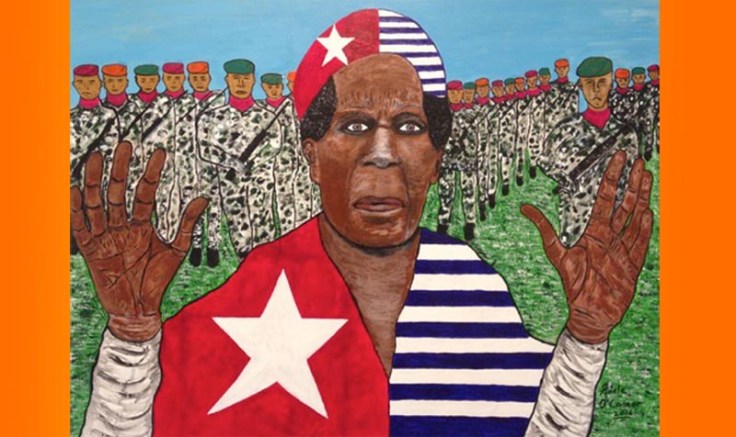
Lukisan karya Adele O’Conner berjudul Mama Yosepha versus the TNI - Katalog pameran
Lukisan karya Adele O’Conner berjudul Mama Yosepha versus the TNI – Katalog pameran

Jakarta, Jubi – Benny Wenda, juru bicara United Liberation Movement for West Papua (ULMWP) akan mengunjungi Aotearoa, Selandia Baru dari tanggal 8 hingga 16 Mei mendatang.

Dilansir voxy.co.nz (19/4) kunjungannya kali ini selain untuk tetap meminta dukungan keadilan politik dan sosial terhadap rakyat West Papua, juga secara khusus hendak meminta agar pemerintah Selandia Baru mendukung inisiatif bangsa-bangsa Pasifik yang mendorong isu West Papua di PBB.

Terakhir kunjungannya ke Selandia Baru pada tahun 2013, Wenda sempat dicekal oleh Juru Bicara Parlemen David Carter untuk tidak berbicara di hadapan parlemen negeri itu.

Namun saat ini kelompok-kelompok yang cukup beragam hingga anggota-anggota parlemen lintas partai mulai makin luas mendukung West papua dan memberikan jaminan bahkan sambutan hangat terhadap tokoh pergerakan kemerdekaan West Papua itu.

Wenda akan disambut di Orakei Marae saat ketibaannya dan diundang resmi untuk memberikan sambutan pada Ngati Whatua Orakei whanau. Sejumlah jadwal pertemuan yang cukup padat menantinya di Auckland, Wellington, Christchurch, dan menyusul Te Tai Tokerau.

Seperti diketahui, tujuh bangsa-bangsa Pasifik di negara Vanuatu, Kepulauan Solomon, Tonga, Tuvalu, Palau, Kepulauan Marshall, dan Nauru secara kolektif menyarakan situasi hak azasi manusia di West Papua di hadapan sidang umum PBB tahun lalu serta sidang Dewan HAM PBB baru-baru ini.

Hal ini telah memulai momentum baru bagi keterlibatan badan-badan tertinggi PBB untuk menetapkan kemungkinan resolusi baru bagi hak-hak rakyat West Papua.

Diharapkan pemerintah Selandia Baru tidak berdiam diri dan berada dipinggiran, melainkan member dukungan kepada bangsa-bangsa Pasifik tersebut untuk mendorong isu West Papua dan membantu perjuangan keadilan di wilayah itu.

Wenda akan bertemu gelombang aktivis peduli West Papua, Maori dan Pasifika, yang baru di berbagai wilayah Selandia Baru, termasuk anggota-anggota International Parliamentarians for West Papua (IPWP).(*)

Indonesia is losing Melanesia

Indonesia is losing MelanesiaVanuatu Dailypost –  – On Sunday last week, New Zealand-based analyst Jose Sousa-Santos commented on Twitter that “Indonesia’s attempt at buying support from the Pacific region seem to have little to no impact on Melanesia’s stance on [West] Papua.

”That’s one of those pesky observations that’s neither entirely right nor entirely wrong. The truth is: Indonesia is winning almost every battle… and still losing the fight.

Conventional wisdom used to be that Indonesia had built an impregnable firewall against Melanesian action in support of West Papuan independence. Its commercial and strategic relationship with Papua New Guinea is such that PNG’s foreign affairs establishment will frankly admit that their support for Indonesia’s territorial claims is axiomatic. Call it realpolitik or call it timidity, but they feel that the West Papuan independence doesn’t even bear contemplating.

Widespread grassroots support and its popularity among progressive up-and-comers such as Gary Juffa don’t seem to matter. As long as Jakarta holds the key to economic and military tranquillity, Port Moresby’s elites are content to toe the Indonesian line.

The situation in Suva is similar. Fiji First is naturally inclined is toward a more authoritarian approach to governance. And it seems that the military’s dominance of Fiji’s political landscape dovetails nicely with Indonesia’s power dynamic.

Many argue that Fiji’s relationship is largely mercenary. It wouldn’t flourish, they say, if the path to entente weren’t strewn with cash and development assistance. That’s probably true, but we can’t ignore the sincere cordiality between Fiji’s leadership and their Indonesian counterparts. The same seeds have been planted in Port Vila, but they haven’t take root.

Until recently, Indonesia’s ability to derail consensus in the Melanesian Spearhead Group has ensured that West Papuan independence leaders lacked even a toehold on the international stage. In the absence of international recognition and legitimacy, the Indonesian government was able to impose draconian restrictions on activists both domestically and internationally.

Perhaps the most notorious example was their alleged campaign to silence independence leader Benny Wenda, who fled Indonesia after facing what he claims were politically motivated charges designed to silence him. He was granted political asylum in the United Kingdom, but a subsequent red notice—usually reserved for terrorists and international criminals—made travel impossible.

In mid-2012, following an appeal by human rights organisation Fair Trials, Interpol admitted that Indonesia’s red notice against Mr Wenda was ‘predominantly political in nature’, and removed it.

Since then, however, activists have accused Indonesia of abusing anti-terrorism mechanisms to curtail Mr Wenda’s travels. A trip to the United States was cancelled at the last moment because American authorities refused to let him board his flight. It was alleged that an Indonesian complaint was the source of this refusal.

Independence supporters claim that Indonesian truculence has also led to Mr Wenda being barred from addressing the New Zealand parliament. His appearance at the Sydney opera house with human rights lawyer Jennifer Robinson received a standing ovation from the 2500 audience members… and an irate protest from Indonesian officials.

Not all of Indonesia’s efforts are overt. Numerous commentators made note of the fact that Vanuatu’s then-foreign minister Sato Kilman visited Jakarta immediately before his 2015 ouster of Prime Minister Joe Natuman. Mr Natuman, a lifelong supporter of West Papuan independence, was a stalwart backer of membership in the MSG for the United Liberation Movement for West Papua, or ULMWP. He was unseated bare weeks before the Honiara meeting that was to consider the question.

Mr Kilman, along with Indonesian officials, vehemently deny any behind-the-scenes collusion on West Papua.

But even with Vanuatu wavering, something happened at the June2015 Honiara meeting that surprised everyone. Solomon Islands PM Manasseh Sogavare stage-managed a diplomatic coup, a master class in Melanesian mediation.

In June of 2015, I wrote that the “Solomonic decision by the Melanesian Spearhead Group to cut the baby in half and boost the membership status of both the ULMWP and Indonesia is an example of the Melanesian political mind at work. Valuing collective peace over individual justice, group prosperity over individual advancement, and allowing unabashed self-interest to leaven the sincerity of the entire process, our leaders have placed their stamp on what just might be an indelible historical moment.

”Since then, the sub-regional dynamic has undergone a transformation. Mr Kilman’s administration suffered a collapse of unprecedented proportions following corruption charges against more than half of his government. The resulting public furore seems—for the moment at least— to have catalysed a backlash against venality and personal interest.

If the rumours are true, and Indonesia did have a hand in Mr Kilman’s palace coup, the tactic hasn’t worked since. A pair of no confidence motions—not very coincidentally on the eve of yet another MSG leaders’ summit—failed even to reach the debate stage.

Kanaky’s support for West Papuan Independence has never wavered, but given their semi-governmental status, and their staunch socialist platform, Jakarta would be hard pressed to find a lever it could usefully pull.

For his part, Sogavare has survived more than one attempt to topple him. Hi sown party leaders explicitly referenced his leadership on the West Papuan question when they tried to oust him by withdrawing their support.

In a masterful—and probably unlawful—manoeuvre, Mr Sogavare retained his hold on power by getting the othercoalition members to endorse him as their leader. His deft handling of the onslaught has raised him in the estimation of many observers of Melanesian politics. Some claim that his dodging and weaving has placed him in the first rank of Melanesia’s political pantheon.

In Vanuatu as well, once bitten is twice shy. Prime Minister Charlot Salwai raised eyebrows when he not only met with the ULMWP leadership, but accepted the salute of a contingent of freedom fighters in full military regalia. The meeting took place at the same moment as MSG foreign ministers met to consider rule changes that, if enacted, will almost inevitably result in full membership for the ULMWP.

The MSG has traditionally operated on consensus. If these rule changes pass muster, this will no longer be the case. It is a near certainty that Indonesia will do its utmost to avert this.

Mr Sogavare has demonstrated an inspired approach to the situation: If the MSG won’t stand for decolonisation in the Pacific, he asks, what is it good for? This rhetoric has become a chorus, with senior politicians in Vanuatu and Kanaky joining in.

Mr Sogavare is, in short, embarked on his own march to Selma. And he is willing to allow the MSG to suffer the slings and arrows of Indonesian opprobrium. He is, in short, willing to allow the MSG to die for their sins.

Whether we agree or not with the independence campaign, there is no denying the genius of Mr Sogavare’s ploy. His willingness to sacrifice the MSG for the cause takes away the one lever that Indonesia had in Melanesia.

His key role in orchestrating an end run around the Pacific Islands Forum’s wilful silence is another trademark move. When human rights concerns were simply glossed over in the communiqué, he and other orchestrated a chorus of calls for attention to the issue in the UN general assembly.

Manasseh Sogavare and his Pacific allies have found a strategy that is making the advancement of the West Papuan independence movement inexorable. As Ghandi demonstrated in India, as with Dr King’s campaign for civil rights showed again and again, anything less than defeat is a victory.

Without losing a single major battle, Indonesia is—slowly, so slowly—being forced from the board.

Sogavare: Demi West Papua, MSG akan luaskan dukungan

PM Kepulauan Solomon, Manasseh Sogavare saat bertemu ULMWP di Honiara, awal tahun 2016 - Dok. Jubi
PM Kepulauan Solomon, Manasseh Sogavare saat bertemu ULMWP di Honiara, awal tahun 2016 – Dok. Jubi

Jayapura, Jubi – Perdana Menteri Kepulauan Solomon, Manasseh Sogavare menegaskan bahwa Melanesia Spearhead Group (MSG) akan mengikutsertakan Mikronesia, Polinesia, dan negeri-negeri Afrika untuk berjuang melawan pelanggaran HAM di West Papua.

Sogavare mengungkapkan hal tersebut di hadapan Parlemen Kepulauan Solomon ketika ditanyakan oleh Pemimpin Oposisi, Jeremiah Manele, Kamis, (15/12) seperti dilansir Solomon Star Jum’at (16/12/2016).

Menurut Sogavare, Papua Nugini dan Fiji sudah jelas memilih jalan berbeda atas persoalan West Papua dan tidak berkeinginan mengikuti tujuan dan pendirian MSG.

“PNG itu berbatasan langsung dengan Indonesia dan memilih lebih berhat-hati, sedangkan Fiji sudah punya hubungan yang kokoh dengan Indonesia,” ujar Sogavare.

Atas dasar itulah, lanjutnya, Kepulauan Solomon, Vanuatu, dan Kaledonia baru akan mengikutsertakan negeri-negeri Mikronesia dan Polinesia serta kelompok non aliansi di Afrika,” ujarnya.

Lebih lanjut Sogavare menegaskan pemerintahannya akan terus melanjutkan diplomasi terkait isu West Papua melalui pengiriman utusan khusus untuk berkonsultasi dan menjalin hubungan di negeri-negeri Pasifik.

“Kami kirimkan utusan untuk bicara dengan para pemimpin di dalam lingkaran kami sendiri dan keluar Melanesia,” ujar Ketua MSG tersebut.

Rex Horoi adalah utusan khusus Kepulauan Solomon untuk persoalan West Papua. Sogavare mengatakan masa tugas utusan tersebut akan berakhir setelah dua tahun periode kepemimpinannya di MSG.

Namun, Sogavare menghendaki persoalan ini dibicarakan di Parlemen untuk mencari cara agar tugas-tugas (penanganan West Papua) tersebut bisa tetap berlanjut walau kepemimpinannya di MSG selesai.

Indonesia sebaiknya memahami

Jeremiah Manele, Pemimpin Oposisi parlemen Solomon di kesempatan itu mengakui bahwa persoalan West Papua adalah isu kompleks karena keterkaitan antara pelanggaran HAM dan penentuan nasib sendiri.

Namun, lanjutnya, inilah pertama kalinya Pemerintah Solomon mengambil langkah proaktif terkait kebijakan ini.

“Penting sekali bagi Indonesia untuk memahami posisi kita,” kata Manele sambil berharap bahwa konsultasi dan jalinan hubungan dua arah di Pasifik tersebut dapat berlanjut. “Hal itu bisa membantu Indonesia mengerti darimana asal usul kita,” tambahnya.

Manele juga mendukung kebijakan pemerintah Kepulauan Solomon terhadap West Papua dengan menambahkan bahwa pendekatan yang sudah dilakukan sekarang tidak kontra produktif.

“Saya kira sebaiknya memang pendekatan konsultatif dan lebih dua arah harus kita lanjutkan terkait persoalan ini, agar tidak kontra produktif,” ujarnya.

Manele juga mendukung gagasan melanjutkan kebijakan ini di Parlemen setelah periode Horoi berakhir.

Awal November lalu sebuah pernyataan sikap dari Kelompok Oposisi Parlemen sempat menggugat Perdana Menteri Sogavare atas kebijakannya yang dinilai sangat konfrontatif terkait West Papua. Oposisi menghendaki perubahan pendekatan terkait isu tersebut.

“Kita semua peduli masalah pelanggaran HAM di West Papua. Namun ada cara lain menangani isu ini ketimbang mengambil pendekatan konfrontatif seperti yang dilakukan Perdana Menteri. Itu tak saja sudah mengintervensi kedaulatan Indonesia, namun juga urusan domestik negara itu,” ujar pernyataan tersebut.

Namun, dengan pernyataan tanggapan Jeremiah Manele, pemimpin oposisi, Kamis lalu itu di hadapan parlemen, tampaknya Pemerintah Solomon dan Parlemen pada akhirnya melanjutkan komitmen mengadvokasi persoalan pelanggaran HAM dan penentuan nasib sendiri West Papua dengan pendekatan yang lebih partisipatif.(*)

West Papuan Liberation Movement lobbies at the UN

RadioNZ – United Liberation Movement for West Papua leaders have been in New York this week, lobbying at the United Nations about their self-determination struggle in Indonesia.

United Nations, New York.
United Liberation Movement for West Papua leaders have been lobbying at the United Nations in New York. Photo: RNZ / Alexander Robertson

The Liberation Movement’s secretary-general Octo Mote and spokesman Benny Wenda said they have been meeting with officials from several UN departments and various embassies.

They have been talking about their hopes for a new internationally-supervised self-determination vote for the indigenous people of Indonesia’s Papua region.

Mr Wenda said the lobbying gives them an opportunity to correct misinformation spread internationally about Papua by Jakarta and people within the UN system appreciate the discussions.

“We’re also updating the current situation (on the ground in Papua) and this is like… that West Papua has been neglected for the last fifty years, so they’re surprised that this has been going on. So there’s a number of diplomats we met in New York.”

Mr Wenda said that taking the matter to the UN is part of the new phase of their struggle.

He said the combined issues of human rights abuses in West Papua, and Papuans’ self-determination struggle, are considered an issue for the whole Pacific islands region, and that Pacific countries are increasingly supportive.

Jakarta said Papua’s incorporation into Indonesia is final and that human rights abuses in the region are being addressed.

It also said it is devoting significant resources into creating better conditions for economic development at grassroots levels in West Papuan communities.

However, despite Jakarta’s sensitivity to it, there have been various diplomatic gains made this year in advancing West Papua as an issue for the UN to address.

This includes the call by the International Parliamentarians for West Papua for an independence referendum in Papua, and the rise of the Pacific Coalition for West Papua.

It is still unclear if the melanesian Spearhead Group will accept the Liberation Movement’s bid to be a full member in the group – a decision could be made before Christmas, according to the MSG secretariat.

However Mr Wenda said Papuans were greatly encouraged by the unprecedented call by seven Pacific states at the UN General Assembly in September for the world community to take action about alleged historical and current injustices in Papua.

Ini pidato 1 Desember Sekjen ULMWP

Ilustrasi - Dok. Jubi
Ilustrasi – Dok. Jubi

Papua……Merdeka, Merdeka,Merdeka

Seluruh rakyat bangsa Papua Barat yang tersebar di seluruh dunia, khususnya yang hari ini kumpul di Lembah Agung Balim-Jantung Papua, Wilayah Adat Lani Pago. Saya atas nama pribadi dan keluarga serta seluruh pengurus United Liberation Movement for West Papua (ULMWP)baik yang di luar negeri maupun di tanah air saya hendak menyambut dengan salam khas dari Wilayah ini yang kini popular di seluruh dunia, waa….waa… waaa….. waaaa.

Hari ini, sebagaimana biasa setiap tanggal 1 December kita berkumpul untuk rayakan peristiwa yang terjadi 54 tahu lalu di Holandia Baru. Yakni saat bendera bintang kejora dikibarkan untuk pertama kali dan lagu kebangsaan Hai Tanahku Papua dinyanyikan serta simbol nasionnal lainya seperti nama bangsa dengan wilayahnya di umumkan. Peristiwa ini dilihat pula sebagai saat lahirnya sebuah bangsa baru bernama Papua Barat. Tentu saja pandangan demikian itu ada benarnya, karena kalau saja Belanda dan bangsa barat tidak menghianati apa yang mereka wartakan, Bangsa Papua semestinya merupakan negara pertama yang merdeka dari berbagai colonial eropa yang menguasai bangsa bangsa di wilayah Melanesia, Polinesia dan Micronesia.

Sayang, sejarah berputar kearah yang berbeda. Negara Kolonial Belanda keluar denga watak aslinya sebagai bangsa pedagang, mereka sama sekali tidak perdulikan dengan nasib dan masa depan bangsa Papua. Mereka sama sekali tidak melibatkan pemimpin resmi bangsa Papua yang sudah mereka siapkan selama kurang lebih 10 tahun sebelumnya. Belanda dan Amerika sama sekongkol untuk jual bangsa Papua kepada colonial baru bernama Indonesia melalui perjanyian New York yang di tanda tangani di markas besar PBB di kota New York pada tanggal 15 Agustus 1962. Perjanjian ini merupakan lebih dari sebuah transaksi perbudakkan.  Karena yang di jual adalah bukan saja kebebasan dari 1025 orang yang di ditodong dengan moncong senjata melainkan yang mereka perdagangkan adalah nasib dan masa depan sebuah bangsa: bangsa Papua. Sebagai imbalannya, Belanda menikmati keuntugan ekonomi dari berbagai perdagangan hingga hari ini dan Indonesia membayar Amerika dengan menyerahkan gunung emas Nemangkawi dari tanah papua yang di tambang oleh perusahaan raksasa Freeport MacMoRan.

Saudara saudari rakyat bangsa Papua yang saya hormati. Setiap kali kita memandang bintang kejora dalam apapun bentuknya senentiasa memperkuat sentiment kebangsaan kita. Setiap kali kita menyanyikan lagu Hai Tanahku Papua, membakar rasa cinta akan tanah air kita, Tanah Papua. Semua itu merupakan darah yang mengalir dalam diri setiap anak negeri yang terus bahu membahahu berupaya mewujudkan negara Papua Barat. Kemerdekaan itu diperjuangkan silih berganti oleh berbagai kepemimpinan nasional melalui aneka wadah nasional yang diawali oleh Komite Nasional Papua Barat (1961), Kongres Rakyat Papua II (2000)  hingga United Liberation Movement for West Papua (2014).

Sekali lagi kalau dalam Kongres Papua I menghasilkan symbol-simbol nasional maka dalam kongres Papua kedua, rakyat papua melalui resolusinya memutuskan bahwa sejarah integrasi Papua ke dalam wilayah Republik Indonesia di luruskan. Yakni bahwa (aa) rakyat Papua Barat adalah berdaulat sebagai sebuah bangsa sejak 1 Desember 1961, bahwa (bb) rakyat bangsa Papua menolak perjanjian new york baik dari sisi moral maupun hukum karena di susun tanpa melibatkan perwakilan bangsa papua dan bahwa (cc) rakyat bangsa Papua melalui Kongres II menolak hasil pepera (hak penentuan nasib sendiri) karena di laksanakan secara paksa, penuh intimidasi dan pembunuhan secara sadis, disertai aneka kejahatan militer dan berbagai macam perilaku tidak tidak bermoral yang bertentangan dengan prinsip-prinsip hak asasi manusia. Dan karena itu melalui Kongres II ini rakyat bangsa Papua menuntut PBB untuk membatalkan resolusi  2504, 19 November 1969.

Dalam perjalanan sejarah bangsa Papua yang demikian ini, ULMWP sadar akan tugasnya dalam mewujudkan kedaulatan bangsa. Tantangannya adalah bagaimana bisa memastikan dukungan dari (paling tidak) 1 per tiga jumlah anggota Negara Anggota PBB. Untuk itu, ULMWP merobah pola diplomasi, tidak seperti di tahun 60an dan sesudahnya yakni lobbynya tidak lagi bertolak dari Papua ke dunia barat dan Africa. ULMWP focuskan dukungan dari negara negara di kawasan Pasifik. Dalam dua tahun pertama, ULMWP memperkuat basis dukungan di seluruh kawasan ini melalui jaringan adat, NGO, Gereja adan kalangan terdidik serta politisi. Secara kelembagaan, ULMWP menjadi anggota oberserver dan kini dalam proses menjadi anggota penuh MSG. Dalam tahun kedua dukungan itu meningkat dari wilayah Melanesia kepada polinesia dan Micronesia melalui wadah baru bernama Pasifik Island Coalition on West Papua atau PICWP yang dibentuk atas inisiative dari Perdana Menteri Solomon Island, Manase Sogovare yang juga adalah Ketua MSG.

Darisi sisi dukungan politik, Lobby ULMWP berhasil memasukan masalah Papua menjadi salah satu masalah utama di kawasan pasifik. Dalam sidang tahunan (2015) Negara Negara Anggota Forum Pasifik|PIF memutuskan untuk mengirim tim pencari fakta ke papua. Indonesia menolak dan keputusan ini tidak bisa di wujudkan tetapi secara politik kita menang. Dalam sidang tahun ini (2016) pimpinan Negara anggota PIF dalam Komunike kembali memutuskan bahwa masalah papua akan selalu menjadi agenda pimpina dalam setiap pertemuan tahunan. Selain itu, tidak kurang dari 7 Negara bersama sama mengangkat masalah Papua. Isinya bukan saja mempersoalkan aneka masalah pelanggaran hak asasi Manusia. Lebih daripada itu mereka minta tanggungjawab PBB untuk intervensi termasuk menggugat tanggungjawab dalam membuka kembali menguji keabsahaan daripada perjanjian new York and pelaksanaannya.

Saudara-saudari rakyat bangsa Papua. Kerja keras anggota ULMWP pun tidak hanya terbatas di kawasan pasifik tetapi juga terjadi di Indonesia. Rakyat Indonesi terutama di  kalangan terdidik sudah mulai akui aneka kejahatan yang dilakukan pemerintah dan militer Indonesia terhadap rakyat papua barat. Lebih daripada itu dalam minggu ini kita baru menyaksikan dideklarasikannya Front Rakyat Indonesia untuk West Papua (FRI-West Papua). Gerakan rakyat Indonesia inipun kini meningkat kepada dukungan terhadap hak bangsa Papua Barat untuk merdeka sebaga bangsa berdaulat. Sementara itu, rakyat berbagai kelompok orang Papua di Belanda pun bangkit untuk menuntut dalam sebuah gugatan hukum tanggungjawab Belanda yang lalai dalam melindungi kepentingan rakyat Papua. Dalam proses gugatan secara hukum tersebut, sejawak awal mereka melakukan konsultasi dengan United Liberation Movement for West Papua. Dan akhirnya perlu dipahami bahwa kebangkitan negara negara di pasifik ini membuat tidak sedikit negara anggota PBB dari berbagai belahan bumi lainnya yang terpukau dan mengikuti secara serius setiap perkembangan yang terjadi di Indonesia dan Papua.

Kita patut bersyukur dan berterima kasih kepada Tuhan atas semua kemajuan diatas. Karena semua terjadi sebagai buah dari kasih karuniaNya. Selain itu, dibalik kemajuan di atas kini kita dihadapkan pada tantangan yang semakin hari semakin berat. Karena itu ULMWP memerlukan dukungan doa dan dana dalam menunjang aneka lobby politik di berbagai belahan bumi. Karena sejak bulan September 2016 focus lobby sudah bergeser dari Pasifik kepada dunia. Focus utama ULMWP bukan lagi semata mata memastikan keanggotaanya di MSG melainkan bagaimana membentuk Kualisi Pendukung Papua Barat di berbagai belahan bumi lainnya. Dukungan ini bukan sekedar dalam bentuk sekali dua kali pernyataan politik tetapi dukungan yang konsisten termasuk ikut mencari dukungan anggota PBB lainnya. Semua orang Papua perlu bangkit untuk lobby dengan caranya sendiri berbagai maam negara di dunia darimana pun kita berada. Kasih tahu kepada mereka bahwa kami mohon suara dukungan mereka dalam ketika anggota PBB bersama sama membatalkan resolusi 2504 tahun 1969 dan membiarkan bangsa papua hidup berdaulat secara damai.

Allah Bangsa Papua dan leluhur moyang kita, seluruh darah dari pejuang terdahulu kita memberkati kita sekalian.

Papua…..Merdeka, Merdeka,Merdeka (*)

West Papua: Australia’s Neighbour Under Siege


Indonesian police arrested 106 West Papuans praying in a park in the coastal city of Sorong in West Papua last Saturday. The group was celebrating the eighth anniversary of the West Papua Committee (KNPB): a non-violent organisation campaigning for self-determination.

Authorities said the activists were taken to the Sorong police station as they’d been calling out pro-independence slogans. After questioning, most were released, but seven were detained – accused of treason and provocation.

West Papuan independence leader Benny Wenda (pictured) said it was no surprise Indonesian police targeted peaceful protesters as it’s a common occurrence in the region.

Mass arrests

“Over 4,000 West Papuan people have been unlawfully arrested this year alone just for peacefully protesting,” Mr Wenda told Sydney Criminal Lawyers. He added that the government is trying to prevent the world from finding out about “the secret genocide and illegal occupation in West Papua.”

Thousands of people were arrested in early May this year, when Indonesian security forces cracked down on rallies held across West Papua.

The protests were in support of the United Liberation Movement for West Papua – a coalition of independence movements formed in December 2014 – and their bid to gain full membership in the Melanesian Spearhead Group.

The Indonesian occupation

Since Indonesia began its occupation of the restive region 53 years ago, an estimated 500,000 local people have been killed under harsh military and police repression.

Indonesian president Joko Widodo had promised improvements in West Papua at the time of his election in July 2014. But Indonesia’s leading human rights organisation announced in May this year that human rights abuses are as rampant as they were under previous governments.

“We are kept like prisoners in our own land, unable to freely express our identity or make choices over our own future,” said Wenda, international lobbyist for the Free West Papua Campaign. He describes the Indigenous people as living in constant fear of being “the next ones to be killed.”

Transmigration

And West Papuans are fast becoming a minority in their own land. The government’s decades-old transmigration program – that resettles people from highly populated islands like Java to low-density areas – is marginalising the local people, both socially and economically.

Wenda has pointed out that in 1971 West Papuans made up 96 percent of the population, but today they only make up 49 percent of the people living in the region.

And despite claims by a government official earlier this year that the policy was stopped three years ago, this isn’t the case.

In October 2014, then Indonesian minister of villages and transmigration, Marwan Jafar, announced the government’s transmigration program would be continuing and further stated in June last year that because of its success, it would be expanding.

And it’s clear the boats are still arriving.

International recognition

However, the West Papuan campaign has been gaining traction in the international arena over recent months.

At the 71st UN General Assembly held in New York in September this year, seven Pacific Island nations called for immediate global attention to human rights abuses in West Papua.

As Wenda put it, “this signals a major turning point as it is the first time that we have had so much international support at a UN level for our struggle since the 1960s.”

And the United Liberation Movement for West Papua (ULMWP) could be given full membership into the Melanesian Spearhead Group (MSG) in December this year. The MSG is an intergovernmental organisation of Melanesian states promoting economic growth.

The ULMWP has had observer status in the group since 2014, but full membership would see West Papua recognised as a political identity by foreign nations.

This prospect rattles Jakarta. Indonesia has been recognised as an associate member of MSG since June last year.

At the Indian Ocean Rim Association ministerial meeting in Bali last month, Indonesian defence minister Ryamizard Ryacudu asked Australian foreign minister Julie Bishop to caution MSG member countries against allowing the West Papua coalition membership into their group.

The defence minister warned Ms Bishop that the West Papua issue could pose a “stumbling block” to closer bilateral ties between the two nations.

The Act of NO Choice

In 1962 the New York Agreement resulted in the United Nations assuming administration of West Papua – then known as West New Guinea – after former coloniser the Netherlands left.

The agreement allowed Indonesia to assume occupation of the territory in 1963 on the proviso that a referendum was carried out to give West Papuan people a choice between remaining part of Indonesia or becoming an independent nation.

Following widespread resistance to Indonesian rule, the UN brokered Act of Free Choice referendum was held in 1969. However, the Indonesian military selected only 1,062 West Papuan representatives to vote and under threat of death, all of them voted to stay with Indonesia.

Calls for a just vote

Wenda refers to the referendum as the Act of NO Choice. And today, he’s calling for an internationally supervised vote on independence. “We have the fundamental right to self-determination that was promised to us by the UN, but stolen by Indonesia,” he outlined.

On May 3 this year, he hosted a meeting of the International Parliamentarians for West Papua at the Houses of Parliament in London. The Westminster Declaration for an internationally supervised vote for self-determination in West Papua was signed.

Those present at the meeting included the Tongan prime minister Akilisi Pōhiva and leader of the British Labour Party Jeremy Corbyn.

The independence leader

A Nobel Peace Prize nominee, Benny Wenda fled West Papua after being imprisoned by Indonesian authorities on charges he states were politically motivated because of his involvement in the independence movement. He was granted political asylum by the British government in 2003.

“As the indigenous Melanesian people in a Melanesian country our right to sovereignty is guaranteed to us,” said Wenda, who now lives in Oxford. “We call upon the world to please not forget us, but to help us in our campaign to be free people at last.”

Although the Indonesian government split West Papua into two provinces in 2002, this article refers to the whole region as West Papua, as the indigenous people do.

Didukung Negara-negara Pasifik, Gerakan Papua Merdeka Kian Lantang

Didukung Negara-negara Pasifik, Gerakan Papua Merdeka Kian Lantang
Pemimpin Gerakan Pembebasan Papua, Benny Wenda, mendesak Pemerintah Indonesia, membuka akses yang lebih ke Papua Barat. | (bennywenda.org)

JAKARTA –Sindonews –  Gerakan Pembebasan Papua atau Papua Merdeka semakin lantang mendesak Pemerintah Indonesia untuk membuka akses ke Papua Barat terkait isu pelanggaran HAM. Gerakan ini bereaksi setelah negara-negara Kepulauan Pasifik di Sidang Umum PBB memberi dukungan bagi Papua Barat untuk menentukan nasibnya sendiri.

Pemerintah Indonesia mengecam sikap enam negara di Kepualuan Pasifik, yakni Vanuatu, Solomon Island, Tonga, Nauru, Marshall Island dan Tuvalu, karena berbicara dengan kurangnya pemahaman mereka tentang Papua. Indonesia melalui diplomatnya di PBB, Nara Masista Rakhmatia, menyebut negara-negara itu mendukung kelompok separatis dan teroris di Papua.

“Pernyataan negara-negara itu benar-benar melanggar tujuan piagam HAM PBB dan melanggar prinsip hukum internasional tentang relasi persahabatan antarnegara serta kedaulatan dan integritas teritori suatu negara,” kata Nara dalam pidato perlawanannya terhadap enam pemimpin Negara Pasifik di forum PBB.

“Saya ulangi, itu sudah melanggar kedaulatan dan integritas teritori suatu negara,” lanjut Nara, yang kesal bahwa negara-negara Kepulauan Pasifik sudah ikut campur urusan dalam negeri Indonesia soal Papua Barat.

Baca:
Usik Indonesia, Negara-negara Pasifik Ikut Campur soal Papua Barat

Pemimpin Gerakan Pembebasan Papua, Benny Wenda, melalui seorang juru bicara mengatakan, selalu ada respons defensif khas Indonesia setiap kali dukungan internasional untuk hak-hak orang Papua muncul.

”Mereka selalu berteriak. Bahkan di London, jika kita mengadakan acara di London, dalam pertemuan parlemen bagian dari dunia, mereka selalu berteriak,” kata Benny Wenda.

”Dan bagi kami, itu bukan hal baru. Jadi saya pikir waktu (telah tiba) bagi Pemerintah Indonesia untuk membuka akses ke Papua Barat,” katanya lagi, seperti dikutip radionz.co.nz, Sabtu (1/10/2016).

Desakan dari gerakan itu telah mengabaikan fakta bahwa sejak tahun lalu, Pemerintah Indonesia telah membuat beberapa langkah untuk memberikan lebih banyak akses bagi jurnalis asing ke Papua.

Langkah Indonesia itu dianggap Benny Wenda belum cukup. Menurutnya, akses ke Papua Barat juga harus diberikan untuk organisasi kemanusiaan dan HAM terkemuka internasional seperti Komite Palang Merah Internasional dan Amnesty International.

Melanesian Solidarity Summit Today

Melanesian Solidarity Summit Today

The Vanuatu West Papua Association is hosting a “Wantok Summit” for Free West Papua Civil Society Organization support group in the Melanesian region of Vanuatu, Solomon Islands, Kanaky, Fiji, Papua New Guinea and West Papua at the Vanuatu Christian Council (VCC) office, 8.30 am today.

The Summit is being held in parallel with the MSG Leader’s Summit in Port Vila which the Daily Post understands will take place on the 3rd and 4th of October 2016. The theme for the Melanesian Associations in support for West Papua full membership in the MSG is “Melanesian Solidarity”.

According to the Chairman of the Vanuatu West Papua Association, Pastor Allan Nafuki, the three-day summit will focus on the issues of Defining “Melanesia; its cultures, language heritage, ethnicity, Impact of colonization on Melanesian solidarity, how Melanesian countries are advocating for Melanesian Solidarity, Restoring the Melanesian Solidarity and what can Melanesians do together in this regard and winding up the Summit with a Melanesian Government heads Reconciliation customary ceremony on Saturday to be facilitated by the Vanuatu Malvafumauri National Council of Chiefs.

Some prominent Melanesian figures behind the support for West Papua full MSG membership include; Benny Wendy, Spokesman for the United Liberation Movement for West Papua, Damson Faisi, Chairman of the Solomon Islands in Solidarity for West Papua, Joko Peter Kassey, of the Free West Papua –PNG Chapter and West Papua Refugee Relief Association, Inco, as others from Fiji and Papua New Guinea were expected to be in Port Vila for the summit.

Without commenting further, the Chairman of the Vanuatu West Papua Association Pastor Allan Nafuki, said a press communiqué will be issued at the end of the summit on the resolutions.

ligo@dailypost.vu

Pacific West Papua 8 Sep 2016 Indonesia obstructing Papua representations – ULMWP

RNZ – Indonesia is impeding Pacific regional efforts to pursue justice for human rights abuses against Papuans the United Liberation Movement for West Papua says.

Criticism from the Movement’s ambassador for the Pacific Islands region, Amatus Douw, comes as Papua is to be discussed at the Pacific Islands Forum leaders summit in the Federated States of Micronesia.

The leaders summit began this morning in Pohnpei after the Forum secretary-general Dame Meg Taylor said earlier this week that the region could not avoid addressing the issue of West Papua.

z


At last year’s summit, Forum leaders resolved to push Indonesia to allow a fact-finding mission on West Papua from where reports of rights abuses against the indigenous Melanesians continue to filter out.

After a year and no movement on this front, Dame Meg said Jakarta has indicated it would not welcome such a mission, and was uncomfortable with the term “fact-finding.”

Mr Douw said it was not a failure on the Forum’s part but a sign of the defensiveness of Indonesia which he accused of “consistently trying to run away from its colonialism and human rights atrocities”.

Solomons PM Manaseh Sogavare and leaders of the United Liberation Movement for West Papua (ULMWP)

Members of the United Liberation Movement for West Papua (including Amatus Douw bottom left) with Solomon Islands prime minister Manaseh Sogavare (center, blue shirt) Photo: Facebook

The Australia-based envoy believes a direct approach to the United Nations is required.

Indonesia, he said, was “now using weapon to killing young Papuans but you will never kill international law and UN charter on self-determination, freedom and independence”.

The Indonesian embassy in New Zealand admitted Indonesia still faced obstacles in protecting the human rights of her citizens, but said Jakarta was addressing rights abuses.

It said Papua’s incorporation into Indonesia in the 1960s was sanctioned by the United Nations and was final.

Jayapura port, Papua province, Indonesia.

Jakarta says it is advancing economic development in Papua region to help improve living conditions for West Papuans. Photo: RNZI / Koroi Hawkins

At a pre-Forum workshop in Pohnpei, Dame Meg identified that regional leadership was partly divided over how to approach the Papua issue, but noted that people in Pacific nations felt very strongly about it.

Mr Douw echoed Dame Meg’s comments that the nascent Pacific Coalition for West Papua, including both government and civil society representatives, was gaining momentum in its bid to take the Papua issue to the UN level.

On the eve of the Forum summit, he urged Australia and New Zealand leaders to acknowledge their “moral responsibility” and get on board the coalition.

Up ↑

Wantok COFFEE

Organic Arabica - Papua Single Origins

MAMA Minimart

MAMA Stap, na Yumi Stap!

PT Kimarek Aruwam Agorik

Just another WordPress.com site

Wantok Coffee News

Melanesia Foods and Beverages News

Perempuan Papua

Melahirkan, Merawat dan Menyambut

UUDS ULMWP

for a Free and Independent West Papua

UUDS ULMWP 2020

Memagari untuk Membebaskan Tanah dan Bangsa Papua!

Melanesia Spirit & Nature News

Promoting the Melanesian Way Conservation

Kotokay

The Roof of the Melanesian Elders

Eight Plus One Ministry

To Spread the Gospel, from Melanesia to Indonesia!

Koteka

This is My Origin and My Destiny