Pursuing freedom for West Papua

John Gratton Wilson has taken his message about the plight of the West Papuan people to the world. KATRINA LOVELL reports about his connection to a country he says few people know about.

Every day Warrnambool’s John Gratton Wilson will put on one of the 10 T-shirts in his drawer that contain slogans calling for freedom for West Papua.

Even if it is hidden under his jumper in winter, you can be sure he is probably wearing one.

The message emblazoned on the T-shirt sits right across his chest in a symbolic gesture towards a topic that he holds close to his heart. John is passionate about the issue and he is not afraid to tell anyone who will listen. “Some people call it an obsession,” he said. “I’m a 71-year-old activist.

“Most of the world wouldn’t have a clue where West Papua is.”

John will wear one of those T-Shirts, no matter where in the world he might be.

“I’ll go to other parts of the world to let the Indonesians know that we’re not happy,” he said. “I’ve been to Vanuatu, I’ve been to New Zealand, I’ve been to Washington, been to Prague.

“I go to the Indonesian embassies in those countries, fly the flag and wear the T-shirt.”

He said the T-shirts had attracted many positive reactions from the strangers he will pass by while on his travels, whether that be in Spain or Cuba. “I will often get the thumbs up,” he said.

A flag-rasing ceremony held in Warrnambool on December 1, 2017.

Just three months ago when he was in Prague, he went to the Indonesian Embassy and stood on the footpath outside with his flag and was very vocal about calling for freedom for West Papua. John said he was just wrapping up his flag and getting ready to leave when the police turned up, followed by an intelligence officer a few minutes later.

“They speak Czech and I speak English. There was a bit of argy-bargy that went on – I was supposed to get a permit to demonstrate. Nothing came of it and I walked back home,” he said. John said somebody had to make the world aware of what was going on in West Papua.

In June, while he was visiting his daughter in Canada he took his flag down to the harbour where the cruise ships arrive, and for an hour or so for four days he raised the Morning Star flag on a stick and talked to anyone who would listen.

On his last day, after being told by security to move on, he stopped an elderly couple in their 90s and discovered the man had been a marine stationed in West Papua during World War II. “He said: ‘Bloody glad someone’s working to help the poor buggers we left behind,” John said.

“I mean damn it, these people helped our troops in the Second World War. They were also helping the Americans and the Dutch and the English stave off the Japanese invasion of Australia. They made a significant contribution,”

he said.

This year for the first time the south-west branch of the Australian West Papua Association marched in Warrnambool’s Anzac Day parade in honour of their efforts, and also participated in Rememberance Day.

John, who moved to Warrnambool about two years ago after living in Mortlake for 36 years, has the Morning Star flag permanently flying above his house. “I did the same in Mortlake, and it gets a bit tattered,” he said.

A new flag arrived in the mail late last month just in time to fly on December 1, the anniversary of the day the Dutch declared the country’s independence and its Morning Star Flag was first raised. John said people in West Papua were now not allowed to fly the Morning Star flag in their own country. “If they can’t do it, I’ll do it for them,” he said.

A gathering on the Civic Green on December 1 included a flag-raising ceremony and a choir sang the West Papua national anthem. He said the flag-raising ceremony had been taking place in Warrnambool for about two decades, and the south-west branch of the the Australian West Papua Association has about a dozen members who raise awareness of the plight of the people in West Papua.

John said he had written many letters and emails to Australian Foreign Affairs Minister Julie Bishop, but had never received a reply. He said both major parties had ignored the issue.

Most of the world wouldn’t have a clue where West Papau is.

John Gratton Wilson

The group also raises money from selling T-shirts, badges and book stalls to send to West Papuan refugees who are in camps on the border in Papua New Guinea. The money goes towards helping the refugees with their health and education needs.

John said he only learned about the situation in West Papua after the 2004 Boxing Day tsunami which killed 250,000 people, mainly in Sumatra and Aceh.

“We put our hand in our pocket, we didn’t have a lot of money. I think we gave $400 to the tsunami relief,” he said.

John said an Amnesty International report from about five years ago found that at least 100,000 people had been killed in West Papua since the 1960s. “That’s 40 people a week for 50 years,” he said, although he believes locals put that figure as high as 200 a week and consider it a genocide.

In 2011, John visited West Papua on a bird-watching trip to the Arfak Mountains.

“It was like Kokoda, it was very tough. On the first day of the trip the bird guide went into the bush, grabbed a stick and whittled this stuff on it with his machette, great big bush knife, and then came over to me and put it in front of me. And while he had his hand on it, I grabbed the stick and I said ‘Papua merdeka stick’ and his face lit up. Somebody else knew what was going on in his country,” he said.

Merdeka means Papua freedom, and the stick forms part of John’s collection of West Papuan items which also includes a whole shelf in his book case filled with books, DVDs and CDs.

John is also passionate about conservation and sustainabilty, and while he has an electric car it is also a chance to drive home his message about West Papua. The number plate reads: “WPAPUA”.

He has only been to West Papua once. “I don’t imagine they would let me in again,” he said, admitting that he didn’t expect to get a visa when he went in 2011 after he’d written so many letters to the embassy.

His passion for the West Papuan people increased after his visit, and fighting stage four prostate cancer that has metastisised and spread to the lymph sytem and bones hasn’t dampened his enthusiam.

John Gratton Wilson flies the Morning Star flag out the front of his Warrnambool home. Picture: Rob Gunstone

John Gratton Wilson flies the Morning Star flag out the front of his Warrnambool home. Picture: Rob Gunstone

“Sooner or later it’s going to catch up with me. I just keep on. You can’t give up on these people.”

He said the United Nations was the only one who could fix the situation in West Papua after it gave the approval for Indonesia to take over the region in 1963 .

“For the locals it’s all been going down hill ever since,” he said. “It’s right on our door step. West Papua is closer to Queensland than we are to Melbourne. Apart from Papua New Guinea it’s our nearest neighbour and we look the other way.”

John Gratton Wilson flies the Morning Star flag out the front of his Warrnambool home. Picture: Rob GunstoneHe said the country was rich in both copper and gold and was home to the world’s largest gold mine and third largest copper mine.

John said he has been heartened by the growing support for self-determination for the indigenous rightful owners of the land. He said while he was also concerned about the injustices towards other indigenous populations around the world, his focus was on West Papua because it is Australia’s closest neighbour.

Source: http://www.standard.net.au/

West Papua diplomatic cause advances in Brussels

A coalition of Pacific Island nations has called on the African, Caribbean and Pacific group of states to back West Papuan self-determination.

Vanuatu, Solomon Islands, Tonga, Tuvalu, Nauru, Palau and the Marshall Islands gave a joint statement at the group’s Council of Ministers in Brussels.

Johnny Blades has been following developments.


Transcript

JOHNNY BLADES: In Brussels the other day, this  African, Caribbean and Pacific bloc heard from a Vanuatu government MP who was representing this Pacific coalition of seven countries which also is a network of NGO, civil society and church groups as well, who are saying that the world community has to act now on human rights abuses in Papua, but specifically to push Indonesia to have a legitimate self-determination process for the West Papuans, because questions about the legitimacy of the self-determination process by which Papua was incorporated into Indonesia back in the 1960s, questions over that are really gaining momentum at the moment. This follows on from the Coalition’s two recent representations at the UN level on Papua: that is, last September at the UN General Assembly, and then in March at the UN Human Rights Council in Geneva.

BEN ROBINSON-DRAWBRIDGE: So how did the other countries in this group react to this call from their Pacific members?

JB: The Caribbean and African countries were signalling strong support for this, to have a resolution urging a proper self-determination process for the Papuans. But the Papua New Guinea ambassador at the meeting in Brussels spoke out against it. He actually said that the group shouldn;t push too hard at this. He suggested that a fact-finding mission to Papua is necessary for the African, Caribbean and Pacific group to conduct first in order to get a clearer picture of the situation. Remember PNG of course is right next door to West Papua and its proximity to this huge Asian country is a point of great sensitivity.

BRD: Have other Pacific groups like the Melanesian Spearhead Group or even the Pacific Forum, have they made similar representations on West Papua?

JB: They have attempted to, really. This issue has been brought up at both of those bodies many years ago, and particularly for the Melanesian Spearhead Group it was a huge issue because Melanesians in these countries feel strongly about West Papuan self-determination. It’s just that their leadership have not been able to find a unified position on it. And for instance since Indonesia has come in to the MSG as an observer and now an associate member, this issue has not advanced. So they haven’t been able to take it up at UN or ACP levels. And it’s much the same with the Forum: there’s not a unified stance on it. So the group of seven Pacific countries here who took up the issue in Brussels have really just thought ‘we’ll go ahead and do what we have to on our own’ because the Forum and the MSG, they seem to be saying, have failed on the West Papua issue.

BRD: Do any of the other countries in this (ACP) group, do they have significant political clout to be able to make a difference on this issue?

JB: They aren’t powerhouses on the world stage, most of these countries. But I think if there was to be this bloc of 79 countries suddenly taking it up at the UN General Assembly, that is significant in itself, and it would really add to the international pressure on Jakarta to maybe look for a new kind of solution to this simmering discontent in Papua.

Walking against impunity

AN activist group on their mission known as ‘The Walk Against Impunity,’ has been in Vanuatu this week, raising awareness about the struggle for justice and freedom in Maluku and West Papua.

The team has been to Port Vila, Luganville and Pentecost spreading the word on Maluku and West Papua’s freedom. The team was led by Dutch activist Francis Janssen and his team.

The team members said this was his second walk against impunity because Mr Janssen was inspired by the words of late Father Walter Hadye Lini: “Vanuatu is not free until all of Melanesia is free.”

Francis Janssen, accompanied by Marcel Tomasowa and Isaac Pattikawa, arrived in Port Vila on February 11, where they were welcomed by Peter Ranbel and Alul Ravue Fanbir.

In preparation for the walk, the team spent their first days in Port Vila meeting with very special people – Andy Ayamiseba, David Thomas, Chiefs Nakamal, Barak Sope, Yoan Simon, and Pastor Alan Nafuki and members of the Lini family.

Mr Janssen had an intensive conversation with Hilda Lini.

“This very inspiring lady made a deep impression, and the walking team marks her words: ‘If Maluku and West Papua will become independent, the first 10 years will be very tough, but that should not withhold you from continuing the struggle’, Ms Lini told us,” he said.

Mr Janssen’s first walk against Impunity took place in Timor-Leste in 2015 in commemoration of the sad anniversary of the killing of five foreign journalists in the village of Balibo. The journalists murdered by Indonesian military in the wake of the Indonesian invasion.

Mr Janssen dedicated his first walk to the brave people of Timor-Leste who persisted in their struggle for freedom.

“The atrocities that occurred in Timor-Leste during the Indonesian occupation are still happening in West Papua and Maluku today.

“No freedom of press, no freedom of expression, no freedom.

“However, the people still deal with occupation, oppression and violence.”

This gives the reason for Mr Janssen to continue walking against impunity because, he says, impunity is a green light for perpetrators to continue and repeat the atrocities, over and over again.

Those taking part said they hope this Walk against Impunity will be an inspiration to young Ni-Vanuatu, international activists and to all those who care about human dignity, freedom and self-determination.

They said they are in good spirits and no storm can stop them from walking against impunity.

Follow Francis and his team at: http://www.facebook.com/walkagainstimpunity2blog

Good-bye, Indonesia: West Papua is fighting for independence from Indonesia

www.jacobinmag.com – by

On July 13, Indonesian delegates — angry because the Morning Star Flag, emblem of the United Liberation Movement of West Papua (ULMWP), was flown alongside other members’ flags — walked out of the first day of the Melanesian Spearhead Group (MSG) leaders’ summit.

The ULMWP is a coalition of Papuan freedom fighters demanding independence from Indonesian control. It and Indonesia have both applied for full membership status in the MSG, but for very different reasons. ULMWP hopes the MSG can bring international attention to their struggle for self-determination, while Indonesia wants to shore up its economic position in the region.

The Indonesian diplomats demanded the flag be taken down, but the organizers ignored them, and the opening ceremony proceeded without the Indonesian delegation.

The summit resulted in a split decision over the ULMWP’s membership status. Vanuatu, the Solomon Islands, and the Kanak and Socialist National Liberation Front (FLNKS) of New Caledonia strongly support ULMWP, while Fiji and Papua New Guinea (PNG) — nations Indonesia has courted with sweetheart economic deals and financial support — oppose it.

The Indonesian delegations’ dramatic exit and the ensuing vote over ULMWP’s membership can help us understand long-standing political fault lines in the region that date back to the 1970s anti-colonization wave.

The MSG and Freedom

For fifty-two years, different political groups have been fighting for West Papuan independence from Indonesia. Although their ideologies differ, each has pursued a common strategy: trying to build diplomatic connections by joining the MSG.

On December 7, 2014, a historic meeting of these independence groups took place in Vanuatu. Papuan leaders from different factions of the movement came together and formed the United Liberation Movement for West Papua.

This new organization consists of the three main groups — the Federal Republic State of West Papua (NRFPB), the West Papua National Coalition for Liberation (WPNCL), and the National Parliament of West Papua (NPWP) — that had until then waged separate struggles for Papuan self-determination. Once they joined forces, they were able to resubmit an MSG application as well as counter Indonesian claims of West Papuan division.

Since it was established, the ULMWP has enjoyed full support from the Solomon Islands and Vanuatu, which, along with Papua New Guinea, originally founded the MSG.

The MSG began in 1986 as a political gathering of these three independent Melanesian states. In 1989 FNLKS joined, followed by Fiji in 1996. Since then, the MSG has developed into a regional bloc with its own trade agreement. On March 23, 2007, the five members signed the Agreement Establishing the Melanesian Spearhead Group and formalized their coalition under international law.

The MSG differs from the other political grouping in the region — the Association of Southeast Asian Nations (ASEAN) — in important ways. For one, it takes a more radical approach to human rights violations than ASEAN.

While ASEAN was founded by pro–United States countries, the MSG developed in the spirit of anticolonialism that spread throughout the region in the 1970s. American interests drive ASEAN, but the MSG’s geopolitical identity — especially its claim to represent Melanesia — was forged in its member nations’ struggle against colonial occupation.

The FNKLS’s MSG membership bears this out. The New Caledonian group doesn’t represent a nation, but a political party that has long called for its nation’s political independence from France. The MSG has played an important role in raising FNKLS’s profile globally and making the Kanak Independence Movement an international topic of discussion. The MSG’s history with FNKLS makes the group especially attractive to the West Papuan freedom fighters.

Who Are Melanesians?

An important aspect of the MSG comes from its self-identification as Melanesian, a term that describes a specific group of South Pacific residents, distinct from both the Polynesian and the Micronesian people.

Melanesia literally means “islands of the black-skinned people” and refers geographically to a subregion of Oceania that extends from the western side of the Pacific Ocean to the Arafura Sea, north and northeast of Australia. Jules Dumont d’Urville first used the term in 1832, but his classification is now considered inaccurate because it ignores the area’s broad cultural, linguistic, social, and genetic diversity.

The original inhabitants of the Melanesian islands were likely the ancestors of the present-day Papuan-speaking people. They are thought to have occupied New Guinea — now divided between independent Papua New Guinea and West Papua under Indonesian control — and reached the other Melanesian islands around thirty-five thousand years ago. They appear to have settled islands as far east as the Solomons, and perhaps even farther.

Around four thousand years ago, the Austronesian people came into contact with the Melanesians along New Guinea’s north coast. A long period of interaction produced many complex changes in genetics, languages, and culture, which are mistakenly used to condense Melanesian, Polynesian, and Micronesian people into one category.

A study published by Temple University, which found that Polynesians and Micronesians have little genetic relation to Melanesians, contests this belief. In fact, it found significant diversity between the groups who live within the Melanesian islands.

Melanesians share a common bond based on identity and a growing consensus against non-Melanesian control. Vanuatu leads what can be called the Pan-Melanesian movement. In an address to the United Nations General Assembly on October 11, 1984, Vanuatu foreign minister Sela Molisa condemned the United Nations for constantly ignoring apartheid in West Papua and closing their eyes to Indonesia’s annexation of East Timor.

Even beyond the region, Indonesian control of West Papua has become a contentious issue. At a UN hearing this June, Vanuatu and the Solomon Islands condemned Indonesian security forces for human rights violations in West Papua. Both countries argued that any future visits by the UN Special Reporter on Freedom of Expression should include West Papua.

The Vanuatu statement expressed its “deepest concerns on the deteriorating human rights situation,” citing regular reports of gross human rights violations in West Papua.

The Solomon Islands, meanwhile, strongly endorsed the International Parliamentarians for West Papua (IPWP) forum, held in London this May. The gathering called for an internationally supervised vote on West Papua’s independence, a declaration cosigned by cross-regional parliamentarians from fifteen UN member states.

Unsurprisingly, the Indonesian representative reacted strongly, accusing both Vanuatu and the Solomon Islands of their own human rights violations.

Indonesia and Melanesia

Indonesia applied for MSG membership for the first time in 2010. It claimed that, because of its population of at least eleven million Melanesians — spreading throughout the provinces of Papua, West Papua, Maluku, North Maluku, and East Nusa Tenggara — it belonged in the regional bloc. But the country’s overtures were met with skepticism.

Most damningly, Indonesia failed to address the cultural differences between Melanesians and Polynesians. For instance, in October of last year, it organized a Melanesian Cultural Festival aiming to promote cultural pluralism and demonstrate how integral Melanesians are to the country. But the event was held in Kupang, East Nusa Tenggara, a Polynesian — not Melanesian — region.

Prior to the event, Indonesia brought a team to lobby the Melanesian countries, but one of the spokespeople was a Polynesian priest from East Nusa Tenggara. Vanuatu and the Solomon Islands both highlighted Indonesia’s confusion over the difference between Polynesian and Melanesian people, arguing that the people outside Papua who Indonesia likes to refer to as Melanesian are in fact Polynesian.

The confusion didn’t stop there. Indonesia invited East Timor — a Polynesian country — to participate in the cultural festival. The event opened with a dance performance billed as Papuan, but the dancers all came from Malay and Polynesia. The director of a documentary that was supposed screen at the festival pulled out, explaining that she would not let Indonesia use her movie to support its claims on Melanesia.

Indonesia quickly realized that it could not make a credible cultural claim, so the country devised a new strategy: positioning itself as an ideal economic partner for MSG countries.

It targeted Papua New Guinea first. Since their partnership, PNG’s GDP has increased 16 percent. The growing trade links and budding economic ties between the two nations are a match made in free-market heaven. They share land and water borders as well as impressive portfolios of vast natural resources and accessible transportation routes into commercial Asian markets.

Papua New Guinea’s quickly expanding middle class provides Indonesian products and services with a massive new market. And both countries have growing populations, making new labor pools available to globally competitive industries such as manufacturing and textiles. Also, thanks to improvements in information and communications technology, they benefit from newfound access to otherwise inaccessible markets and to geographically remote — yet commercially viable — sectors like agriculture and forestry.

At the invitation of PNG prime minister Peter O’Neill, Indonesian president Joko Widodo visited Port Moresby in May 2015 to negotiate cooperative economic, trade, investment, and infrastructure projects. The two leaders also agreed to increase the value of their current bilateral trade agreement beyond current trading activities in the border areas, which already reach $4.5 million a year.

The two countries have signed eleven memoranda of understanding and three agreements to strengthen their partnership based on mutual respect, O’Neill said. Papua New Guinean elites cite their willingness “to learn from Indonesia’s rich experiences in democracy.”

Next, Indonesia turned to Fiji. In April, an Indonesian delegation — led by Luhut Binsar Pandjaitan, the coordinating minister for political, legal, and security affairs — traveled to the country. Pandjaitan met with Prime Minister Voreqe Bainimarama, extending $5 million in financial assistance to help the victims of Tropical Cyclone Winston, which hit Fiji in late February. Indonesia sent an additional $3 million worth of goods to aid recovery, and promised to deploy engineer troops to help reconstruct Queen Victoria School on Lawaki Island.

The engagement was welcomed by Fijian elites. Ina Seriaritu, Fiji’s minister of agriculture, rural, maritime affairs, and national disaster management openly praised Indonesia as a key player in the Asia-Pacific region, and called the country’s success in disaster management and mitigation a model. Seriaritu also hailed the two countries’ plans to intensify educational, agricultural, and economic cooperation.

Indonesia moved fast, sending Husni Kamil Manik — chairman of the Indonesian general election commission — to sign a memorandum on cooperation for election management with his Fijian counterpart.

As Indonesia’s public face in Fiji, Pandjaitan expressed his country’s keenness to become a full member of the MSG and listed Fiji as one of its strategic allies. In exchange, Fiji’s foreign minister Inoke Kubuabola remarked that the Fijian government had proposed upgrading Indonesia’s membership status to strengthen the nation’s position in the group of Melanesian countries.

These economic investments later paid off: both PNG and Fiji supported Indonesia at the MSG meeting this July. They not only endorsed Indonesia’s proposal to become a full member — the nation was granted associate member status in 2015 — but also took Indonesia’s side in debates over the criteria for membership in the regional alliance.

But Indonesia’s desire to prevent ULMWP from obtaining full membership has an important side effect: it endangers the FLNKS’s status as co-founding member. Because the FLNKS is a pro-independence political organization, its status is in many ways dependent on that of the ULMWP.

The Repression

The response to MSG in Indonesia and West Papua is telling. When Indonesia achieved associate membership status, Jakarta newspapers ignored the country’s failure to get full membership and instead focused on its successful block of ULMWP’s application.

The anticolonial party was granted observer status thanks to support from Vanuatu and the Solomon Islands at the same meeting. In stark contrast to how it was reported in the capital, ULMWP supporters in Port Numbay celebrated their new status as an internationally significant step in their lengthy diplomatic campaign.

During this year’s MSG meeting, the West Papua National Committee (KNPB) welcomed the summit by holding mass rallies. KNPB chairperson Victor Yeimo called for protesters to present a united front to the international community to increase political pressure on Indonesia. More than five hundred people were arrested over the course of the day.

These protests were not the first time Indonesia shut down a nonviolent KNPB rally. Indonesian repression against West Papua has only increased since June 2015. The Jakarta Legal Aid Foundation (LBH Jakarta) frequently criticizes the police for their violence. According to Papua Itu Kita (“Papua Are Us”), an Indonesian solidarity network, police have arrested more than six thousand KNPB members and supporters since last summer. Mass KNPB rallies are outlawed, which grants the police and army license for repression.

Recently in Yogyakarta, pro-Indonesia militias stormed the university, harassed Papuan students, and chanted racist epithets while blockading the Kamasan dormitory. The militia group tried to break into the dorm to attack, but the students defended themselves by locking the main gate.

About one hundred students were inside without sufficient food or water. But the police were no help: when two students ventured outside to buy cassava, sweet potatoes, and vegetables for lunch, they were detained and had their food confiscated. In total, seven activists were arrested and charged with treason.

When the news spread across social media, many Indonesians showed their solidarity by collecting food, water, and other basic needs for the Papuans. The country’s Red Cross attempted to deliver aid, but police ordered it to stay away from the location. The next day, in a clear attempt at intimidation, the police held their morning muster outside the dorm.

At the same time, students in Manado and North Sulawesi were not allowed to march, and two activists were arrested and charged with treason as well. Naturally, Indonesia’s restrictions and censorship, its denial of access to international bodies, and its ban on journalists entering Papua have all failed to convince these Melanesians that they are really Indonesians.

What’s Next?

The next special MSG summit will take place before September in Vanuatu. But there are some questions that need to be settled first.

For ULMWP, the June vote marked a delay, not a full stop. The Solomon Islands, Vanuatu, ULMWP, and FLKNS just signed an agreement demanding ULMWP’s full membership status in MSG, and connecting the Kanak independence struggle against French rule with West Papua’s fight against Indonesia. The prime ministers of the Solomon Islands and Vanuatu, the FLKNS chairperson, and the ULMWP general secretary all signed it.

Following the agreement, this new alliance met with Polynesian and Micronesian countries in the first international meeting between these nations, political groups, and regional alliances in the Pacific.

Indonesia, on the other hand, continues to tout its success in stalling the ULMWP’s diplomatic aims. Indonesian media repeats state propaganda, referring to the ULMWP as a separatist group that only represents a small part of exiled Papuans.

The majority of Indonesians believe that the problems in West Papua can be solved with more development. They praised the Widodo regime for expanding infrastructure — by grabbing hundreds of acres of indigenous land — and building schools that assimilate Papuan children into the Indo-Malay culture.

For example, they encourage Papuans to have a “more civilized way of life” by eating rice instead of sago. But this is really because sago forests are being converted into palm oil, pulp, and paper mega-plantations. This exploitative economic relationship is one reason why Indonesia will put up a vicious fight to prevent Papuan independence.

At the same time, another group of Indonesians believe that the Papuan demand for self-determination can be resolved by addressing the dozens of open human rights violation cases. They call on the Indonesian government to form separate independent bodies to address each case.

Another faction calls for a “democratic solution”: holding a “peace dialogue as one nation” between Jakarta and the Papuan people. All the extrajudicial killings, all the land grabs, and all the long-term discrimination and racism will be solved through dialogue, and the self-determination demand will be forgotten.

But with each passing day this liberal solution looks more and more far-fetched. Independence is the only solution.


International surge on West Papua amid mass demos

Radio NZ – More mass demonstrations are expected in Indonesia’s Papua region amid growing international interest in West Papuan self-determination aspirations.

West Papuans demonstrate support for the United Liberation Movement for West Papua's bid to be a full member of the Melanesian Spearhead Group.

West Papuans demonstrate support for the United Liberation Movement for West Papua’s bid to be a full member of the Melanesian Spearhead Group. Photo: Tabloid Jubi

Last week’s demonstrations in cities across Papua region and other Indonesian cities came three weeks after similar public mobilisations, and resulted in mass arrests.

It’s traditional for West Papuans to demonstrate around May the 1st. This date is the anniversary of transfer of administration in the former Dutch New Guinea to Indonesia in 1963, a process in which Papuans were not consulted.

But this year they were also demonstrating their support for the United Liberation Movement for West Papua’s bid to be a full member of the Melanesian Spearhead Group, as well as the International Parliamentarians for West Papua.

London summit

The IPWP, a network of politicians from around the world who support self-determination for West Papuans and are concerned about ongoing human rights abuses against Papuans, held a summit in London last week.

One of the IPWP’s founders is the British opposition leader Jeremy Corbyn who said at the summit that he wanted support for West Papuan self-determination, and recognition of the human rights issues, to become central to policy in his Labour Party.

Labour Party Jeremy Corbyn (left) speaking in the House of Commons during the debate on whether the UK should begin bombing IS targets in Syria.

Jeremy Corbyn described West Papuans as “people who did not enjoy their rights during a period of decolonisation, did not enjoy the rights bestowed to them by the UN charter and by the statutes on decolonisation”. Photo: AFP / PRU

Attended by MPs from the wider Pacific, Europe and Britain, as well as Liberation Movement leaders such as Benny Wenda, the summit resulted in a declaration calling for an internationally-supervised vote on independence in West Papua.

The West Papua-based journalist Victor Mambor said people demonstrating last week in Papua’s main centres supported this call.

“They want a referendum, they want the right to self-determination. As far as I know the authorities never talk about that, they didn’t want to talk about that,” he said.

However Jakarta insists that there is no going back on the what it calls the ‘final’ incorporation of West Papua into the republic, and has been swift to condemn the London meeting.

In a series of posts on Twitter, the Indonesian embassy in Australia called the meeting a publicity stunt organised by a ‘small group of Papuan separatists and sympathisers.’


Jakarta said the United Nations and international community already recognised Papua as part of Indonesia, saying the region already has self-determination through special autonomy, elections and education.

However, the 1969 referendum by which West Papua was formally incorporated into Indonesia, named the Act of Free Choice, is widely regarded as having been stage-managed.

A leading Vanuatu government minister who attended the London summit, Ralph Regenvanu, said there was growing international support to address what remained an unresolved decolonisation issue.

“According to international law, that self-determination issue has never been addressed by a proper vote in West Papua, and that’s been recognised at a number of forums,” said Mr Regenvanu.

“Decolonisation never happened and in fact this colony was simply passed from one colonial power, being the Dutch, to another colonial power which is Indonesia which continues to colonise the territory to this day.”

Jokowi’s Papua drive

The demonstrations came just a day after Indonesia’s President Joko Widodo visited Papua region to open a major port facility and preside over a new market construction designed to assist Papuans.

Less than two years since taking office, President Widodo, or ‘Jokowi’ as he is known, has already visited Papua several times – more than any previous Indonesian president.

Indonesian presidential candidate Joko Widodo campaigning in Jayapura.

Jokowi has promised to apply special focus to improving living conditions there. Photo: AFP

Jokowi has embarked on a major development drive in Papua, including plans for an 800-kilometre Papuan highway and an ambitious 1,390-km railway project.

“Within the first one-and-a-half years of Jokowi’s administration, eastern Indonesia’s economic growth has surpassed that of the western part of the country,” according to a statement from Indonesia’s House of Representatives following last week’s London summit.

The president’s focus on economic development in Papua has been welcomed but for many West Papuans has not addressed the self-determination issue, nor ongoing human rights abuses.

The Jokowi administration appears limited in its ability to rein in the military and police forces who run Papua; gains in living conditions for Papuans have yet to eventuate.

Indonesian police deployed to control the Jayapura demonstration in support of the United Liberation Movement for West Papua.

Indonesian police deployed to control the Jayapura demonstration in support of the United Liberation Movement for West Papua. Photo: Tabloid Jubi

Indonesia’s leading human rights body said last month that abuses in Papua, generally by security forces, remained as rampant as they were under previous governments.

Furthermore, health and education outcomes in Papua are typically Indonesia’s worst – for instance, Papua region has a rate of HIV/AIDS which is 20 times the national average.

Marginalised

Indonesian police said that the West Papua National Committee (which is part of the Liberation Movement) requested permission to hold the demonstrations and failed to meet the requirements. They proceeded anyway.

The demonstrations have gone wider, spreading even to Indonesian cities outside Papua, including Semarang and Makassar, with significant West Papuan populations.

A Papuan who works with political prisoners, Ruth Ogetay, said there was a common theme among the demonstrators.

“All over our land, West Papua, in cities like Wamena, Jayapura, the expression of West Papuans has been in support of independence,” she said.

While there was a more restrained conduct of police forces in handling last week’s demonstrations compared with past rallies, the number of arrests was massive.

Some local media reports had the number of arrests as high as 1700.

While the vast majority of those detained have since been released, images of hundreds of Papuans being held semi-naked in the midday sun at paramilitary police headquarters have caught international attention.

Indonesian security forces hold demonstrators

Indonesian security forces hold demonstrators Photo: Tabloid Jubi

In the wake of the arrests, New Zealand Foreign Minister Murray McCully, not for the first time, was pressed about the rights situation in West Papua.

“The government is concerned about these matters,” he told parliament, “and the government wants to see an improvement in the situation in that part of the world.

“The government does not believe that megaphone diplomacy will serve that objective.”

Politicians in Australia have frequently claimed that the economic and social plight of the indigenous people of Indonesia’s West Papua region was improving.

But a new report called ‘We will Lose Everything’, based on a fact finding mission the Catholic Justice and Peace Commission in Brisbane, concludes otherwise.

Jayapura Harbour, Papua Province, Indonesia.

The Papua provincial capital Jayapura is a bustling city where economic activity and culture is increasingly dominated by non-Papuans. Photo: RNZI / Johnny Blades

Some Papuans say life in their region has improved significantly, compared to the years under the rule of Indonesia’s President Suharto who fell in 1998.

Yet the proportion of West Papuans to the overall population of their region is declining quickly as non-Papuan migrants stream in on a regular basis, via the state-facilitated transmigration system.

As a result, in their homeland Papuans are increasingly marginalised, in terms of culture and economic activity.

International pressure

The internationalisation of the West Papua issue continues, despite Jakarta’s insistence that it is a domestic matter.

As Tonga’s prime minister Akilisi Pohiva said following his attendance at the London summit, United Nations’ Sustainable Development Goals were ‘impossible to achieve without the full support for the human rights of all people living in areas of conflict throughout the world and in the peaceful Pacific region.’

Grassroots support for governmental action on West Papua is steadily growing in the Pacific Islands region, particularly Melanesia.

The Melanesian Spearhead Group’s decision last year to grant the Liberation Movement observer status within the group was a recognition of that.

The secretary-general of the United Liberation Movement for West Papua, Octo Mote (centre) talks to New Zealand MPs, including Steffan Browning (right).

The secretary-general of the United Liberation Movement for West Papua, Octo Mote (centre) talks to New Zealand MPs, including Steffan Browning (right). Photo: RNZI / Johnny Blades

Concurrently, Indonesia with its claims to a large Melanesian population, became an associate member of the MSG in 2015.

The changing shape of the MSG – whose full members are Papua New Guinea, Solomon Islands, Vanuatu, Fiji and New Caledonia’s Kanak peoples – has become a divisive issue.

Ralph Regenvanu said Indonesian inclusion in the MSG was supposed to have opened the way for dialogue about West Papua. But he said that unfortunately the MSG’s call for Jakarta to dialogue had been ignored.

“And in fact they rebuffed the prime minister of the Solomons (Manasseh Sogavare who is the current MSG chair). There’s been no response to the letter from the prime minister of Papua New Guinea as the chair of the Pacific Islands Forum to them, asking for some sort of human rights assessment to be done,” said Mr Regenvanu.

“The question is: do they really want to engage or not? If it (Jakarta) is not coming to the table, then why are they in the MSG?”

The MSG is expected to have a leaders summit before the end of June in Port Vila where the full members are due to discuss the Liberation Movement’s bid for full membership.

As this draws near, more West Papuan demonstrations are likely.

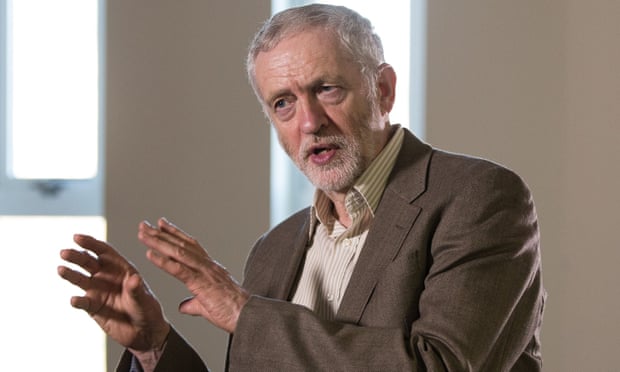
Jeremy Corbyn on West Papua: UK Labour leader calls for independence vote

https://i.guim.co.uk/img/media/42fc08c4fb5d24b8660f856fdaa23bffa97cd34c/0_39_2992_1794/master/2992.jpg?w=620&q=55&auto=format&usm=12&fit=max&s=4c384e75f4ed0dac31e976503fb18451The  Guardian, Jeremy Corbyn has drawn attention to the plight of West Papuans, saying the recognition of human rights and justice should be the “cornerstone” of the UK Labour party’s foreign policy.

The Labour leader made the comments in an address to a meeting of international parliamentarians, supporters and activists in London on Tuesday.

The group, which included Pacific region ministers and leaders, among them the West Papuan independence leader Benny Wenda, called for a UN-supervised independence vote in the Indonesian territory.

West Papuans are the indigenous people of a region on the western half of the island shared with Papua New Guinea, formerly under Dutch rule. Indonesia took temporary control of West Papua under a UN–backed treaty in 1963. It consolidated its rule through a UN-sanctioned but discredited ballot in 1969, in which barely 1,000 West Papuan representatives selected by Indonesia cast votes under threat of violence.

Wenda, who sought asylum in the UK in 2003 after escaping prison in West Papua, has led an international campaign for independence, drawing attention to continuing acts of violence and alleged human rights abuses by Indonesian authorities. Indonesian police have arrested thousands of West Papuans in recent weeks.

“Essentially what we’re looking at is a group of people who did not enjoy their rights during a period of decolonisation, did not enjoy the rights bestowed to them by the UN charter and by the statutes on decolonisation,” Corbyn said.

“As a member of parliament I support them, as a member of this group and as a former vice-chair of the all-party human rights group.”

Recognising human rights and justice “has to be the cornerstone of foreign policy, the cornerstone of our relationship with every other country”, Corbyn said, pledging he would discuss a list of recommendations made in a report by the Politics of Papua Project at the University of Warwick with the Labour party.

“I want these issues to become central to our party’s policies in the future and above all I want to see an end to environmental degradation and destruction and the right of people to be able to make their own choice on their own future.”

Corbyn, who is a cofounder of the International Parliamentarians for West Papua, described Monday’s gathering as “historic” and said the recommendations put forward were a good framework for moving towards recognition of the human rights issues, rights of representation and the right of people to choose their future in West Papua.

He noted the recommendation called for a visit by the UN special rapporteur, the reinstatement of NGOs in the region and questioning of international companies working in West Papua.

“It’s about a political strategy that brings to worldwide recognition the plight of the people of West Papua, forces it onto a political agenda, forces it to the UN, forces an exposure of it and ultimately that allows the people of West Papua to make the choice of the kind of government they want and the kind of society in which they want to live,” he said. “That is a fundamental right.”

He said the international community could continue “pretending the issue will go away” or it could “do something bold”.

“Recognise injustice when you see it,” he said. “Recognise the abuse of human rights when you see it and recognise that both sides in any conflict benefit from a peace process and benefit from recognition of human rights, law and justice.”

The Free West Papua campaign hopes to see a UN resolution within two years to send international peacekeepers to protect West Papuans as they vote on independence.

It urged international governments – particularly those of Australia and New Zealand – to support the vote.

“For 50 years Indonesia massacred my people, 500,000 people. We need international peacekeeping force in West Papua,” Wenda said. “In maybe another 10 or 20 or 50 years time I think my people will become a minority. We need this as soon as possible.”

On Friday the Indonesian embassy in Australia released a statement dismissing the meeting as a publicity stunt organised by a “small group of Papua separatists and sympathisers”.

“Papua and Papua Barat (West Papua) are parts of Indonesia. The UN and the international community recognise this,” it said in a series of tweets.

It accused the United Liberation Movement for West Papua, which Wenda leads, of making “false claims” and said West Papuans already had self-determination through special autonomy, free and fair elections, and education.

“President Jokowi is mobilising resources of the nation to deliver much needed infrastructure and public services in Papua,” it said.

“However, cases of violence are still a challenge. For example cases killed civilians, members of security authorities and separatists. Many cases are brought to court. And more to be brought to justice. President Jokowi is personally looking after human rights protections.”

This article was amended on 19 May 2016. The recommendations that Jeremy Corbyn said he would discuss with the Labour party were made in a report by the University of Warwick’s Politics of Papua Project, not the group as a previous version said.

The Muslim occupation of West Papua after Dutch granted independence

The Muslim Issue, How often do we hear how “bad” colonialism was? Whether it is from India, Africa or Papua New Guinea and West Papua we are painted a nightmarish picture of the “wicked white man” who is described to have “destroyed” the countries they ruled. But facts are different to these exaggerated left wing fairy tales of division and racism so common amongst the liberals. They have painted the crusaders, the brave Christian army that sacrificed their own lives to save Europe from Muslim takeover, in the same light.

The story of colonialism is different from natives who actually lived under colonialism. Unlike popular claims by left wingers and their historians, colonialism did far more good than bad and offered protecting of territories from the Muslim threat and other external threats. Read here what happened when the Dutch ‘colonialists’ tried to return Papua to its own people and left the country:

The Dutch colonialists tried to give Papua New Guinea and West Papua their independence back to the natives. There was no wars or attacks on the ‘colonialists’ needed for it and the natives gained their island back by appealing to the UN. The Dutch perfectly willingly decided to give it back to the people.

Note also in the story below that the natives and tribals had been able to live freely, protected, and by their own choice and natural lives in their jungles without interferences from the Dutch at all. So much so that they did not even know much about Dutch rule of their own country until after the Dutch left – quite contrary to the claims left wing writers tend to paint the picture. This testimony is the same one can find in India where many native people did not even know their country had been under British rule because they had never even seen an English man, and never had any interferences from the English into their lives for over three hundred years.

To return independence to this island the Dutch tried to prepare them for the task to avoid a Muslim takeover from neighboring Indonesia. Unfortunately the natives did not listen, grasp or take serious the groundwork the Dutch tried to create for them. Like many colonial societies they benefited from the protection and rule colonialism had given them, and did not imagine things would change drastic without it. West Papua, like the Dutch feared, quickly fell into Muslim hands once they had left and the natives have been living under Muslim oppression, rape, arson, threats and mass murders ever since.

Up ↑

Wantok COFFEE

Organic Arabica - Papua Single Origins

MAMA Minimart

MAMA Stap, na Yumi Stap!

PT Kimarek Aruwam Agorik

Just another WordPress.com site

Wantok Coffee News

Melanesia Foods and Beverages News

Perempuan Papua

Melahirkan, Merawat dan Menyambut

UUDS ULMWP

for a Free and Independent West Papua

UUDS ULMWP 2020

Memagari untuk Membebaskan Tanah dan Bangsa Papua!

Melanesia Spirit & Nature News

Promoting the Melanesian Way Conservation

Kotokay

The Roof of the Melanesian Elders

Eight Plus One Ministry

To Spread the Gospel, from Melanesia to Indonesia!

Koteka

This is My Origin and My Destiny