Churches express solidarity with West Papua independence campaigners

Posted on: June 30, 2016 9:12 AM

[ACNS, by Gavin Drake] The increasing tensions in Indonesian West Papua has attracted the attention of both the World Council of Churches’ Central Committee and the Bishops of the Anglican Church in Papua New Guinea.

Sovereignty over West Papua has been disputed since the demise of the Netherlands East Indies in the 1940s. Indonesia claimed sovereignty over all of the former colony but the Dutch retained control over West Papua. Indonesia invaded the island in the 1960s and a later UN-brokered peace deal resulted in 1,000 “elders” electing to become part of Indonesia.

But the result of the “Act of Free Choice” has been disputed – with pro-independence campaigners saying that the elders who took part in the election were hand-picked by Indonesia and forced to vote unanimously for Indonesian control.

There has been growing calls for independence despite a crackdown on protest activity. Recently, police arrested more than 1,000 protestors who took part in a pro-independence march. International journalists are not allowed into the province and reports indicate that local journalists covering protests are harassed and blocked by police and military officials.

Archbishop Clyde Igara, Primate of the Anglican Church of Papua New Guinea, said that week that the bishops of the PNG church “spoke in support of our Melanesian brothers and sisters of West Papua” during their recent meeting.

“The constitution of the Anglican Church of Papua New Guinea affirms the dignity of human life and the need to show respect for all people,” he said. “The bishops wish to express on behalf of the Anglican Church the hope that the Governments of Papua New Guinea and of West Papua will make every effort to give freedom to the many displaced people of West Papua to settle and re-establish their sense of livelihood; their homes and gardens.”

The Papua New Guinea bishops welcomed their government’s decision to give citizenship to West Papuans living in PNG. “We are clear that it is a Gospel imperative that we must ‘love the Lord our God and secondly to love our neighbours as ourselves’”, Archbishop Igara said. “Therefore we stand in solidarity with the people of West Papua.”

Meanwhile, at their meeting in Trondheim, Norway, the Central Committee of the World Council of Churches called on member churches to “pray and act in support of Christian witness in the region.”

The Committee also requested that an international ecumenical delegation be sent to the region “as soon as possible” in order to “demonstrate the ecumenical movement’s accompaniment of the churches in the region, to hear the voices of the victims of violence and human rights violations, and to pursue the pilgrimage of justice and peace in this context.”

The Indonesian government says that “any solution to the issue must be within the framework of the unitary state of the Republic of Indonesia.

“It is important to stress that Indonesia is a multi-ethnic and multi-cultural and multi-linguistic nation with ‘unity in diversity’ as its moto. It is therefore important to find common ground to bridge differences among its peoples as differences are common in democratic societies throughout the world.”

It suggests increased regional autonomy in the region, which it calls Irian Jaya, and warns that “Problems arising of the province . . . have to be dealt with on a national basis and the Government would view any attempt to disrupt Indonesia’s sovereignty over Irian Jaya as interference in the internal affairs of a sovereign state

Jakarta slams Solomons and Vanuatu over human rights

6:53 pm on 27 June 2016, http://www.radionz.co.nz

Indonesia has strongly rejected statements about West Papua by Vanuatu and Solomon Islands at the UN Human Rights Council session last week.

Delegates of the two Pacific Islands’ countries accused Indonesia of failing to prevent ongoing human rights abuses against West Papuans.

But Indonesia’s delegate at the session, Michael Tene, said Vanuatu and Solomon Islands’ statements showed a lack of understanding of Papua.

He said they were politically motivated in support of separatist groups which incite public disorder and terrorist attacks against civilians and security personnel.

Indonesia as a democratic country is committed to promoting and protecting human rights, including by taking necessary steps to address the allegations of human rights violations and abuses in Papua. No one is perfect. We are always open to have dialogue on human rights issues, but we reject politicisation of these issues. We deplore the way Solomon Islands and Vanuatu have abused this council and the universal principles of the promotion and protection of human rights by supporting the cause of separatism.

Michael Tene from Indonesia’s Permanent Mission to the UN.

He has described Vanuatu and Solomon Islands as being far from perfect on protection of human rights.

He said the two countries still face serious human rights problems, have rampant corruption in all segments of society and government, human trafficking, mistreatment of children and daily abuse of women.

“It would be for the betterment of their populations if the governments of Solomon Islands and Vanuatu give attention and priority to seriously address their respective own domestic human rights shortcomings.”

Furthermore, Mustika Hanum, the third secretary at Indonesia’s Permanent Mission, expanded on her country’s concerns about domestic violence in Solomon Islands.

MSG gets West Papua and Indonesia to talk

SolomonStarnews.com, Published: 18 June 2016

A SENIOR delegation of Indonesian officials and delegates of the United Liberation Movement for West Papua met Thursday in a move instigated by the Melanesian Spearhead Group (MSG).

The two sides had been at loggerhead over West Papua’s struggle to have a separate state.

MSG Foreign Ministers meeting chairman and Solomon Islands Foreign Affairs minister, George Milner Tozaka said it was important to get both sides to sit at the same table and talk.

He said the objective of MSG is to look at the developmental interests of Melanesian countries and this included West Papua.

“We are constructively trying to engage both Indonesia and West Papua to talk and say what they want to say to each other in the meeting, but the main thing is to get them to sit at the same table and talk,”

Mr Tozaka said.

He said one of the major issues was the membership of MSG and the inclusion of the United Liberation Movement for West Papua (ULMWP) as observers, while Indonesia was accorded associate membership.

“The last meeting we had in Honiara we had been to work on the criteria for the membership of Indonesia and West Papua so that they can participate in the MSG.”

Mr Tozaka said Senior Officials Meeting (SOM) had a look through this issue and concluded that there was still a lot more work to be done.

“SOM have asked for more time for them to look into this issue.”

They would then submit their report to the Foreign Affairs Ministers meeting, before it was taken up to the Leaders Summit in Honiara on July 14.

The MSG is made up of three levels, the highest of which was the Leaders Summit, then the Foreign Affairs Ministers meeting and the Senior Officials Meeting.

The application for membership from West Papua and Indonesia in the Melanesian Spearhead Group has been referred to the legal committee.

Fiji’s Minister for Foreign Affairs Ratu Inoke Kubuabola said Fiji would raise its voice with Indonesia over the matter.

Ratu Inoke said Fiji had a good relationship with Indonesia.

“We respect the integrity and sovereignty of Indonesia under international laws.”

Meanwhile, Ratu Inoke said Fiji still maintained its position that its participation in the Pacific Islands Forum would still remain at ministerial level.

“Our Prime Minister (Voreqe Bainimarama) still feels very strongly on that position.”

Fiji wants Australia and New Zealand to withdraw as members of PIF.

MSG Chair Reminds Jakarta about Decolonisation

11:06 am on 25 May 2016 Radio NZ

The chairman of the Melanesian Spearhead Group has defended his criticism of Indonesia over its alleged failure to engage with the region over West Papua.

Manasseh Sogavare, who is also Solomon Islands Prime Minister, recently claimed that Indonesia joined the MSG for the purpose of protecting its own interests, rather than discussing human rights in West Papua.

It drew a sharp rebuke from Jakarta where the Director General for Asia, Pacific and Africa, Desra Percaya, said Mr Sogavare’s claims were not based on reality.

Desra Percaya from Indonesia's Ministry of Foreign Affairs

Desra Percaya from Indonesia’s Ministry of Foreign Affairs Photo: UN

He also said Mr Sogavare’s statements violated the basic principles of sovereignty and non-interference, as contained in the MSG Establishing Agreement.

However the MSG Chair’s Special Envoy on West Papua, Rex Stephen Horoi, said the chair would like to remind Jakarta that one of the key overarching principles of the group is the principle of decolonisation of Melanesia.

“This is a fundamental principle that binds the Melanesian countries and all MSG members together,” he said.

“In this principle, MSG stands for its defense and promotion of independence as the inalienable right of indigenous peoples of Melanesia.”

Mr Sogavare also sought to remind Jakarta that the United Liberation Movement for West Papua was also a part of the MSG, with observer status.

He claimed the refusal of Indonesia’s government so far to discuss West Papua with him showcases Jakarta’s intention of not engaging in dialogue about the serious allegations of human rights issues.

The MSG chair has reiterated his offer to the Indonesian President, Joko Widodo, to discuss matters of common interest within the space provided by the MSG.

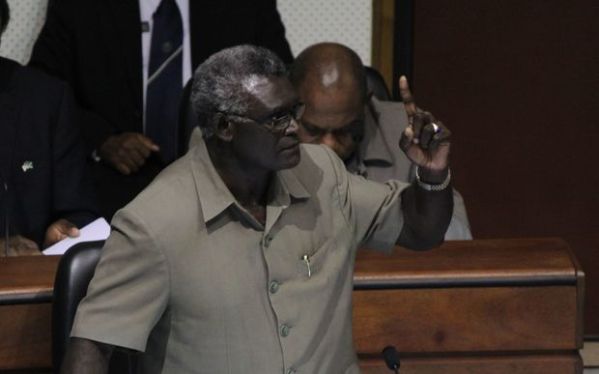
Manasseh Sogavare

Manasseh Sogavare Photo: RNZI Koroi Hawkins

Solomons PM Reiterates Papua Stand

7:57 am on 18 May 2016, Radio NZ

The Solomon Islands prime minister has reiterated his support for full membership of the Melanesian Spearhead Group for the United Liberation Movement of West Papua.

Manasseh Sogavare, who is also the chairman of the MSG, has returned from a visit to Port Vila where he announced his intention to support Vanuatu and push to elevate the Liberation Movement from its current observer status in the group.

He also confirmed his plan to request United Nations intervention in West Papua due to ongoing alleged human rights abuses by the Indonesian security forces

Mr Sogavare has criticised Indonesia for not taking up repeated efforts by the MSG and Pacific Islands governments to establish dialogue with Jakarta over concerns about West Papua.

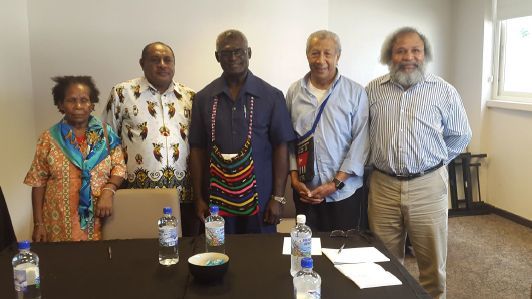
United Liberation Movement for West Papua members Mama Yosepha Alomang, Edison Waromi, AndyAyamiseba and Jacob Rumbiak with the Solomon Islands prime minister Manasseh Sogavare (centre),
United Liberation Movement for West Papua members Mama Yosepha Alomang, Edison Waromi, Andy Ayamiseba and Jacob Rumbiak with the Solomon Islands prime minister Manasseh Sogavare (centre), Photo: MSG

International Pressure Building on Jakarta over Papua

4:02 pm on 10 May 2016, Radio NZ

The International Parliamentarians for West Papua has called for an internationally-supervised vote on independence in West Papua and is preparing to build pressure on Indonesia over the issue.

Transcript

The International Parliamentarians for West Papua has called for an internationally-supervised vote on independence in West Papua

This group of politicians from around the world, who support self-determination for West Papuans and are concerned about ongoing human rights abuses against Papuans, held a summit in London last week.

Also present were members of the United Liberation Movement for West Papua which was last year granted observer status at the Melanesian Spearhead Group.

One of those in attendance was the Vanuatu government minister Ralph Regenvanu who spoke to Johnny Blades about the IPWP’s strategy.

RALPH REGENVANU:There is also a need for the whole process of the vote of self-determination to be revisited, in light of the fact that the UN-supervised vote when it happened back in the 1960s (The Act of Free Choice) was very questionable, basically a sham. So that needs to happen again because the people of West Papua haven’t been given an opportunity to decide on their future. And it’s really a decolonisation issue. It’s not a secession issue or anything like that. It’s a decolonisation issue. For that to go forward we basically need the support of many more countries so that it can be addressed at the level of the UN General Assembly. one of the strategies that Vanuatu for example will be actively participating in, and has been, as well as the other countries that were at the meeting, is to get more countries in support of seeking an internationally-supervised vote on self-determination again in West Papua.

JOHNNY BLADES: In the wake of that meeting in London, the Indonesian House of Representatives has condemned it and called it a “reflection of colonial acts”. What do you say to that, because they’re also said it’s a stunt, trying to disrupt the unitary state of Indonesia?

RR: Well, unfortunately, according to international law, that self-determination issue has never been addressed by a proper vote in West Papua, and that’s been recognised at a number of levels, a number of forums. Decolonisation never happened and in fact this colony was simply passed from one colonial power, being the Dutch, to another colonial power which is Indonesia which continues to colonise the territory to this day.”

JB: Now that strategy you told me about, in terms of through the MSG forum, we’ve seen divisions come up around this issue. Do you have faith in the MSG to be able to wrestle with this properly, to be able to get Indonesia to the table?

RR: Well, the point is that we are going down all avenues to address this issue. Through the MSG, we’re trying to bring Indonesia to the table to talk. The (Pacific) Forum has asked for consultation regarding getting a proper human rights assessment done. We’ve got the International Parliamentarians for West Papua calling for a supervised vote. So there are a number of efforts happening at different levels to try and address the issue in a range of ways. And so if Indonesia doesn’t want to… it hasn’t actually responded to any of those. It hasn’t responded to the Forum, it hasn’t responded to the MSG, so basically we’ll just take it to the next level. We’re trying to do it at the levels we can. If there’s no response, we go to the next level and we continue to address it at a higher level and ultimately the UN is going to have to take it on.

JB: Indonesia is obviously sensitive to this pressure. It wants to engage with Pacific countries. But your government wants Indonesia to be stripped of its associate member status at the MSG, right, how does that stack up with being able to dialogue with them?

RR: Well you have said that Indonesia wants to engage with the Pacific, ok. Unfortunately, the call by the MSG to sit at the same table has been ignored. And in fact they rebuffed the prime minister of the Solomon Islands (Manasseh Sogavare who is the current MSG chair). There’s been no resonse to the letter from the prime minister of Papua New Guinea as the chair of the Pacific Islands Forum to them asking for some sort of human rights assessment to be done. The question is: do they really want to engage or not? Vanuatu will be happy for Indonesia to stay in as an associate member of the MSG if it comes to the table. But if it’s not coming to the table, then why are they in the MSG? For Vanuatu the reason Indonesia is in the MSG is to be able to talk about this issue with the United Liberation Movement for West Papua. If they don’t want to talk about that issue, then why are they there?

JB: And the United Liberation Movement is – depending on which MSG leader you speak to, some say they’re just a technical group or a group outside of the region representing the interests of exiled West Papuans; I’m talking about comments coming from Suva or Port Moresby – but in fact we see in the demonstrations in the past few weeks in Papua that there is huge support for the United Liberation Movement and for the MSG, right?

RR: The United Liberation Movement for West Papua is recognised mostly within West Papua. It’s only because the leaders within West Papua can’t get out and get in these forums that we have people who are outside of the country actively engaging, people like the secretary-general Octo Mote, people like international spokesman Benny Wenda. These are all people who escaped as refugees in fear of their lives. People inside Indonesia, they’re getting arrested in mass amounts, they’re getting killed, they’re getting tortured. So they can’t be at the forefront of anywhere the ULMWP goes to talk about this issue. But of course they are part of it, they are intrinsic members of the movement and support it. So anyone who says that the ULMWP doesn’t represent the movement in West papua only has to see what’s happening in country. Every time the ULMWP does anything, for example the mass protests in support of membership in the MSG, that’s thousands and thousands of people in West Papua. Mass demonstrations in support of the International Parliamentarians for West Papua in London, the largest arrests in the history of West Papua (took place) because of that London meeting that we attended. So at that London meeting also, we had representatives who basically snuck out fro the territory to be there. So I don’t think there’s any substance to the claims that the ULMWP doesn’t represent the majority of the Movement.

JB: What do you and other people in the parliamentarians group make of the Indonesian government’s efforts to foster economic development in Papua, with more participation by the Melanesian population?

RR: We received reports from… there were a few universities who presented assessments of what’s happening. And while there are development efforts going ahead, there’s a huge disparity on all indicators between the indigenous West Papuan population and the Javanese population that’s been moved by transmigration to the territory. And in fact what we heard from one of the International Lawyers for West Papua who is based at Oxford University is that if you look at all those indicators and if you look at the historical development in the province, what’s been happening, basically under international law, under the genocide convention, Indonesia is committing genocide.

Papuans concerned at Indonesian overtures to MSG

3:29 pm on 8 April 2016

The United Liberation Movement for West Papua has questioned Indonesia’s increased diplomatic overtures to Melanesian countries.

TRANSCRIPT RADIO ANZ

The United Liberation Movement for West Papua says that while Indonesia increases diplomatic links to Melanesian countries, its security forces continue to brutalise Papuans.

The Liberation Movement was last year granted observer status in the Melanesian Spearhead Group, while Indonesia was given associate member status.

However Indonesia’s Political and Security Affairs minister Luhut Pandjaitan visited Papua New Guinea and Fiji last week to lobby for greater participation by Jakarta.

Minister Luhut indicated that Jakarta was aiming to “aggressively explain” to Pacific states about the conditions in Indonesia what it has been doing in the area of human rights.

However, Indonesia’s National Human Rights Commission last month stated that in the past year more than 700 West Papuans had been persecuted through being arrested, beaten, and tortured by security forces.

The Liberation Movement’s Benny Wenda spoke to Johnny Blades, who asked him about Indonesia’s outreach and assistance packages to PNG and Fiji.

BENNY WENDA: The bilateral agreements like trade, yes that’s up to the Papua New Guineans and Fijians but from my point of view, this is like a bridge, like Indonesia is using this as a good bridge to convince the Papua New Guineans and Fijians. But one of the things that I always argue [is] why now? Why now, but before never? When we become a member of the MSG, observer status, and they’re trying to use that issue to engage more with Melanesians and Pacific countries while they’re killing our people and they’re more campaigning for their investments, business and things and they’re trying to trade. But all the while killing Melanesian people and that is undermining what Indonesia does to pretend they’re good guys. But I’m not criticise what Indonesia has contributed to the Fijians for the cyclone [Winston]. But on the other hand, using this issue… trying to pressurise, look, we’re giving you money but don’t talk about West Papua. We don’t know, that’s under the carpet, but that’s my view. The West Papua issue is a Melanesian issue, it’s nothing to do with Indonesia. And the fact that Minister Luhut [once said] that we don’t need you, you go where you come from, that is what he already stated. And this dates back to 1960s, one of the generals called Ali Murtopo, said Papuans, we don’t need you, if you need island go to the Pacific or go to the moon or go to America. It’s repeated again. And so that’s why my argument is that Indonesia is not really interested in the people of Melanesia’s suffering under their colony. So they just need our resources. So in fact all the resources they are using to kill us and trying to be good guys. So that’s not make us a setback but give us confidence, more to convince our brothers and sisters in Melanesia that West Papua issue is a Melanesia issue and a Pacific issue, and we are the Pacific family.

JOHNNY BLADES: It seems in the Indonesian media that minister Luhut is claiming PNG and Fiji are going to support their bid to become full members of the MSG, do you know?

BW: I’m not sure at the moment, because that is just trying to claim, trying to convince the PNG and Fiji governments. But I’m sure that ordinary people in PNG and Fiji are really supportive, one hundred percent, of west Papuan full membership and that’s from before, until today. That’s why I’m really confident that West Papua issue is still there. But I don’t know about Minister Luhut’s claim. But that depends on whether PNG and Fiji want to support that or not, that’s up to the two governments. But MSG stands for the Melanesian peoples, it’s nothing to do with Indonesia. And MSG on principle, Indonesia has no right to stand in the way of what decision must be made by Melanesians for Melanesian people.

JB: This claim that the people in Jakarta keep making, about having 11 million Melanesians within the republic, including Maluku, North Maluku and East Nusa Tenggara, do you believe that people in those provinces – even if they have Melanesian stock – do they identify as being Melanesians?

BW: Look, this makes me laugh. They have never campaigned for… they never think about their identity as Melanesia. They more look the Indonesia. They feel they are  Indonesia, so I have never seen those islands, those two or three provinces that you mention campaign for membership in the Melanesian family. No, they are more Indonesian, they claim, nothing to do with the Melanesians. They are more happy with Indonesia rather than Melanesia. So when we become part of the MSG, then Indonesia [started thinking] okay let’s use some of the outer islands. They may have Melanesians but they never campaigned for membership because they never feel they are Melanesian. That’s from beginning until today.

Melanesian Anglicans co-launch group advocating West Papua freedom

Posted on: March 26, 2015 12:30 PM

[The Anglican Church of Melanesia] A one day consultation to discuss and highlight issues concerning West Papua’s struggle for freedom and independence from Indonesia on Friday 20th March 2015, led to the formation of the “Solomon Islands Solidarity for West Papua Freedom”.

The consultation was jointly organized and hosted by the Pacific Council of Churches (PCC) and the Anglican Church of Melanesia (ACOM) and was held at the Melanesia Haus, St. Barnabas Cathedral grounds, in Honiara.

The consultation was a follow up of a workshop held in June 2014 on the theme:Rethinking the Household of God in the Solomon Islands: Training on Stewardship and Leadership, and was facilitated by Mr. Aisake Casimira of PCC and Mr. Sirino Rakabi of the Ecumenical Centre for Research, Education and Advocacy (ECREA), from Fiji.

Representatives and leaders from all the SICA [Solomon Islands Christian Association] and SIFGA [Solomon Islands Full Gospel Association] member churches, various civil society organizations and groups including Forum Solomon Islands International (FSII), Free West Papua Movement in the Solomon Islands, S.I. Grassroots for West Papua, ACOM’s Commission for Justice, Reconciliation and Peace (CJRP), ACOM Mothers Union, Young Women’s Parliamentary Group, Voice Blo Mere, and, the Development Services Exchange (DSE) representing the NGO’s in the country, attended the consultation.

Membership of the “Solomon Islands Solidarity for West Papua Freedom” comprises of representatives of the churches, organizations and groups that were present during the consultation.

The consultation also reiterated its support for the call made by the Churches in the country in a press release issued in Honiara in June 2014 to“…actively support the political independence struggle of the people of West Papua” and to “…commit to advocating their inherent right to gainful political self-determination and true freedom”.

Consequently, a committee was set up to administer and execute planned programmes and activities in the lead up to the Melanesian Spearhead Group (MSG) meeting to be held in Honiara in July 2015, as well as to formulate strategies for ongoing advocacy campaigns in the Solomon Islands as well as regionally and internationally, for the freedom of West Papua.

The Terms of Reference (TOR) for this committee include the following:

1. That the SI government support West Papua’s application to be a member of the MSG;

2. That the SI government makes a clear stand in favour of West Papua;

3. That strategies are made for ongoing advocacy towards freedom for West Papua; and,

4. That submissions are made to the SI government and other national, regional and international bodies on West Papua issues.

Biblically, the underlying principle for the position of the consultation is drawn from the narrative in Exodus 3: 7 – 8 in which God told Moses to go and tell Pharaoh to release [God’s] people from slavery so that they can go and worship [God] freely.

“This consultation affirms that it is morally and ethically wrong to remain silent when our brothers and sisters from West Papua are suffering from suppression and human rights atrocities under an oppressive colonial ruler at our very own doorstep. The Melanesian Region, the Pacific and the World at large need to speak out against Indonesian oppression of West Papua and call upon their leaders and government to ‘let God’s people and nation of West Papua go’.”

Sogavare pushes for West Papua at Forum

Radio NZ – The government’s special envoy on West Papua Matthew Wale says the Solomon Islands is supporting the United Liberation Movement of West Papua’s application for observer status at the Forum.

The ULMWP was granted observer status in the Melanesian Spearhead Group at the regional organisation’s recent leaders summit in Honiara.

Mr Wale says Solomon Islands will also urge Forum leaders to support a resolution calling for the UN Human Rights Commissioner to conduct an assessment on the human rights situation in West Papua.

The Solomon Islands also wants a resolution calling for West Papua to be included on the UN’s decolonisation list.

Mr Wale says the leaders have a moral obligation to deal with the issues responsibly given public opinion and the amount of information about the situation in the Indonesian region.
Manasseh Sogavare

Solomon Islands Prime Minister Manasseh Sogavare has emerged as a leading advocate for regional representation for West Papuans Photo: RNZI Koroi Hawkins

However other Pacific Islands government, notably those of Melanesian powerhouses Papua New Guinea and Fiji appear reluctant to engage on West Papua at the Forum level to any great extent.

The situation in the Indonesian region is one of the five agenda items at the Pacific Islands Forum leaders summit in Port Moresby and there have been calls for a fact-finding mission to the province.

However PNG’s Foreign Minister Rimbink says his country will not do anything to endanger the good relationship it has with Indonesia when it comes to West Papua.

Mr Pato says he acknowledges the call for a forum mission and it will be discussed but PNG is looking at other methods.

“Our strongest recommendation will be to work alongside Indonesia. Indonesia has just been made an associate member of the Melanesian Spearhead Group which is a sub-regional body and that is a starting point, and should there be some issues we will be looking to work through that and work together with Indonesia.”

The plenary meetings at the 2015 Forum summit have been marked by protesters outside the venue calling for more action in West Papua.

Arkilaus Baho: Selamat! Papua di Terima Sebagai Anggota MSG

Selamat! Papua di Terima Sebagai Anggota MSG
Delegasi WPNCL, Dr. OPM John Otto Ondawame (Tengah) sedang menyampaikan aplikasi Papua Barat di Forum KTT MSG ke-19. Foto(Jubi Papua)

Kompasiana.com – Selamat kepada West Papua National Coalition for Liberation (WPNCL) yang telah bersusah payah meyakinkan anggota Melanesian Sperhead Grub untuk menerima tawaran. secara resmi diterima oleh MSG. Namun status yang diminta oleh WPNCL dalam aplikasinya akan ditentukan dalam enam bulan kedepan.

Hasil KTT ke-19, dimulai pada tanggal 18 Juni 2013 dan puncaknya pada tanggal 20-21, diantaranya; MENYETUJUI: bahwa MSG sepenuhnya mendukung hak-hak asasi rakyat Papua Barat terhadap penentuan nasib sendiri sebagaimana ditetapkan dalam mukadimah konstitusi MSG. MENYETUJUI: bahwa kekhawatiran MSG mengenai pelanggaran hak asasi manusia dan bentuk lain yang berkaitan dengan kekejaman terhadap Masyarakat Papua Barat akan diajukan bersama dengan pemerintah Indonesia secara bilateral maupun sebagai kelompok. MENCATAT bahwa aplikasi dari WPNCL untuk menjadi anggota MSG telah diterima dan aplikasi akan ditinjau setelah pengajuan laporan FMM, dan MENYETUJUI: roadmap seperti yang direkomendasikan oleh FMM mencakup: a) bahwa MSG mengirim misi menteri luar negeri di tingkat FMM yang dipimpin oleh Menteri Luar Negeri Fiji ke Jakarta dan kemudian ke Papua Barat pada tahun 2013 dan menerima undangan dari pemerintah Indonesia. b) misi menteri luar negeri ini akan menyajikaN laporannya kepada para pemimpin msg pada kesempatan pertama dalam enam bulan ke depan. c. WPNCL akan diberitahu secara resmi tentang keputusan para pemimpin MSG mengenai aplikasinya, dan d. misi akan menjadi bagian dalam proses menentukan aplikasi keanggotaan WPNCL.

Komunike ini ditandatangani oleh kelima pemimpin negara-negara Melanesia, masing-masing Victor Tutugoro (FLNKS), Veroqe Bainimarama (Fiji), Leon Dion (Papua New Guinea), Gordon Darcy Lilo (Kepulauan Solomon) dan Moana Carcassas Kalosil (Vanuatu). Penandatangan ini dilakukan di Escapade Resort, Noumea, 21 Juni 2013.

Pemerintah Indonesia pun tak terlalu merisaukan keanggotaan Papua Barat pada forum MSG. Wakil Menteri Luar Negeri Indonesia, Wisnuwardhana yang memimpin delegasi Indonesia dalam MSG Summit di Noumea, Kaledonia Baru mengakui bahwa rumpun bangsa Melanesia di Indonesia tersebar di lima provinsi dari 34 provinsi di Indonesia. Masing-masing provinsi tersebut adalah Papua, Papua Barat, Maluku, Maluku Utara dan Nusa Tenggara Timur. Wilayah lima provinsi ini mencapai sepertiga dari seluruh wilayah Indonesia. Berdasarkan sensus penduduk tahun 2010, ada sekitar 11 juta penduduk yang mewakili suku bangsa Melanesia di Indonesia. Mereka ada di lima provinsi di Indonesia, yakni Papua, Papua Barat, Maluku, Maluku Utara dan Nusa Tenggara Timur yang mencakup sepertiga wilayah Indonesia.” kata Wisnuwhardana dalam pernyataan pemerintah Indonesia dihadapan sesi pleno MSG Summit, 21/06.

Kenyataan ini, menurut wakil Menteri Luar negeri Indonesia ini, menjadikan hubungan Indonesia dengan Melanesia Spearhead Group (MSG) harus dipererat dan terus ditingkatkan. Salah satu caranya adalah dengan mempersilahkan para Menteri Luar Negeri negara-negara MSG untuk datang ke Indonesia. Untuk memperkuat hubungan Indonesia dengan MSG, Indonesia mempersilahkan para Menteri Luar negeri MSG datang ke Indonesia. Untuk bertukar pengalaman dan memberikan kesempatan untuk melihat dan memahami dengan baik tentang pembangunan di Indonesia, termasuk Papua dan papua Barat.” kata Wisnuwardhana.

MSG juga memastikan sebuah referendum bagi rakyat Kaledonia. Presiden Kaledonia Baru, Harold Marthin, dalam sambutannya pada acara pembukaan Melanesia Sparehead Group mengatakan pada awalnya, tidak semua rakyat Kaledonia Baru setuju untuk bergabung dalam MSG karena sejarah persaingan di Pasifik, yang mengakibatkan adanya rivalitas pada kelompok masyarakat Melanesia. Namun mereka bekerja keras untuk meninggalkan trauma sejarah itu.

Pada tahun 2014 nanti rakyat Kaledonia baru akan mengadakan referendum untuk menentukan nasib mereka sendiri. Apakah rakyat Kaledonia Baru akan tetap menjadi bagian dari Perancis atau berdiri sebagai sebuah negara independen, akan ditentukan oleh referendum tersebut.

Mr. Harold Marthin menambahkan, dirinya bersama pimpinan FLNKS, organisasi yang memotori permintaan referendum Kanaky menyambut kedatangan para pemimpin negara Melanesia, untuk menunjukkan bahwa tidak ada ketegangan atau upaya untuk menghambat hubungan antara sesama komunitas Melanesia demi kemakmuran rakyat Melanesia. Saya yakinkan pada anda semua, para pemimpin bahwa rakyat Kaledonia Baru memiliki pandangan positif dari tindakan pemerintah Kaledonia Baru bersama FLNKS.

Prestasi MSG dibawah kepemimpinan lama, menurut ketua MSG yang juga perdana mentri negara Fiji Commodore Frank Bainimarama mengatakan, selama masa kepemimpinannya dia telah meletakkan dasar dasar perubahan bagi negara Melanesia. Meletakkan dasar untuk pasukan pemelihara perdamaian regional Melanesia adalah salah satu prestasi puncak MSG di bawah pimpinan dua tahun nya. Secara resmi menyerahkan kepemimpinan kepada juru bicara Kaledonia Baru dari gerakan FLNKS, Victor Tutugoro, pada KTT para pemimpin MSG 19 di Noumea.

The Commodore mengatakan MSG telah berbuat banyak untuk bisa dibanggakan dalam beberapa tahun terakhir. “Prestasi nyata telah dibuat dalam bidang kerjasama kepabeanan dan biosekuriti, perikanan dan pelestarian budaya. Kami telah berkomitmen untuk kerjasama regional antara lembaga penegak hukum untuk mengatasi kejahatan transnasional, departemen operasi penjaga perdamaian telah dibentuk di sekretariat MSG untuk membantu membentuk unit penjaga perdamaian MSG. Frank Bainimarama mengatakan masih banyak tantangan untuk MSG untuk mengatasi dan bahwa laporan oleh Eminent Persons Group akan membantu memetakan arah masa depan MSG. Selamat

Di Sunting dari laporan jurnalis Papua, Pasifik dan Delegasi WPNCL

Up ↑

Wantok COFFEE

Organic Arabica - Papua Single Origins

MAMA Minimart

MAMA Stap, na Yumi Stap!

PT Kimarek Aruwam Agorik

Just another WordPress.com site

Wantok Coffee News

Melanesia Foods and Beverages News

Perempuan Papua

Melahirkan, Merawat dan Menyambut

UUDS ULMWP

for a Free and Independent West Papua

UUDS ULMWP 2020

Memagari untuk Membebaskan Tanah dan Bangsa Papua!

Melanesia Spirit & Nature News

Promoting the Melanesian Way Conservation

Kotokay

The Roof of the Melanesian Elders

Eight Plus One Ministry

To Spread the Gospel, from Melanesia to Indonesia!

Koteka

This is My Origin and My Destiny