PM James Marape: Tiga Pokok Masalah Menghadapi Manusia Hari ini

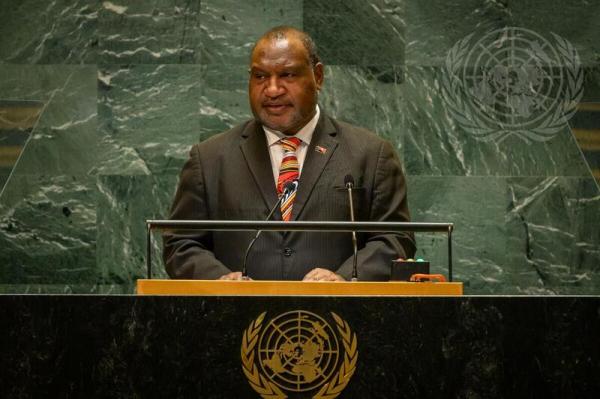
Dalam pidatonya mengatasi ancaman kemanusiaan, Perdana Menteri James Marape menekankan komitmen Papua New Guinea untuk memerangi keanekaragaman lingkungan, dan pembangunan berkelanjutan. Dia menyoroti pentingnya toleransi budaya, konservasi keanekaragaman hayati, dan pengelolaan sumber daya alam yang bertanggung jawab dalam membentuk masa depan negara. Login Keanekaragaman budaya dan linguistik yang kaya di Guinea, ditambah dengan sumber daya alam yang melimpah, posisi bangsa sebagai pemimpin global dalam konservasi lingkungan dan toleransi budaya.

Papua New Guinea adalah rumah bagi lebih dari 800 bahasa yang berbeda dan beragam budaya, menjadikannya salah satu negara yang paling beragam di dunia. Kaset budaya yang luas ini telah membentuk identitas negara dan menumbuhkan rasa toleransi yang mendalam dan menghormati tradisi dan kepercayaan yang berbeda. Komitmen pemerintah untuk mempromosikan keanekaragaman budaya tercermin dalam kebijakan yang mendukung pelestarian dan promosi bahasa adat, praktik tradisional, dan situs warisan.

Papua New Guinea terkenal dengan keanekaragaman hayati yang tak tertandingi, dengan berbagai macam flora dan endemic fauna ke daerah. Ekosistem beragam negara adalah sumber kebanggaan nasional dan sangat penting untuk mempertahankan mata hidup dan melestarikan keanekaragaman biologis. Pemerintah telah menerapkan inisiatif konservasi untuk melindungi spesies yang terancam, membangun daerah yang dilindungi laut, dan mempromosikan praktik pertanian dan kehutanan yang berkelanjutan. Upaya ini bertujuan untuk menjaga warisan alam negara untuk generasi mendatang dan berkontribusi terhadap upaya global untuk memerangi perubahan iklim dan kehilangan keanekaragaman hayati.

Pendekatan Papua New Guinea terhadap keselarasan lingkungan dengan Sustainable Development Goals (SDGs) yang ditetapkan oleh PBB, terutama Goal 15 yang berfokus pada melindungi, memulihkan, dan mempromosikan penggunaan ekosistem terestrial yang berkelanjutan. Dengan memprioritaskan konservasi dan pengelolaan sumber daya alam yang berkelanjutan, Papua New Guinea tidak hanya menjaga lingkungannya tetapi juga berkontribusi pada agenda global untuk pembangunan berkelanjutan.

Visi Perdana Menteri Marape untuk Papua New Guinea untuk menjadi bangsa yang lebih tinggi oleh 2045 mencerminkan ambisi pemerintah untuk meningkatkan kualitas hidup bagi warganya dan mencapai kemakmuran ekonomi jangka panjang. Tujuan ini menyelaraskan dengan beberapa SDG, termasuk Tujuan 8 (Ketentuan Kerja dan Pertumbuhan Ekonomi) dan Tujuan 10 (Konten Reduced), yang bertujuan untuk mempromosikan pertumbuhan ekonomi inklusif dan berkelanjutan dan mengurangi kemiskinan dan ketidaksetaraan. Dengan berfokus pada pembangunan berkelanjutan dan kebijakan ekonomi inklusif, Papua New Guinea dapat menciptakan peluang bagi kewirausahaan, penciptaan pekerjaan, dan pemberdayaan sosial, pada akhirnya meningkatkan kesejahteraan masyarakat.

Namun, mencapai aspirasi ini hadir dengan tantangan. Login New Guinea menghadapi ancaman lingkungan seperti deforestasi, penebangan ilegal, dan kegiatan pertambangan yang menimbulkan risiko keanekaragaman hayati dan masyarakat adat. Negara ini juga berminyak dengan isu-isu sosial-ekonomi termasuk kemiskinan, kesetaraan, dan akses terbatas pada layanan dasar seperti kesehatan dan pendidikan. Mengamati tantangan ini membutuhkan pendekatan berwajah yang melibatkan kolaborasi antara pemerintah, masyarakat sipil, dan pemangku kepentingan sektor swasta untuk mempromosikan praktik pembangunan berkelanjutan, memperkuat tata kelola lingkungan, dan meningkatkan kecenderungan sosial.

Meskipun tantangan ini, posisi unik Papua New Guinea sebagai pemimpin global dalam konservasi lingkungan dan toleransi budaya memberikan kesempatan untuk inovasi dan kolaborasi pada skala global. Komitmen negara untuk memerangi keanekaragaman lingkungan, dan pembangunan berkelanjutan menetapkan contoh positif bagi bangsa lain untuk mengikuti, menunjukkan bahwa kemajuan ekonomi dapat dicapai selaras dengan keanekaragaman alam dan budaya.

Kesimpulan, Perdana Menteri James Marape’s pidato menggarisbawahi komitmen Papua Nugini untuk mempromosikan toleransi budaya, lingkungan, dan pembangunan berkelanjutan. Keanekaragaman budaya dan linguistik negara, dedikasi terhadap konservasi keanekaragaman hayati, dan pengelolaan sumber daya alam yang bertanggung jawab memposisikannya sebagai pemimpin global dalam konservasi lingkungan dan toleransi budaya. Dengan menyelaraskan aspirasinya dengan Tujuan Pembangunan Berkelanjutan, Papua New Guinea dapat bekerja untuk mencapai kemakmuran ekonomi jangka panjang sambil menjaga lingkungan dan mempromosikan kecenderungan sosial. Mengamati tantangan lingkungan dan sosial-ekonomi akan membutuhkan upaya yang berkonsentrasi dari semua pemangku kepentingan, tetapi peluang untuk pembangunan berkelanjutan dan kepemimpinan global sangat luas.

Artiker Asli di Sini
Wansolwara student journos report on West Papua human rights struggle

By Vilimaina Naqelevuki in Suva

Media access to West Papua, where more than half a million of its indigenous people have reportedly been killed over five decades, remains restricted.

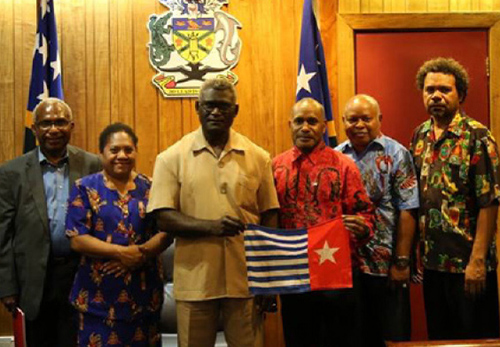
Full support … West Papuan Independence leader Benny Wenda (in red shirt) holds the banned West Papuan Morning Star flag with key supporter Solomon Islands Prime Minister Manasseh Sogavare during his visit last year. Image: bennywenda.org

News coverage of the alleged genocide is extremely difficult because of the restrictions on local and foreign media.

Some West Papuan journalists have also died in their effort to tell the truth about the deaths that largely occur in remote rural areas.

This makes news coverage of the alleged atrocities in the Indonesia-occupied land extremely difficult.

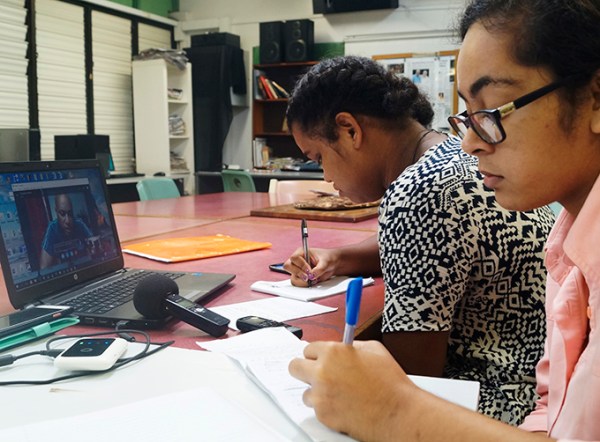
West Papuan independence leader Benny Wenda, in an online interview, told Wansolwara the restrictions allowed for the atrocities to remain “silenced”.

And even if access was granted after the labyrinthine effort, “journalists cannot go freely to report on politics in West Papua,” he said.

“They will get followed and questioned by Indonesian intelligence and West Papuans will suffer intimidation and threats if they speak to journalists.”


Recent prominence

Papua New Guinea Media Council president Alexander Rheeney said West Papua’s struggle of more than 50 years had only been given prominence in the region’s mainstream media in recent years.

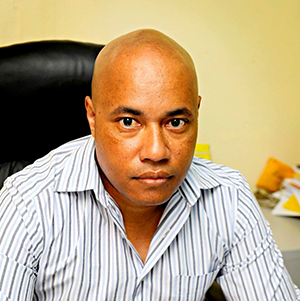
Papua New Guinean journalist Alexander Rheeney, who is also president of the PNG Media Council. Image: PNG Media Council

Less than 10 years ago, the mainstream news media – in neighbouring countries like Fiji, Australia and New Zealand, ignored the situation in West Papua. It was effectively a media “black hole”.

Rheeney said it was more challenging for Pacific journalists whose governments recognised the sovereignty Indonesia had over West Papua.

“The media in PNG have reported on West Papua and all the human rights abuses but not as much as we would want it to despite the fact that PNG and West Papua share a land order,” he said.

The increasing coverage by Pacific news media should be commended, said journalism educator Professor David Robie.

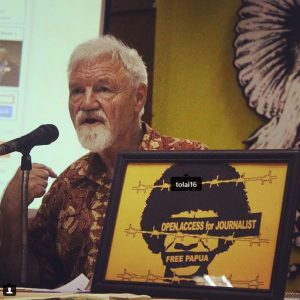
Professor David Robie speaking at the Free Media in West Papua seminar in Jakarta, Indonesia, last month. Image: Alves Fonataba/PMC

Dr Robie, director of the Auckland-based Pacific Media Centre, who has regularly written and published news on West Papua’s struggle for more than three decades, said it was a huge relief that the Pacific was “finally waking up to the issue of West Papua”.

“This an issue of Melanesian solidarity, Pacific solidarity – an issue of self-determination, and the Pacific countries that got independence on a plate ought to be telling this story,”

he said.


Jakarta media freedom conference

Dr Robie was one of the keynote speakers invited last month to the Free Media in West Papua forum at the UNESCO World Press Freedom Day 2017 conference in the Indonesian capital of Jakarta.

He spoke along with Indonesian and Papuan human rights activists and Tabloid Jubi editor Victor Mambor of Jayapura.

Pacific Freedom Forum editor Jason Brown said it was an utter disgrace that some in mainstream media published or broadcast stories on wars from other regions and “not in our own backyard”.

“In recent years, RNZI has done a much better job of covering West Papua. The recent closure of shortwave services by Radio Australia, however, means that the region has lost reliable access to news on West Papua from that source,” said Brown.

Rheeney warned that the region could not afford to fail fellow Pacific Islanders of West Papua.

He said to do so would be to doom the Pacific region to more instability.

“If a prosperous Pacific region is to be ensured, the issue of West Papua must be addressed,” he said.


Timor-Leste lessons

“As journalists we can no longer continue to turn a blind eye on all the human rights abuses that is happening.

“The PNG government can no longer turn a blind eye on what is happening on the other side of the border.”

Dr Robie said that informed political decisions could not be reached if the news media were not allowed to report freely on West Papua.

He said this lesson could easily be drawn from East-Timor’s road to independence.

East Timor, which was also occupied by Indonesia in 1975, secured its independence after a handful of journalists exposed the human rights violations through video smuggled out of the Indonesian-ruled territory, especially after the Santa Cruz massacre in the capital Dili in 1991.

Indonesia’s control rapidly fell apart after international pressure.

“In-depth and timely media coverage will save lives as West Papua lurches towards independence — which will come eventually — no matter how hard Jakarta tries to block this,” said Dr Robie.

Rheeney is also optimistic. He said Pacific journalists should continue to report on the issue, to keep the struggle in the news so that lasting solutions were found sooner and more bloodshed is prevented.

Vilimaina Naqelevuki is a final year journalism student with the USP Journalism Programme. Naqelevuki is pursuing a double major in journalism and politics, and is pictures editor of Wansolwara, the student news publication produced by the Journalism Programme.

PNG opposition leader calls for “honest” take on Papua

Don Polye Photo: SUPPLIED

RNZ – Papua New Guinea’s opposition leader says his country and Australia need to play a greater role in responding to human rights abuses in neighbouring West Papua.

Don Polye said basic human rights of West Papuans continue to be repressed by Indonesian authorities and security forces, requiring a more “honest” approach from neighbouring countries.

He said the problem had a set of direct consequences for PNG, yet its government continued to turn a blind eye to what was going on.

Mr Polye said recent remarks by Australia’s Foreign Minister Julie Bishop playing down reports of rights abuses in Papua were unfortunate.

“She said that there is not enough justification or evidence to show if there is any human rights abuse along the border between Papua New Guinea and Indonesia. I believe that Australia should assess the situation more closely, in partnership with Indonesia as well as with Papua New Guinea, to be honest about it and to look at the issues more carefully,” he said.

Mr Polye said as party to international conventions on human rights, PNG and Indonesia needed to engage more to address the situation in Papua.

He said that West Papuan calls for a legitimate self-determination process could no longer be ignored.

A need for meaningful dialogue at both international and bilateral level, he said, also required leadership from the Melanesian Spearhead Group.

However the MSG’s full members – PNG, Fiji, Vanuatu, Solomon Islands and New Caledonia’s Kanaks – are divided over advancing the Papua issue.

Governments of PNG and Fiji in particular appear opposed to granting the United Liberation Movement for West Papua full membership in the group.

They also firmly support Indonesian territorial control over Papua.

Yet Mr Polye says the example of France in granting a self-determination referendum to its Melanesian territory of New Caledonia shows that the Papua question could be solved peacefully.

Cross border flow between Indonesia and Papua New Guinea.
Cross border flow between Indonesia and Papua New Guinea. Photo: RNZ / Johnny Blades


PNG Opposition Plans New Move Against PM

Pasifik.News – The Papua New Guinea Opposition says it is still determined to remove Peter O’Neill as Prime Minister before the next election, despite failing in its motion of no-confidence.

Parliament last week voted overwhelmingly to keep Mr O’Neill in the job, 85 to 21.

But Opposition spokesman Wanpis Ako says people are demanding change. “We will push for another vote of no-confidence without naming an alternative Prime Minister when parliament resumes on August 9,” he told Pasifik News.

That would be inside the one-year grace period protecting the Government from no-confidence motions, but the Opposition believes it can still push for a caretaker leader.

It also intends to take legal action against the Speaker and Parliamentary Clerk for not allowing more MPs to debate last week’s motion.

But the Prime Minister says it’s time to get on with business.

“Despite the political events of the past two weeks, and recent disquiet in some sections of the community, matters have all culminated with the vote in the Parliament and this has been resolved decisively,” Mr O’Neill said.

It may not be that simple. Apart from the Opposition, some community groups are still pushing for him to step down and face questioning over allegations of corruption.

On his Facebook wall, the Secretary of the National Doctors’ Association Sam Yockopua insisted their action is not in breach of PNG law. “It is instead civil disobedience exercised as concerned professional citizens, which is allowed for, acting to display their conscience using their democratic and constitutional rights,” he wrote.

Mr O’Neill will soon unveil a new ministerial line-up made necessary by the defection of some MPs.
“The new lineup will place our Government in an even stronger position to communicate with relevant parties and resolve outstanding issues,” he said.

Up ↑

Wantok Coffee

Melanesia Single Origin Coffee

MAMA Minimart

MAMA Stap, na Yumi Stap!

PT Kimarek Aruwam Agorik

Just another WordPress.com site

Wantok Coffee News

Melanesia Foods and Beverages News

Perempuan Papua

Melahirkan, Merawat dan Menyambut

UUDS ULMWP

for a Free and Independent West Papua

UUDS ULMWP 2020

Memagari untuk Membebaskan Tanah dan Bangsa Papua!

Melanesia Spirit & Nature News

Promoting the Melanesian Way Conservation

Kotokay

The Roof of the Melanesian Elders

Eight Plus One Ministry

To Spread the Gospel, from Melanesia to Indonesia!

Koteka

This is My Origin and My Destiny