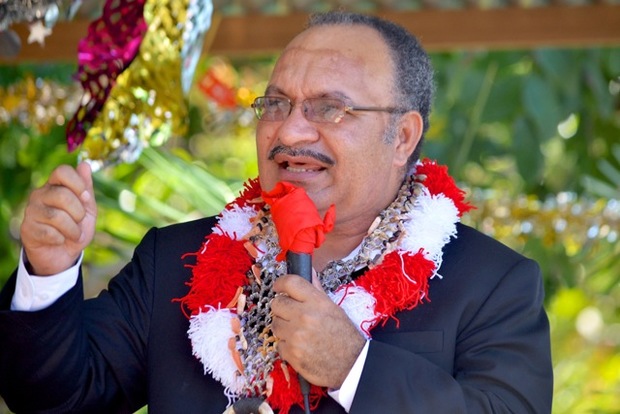
Parkop urges Government to address West Papua issue

LoopPNG – Freddy Mou, October 6, 2016  – Bational Capital District Governor Powes Parkop has called on the Government to seriously look into the plight of West Papua.

In a statement, Parkop said Papua New Guinea should be adopting a more moral and humanistic policy on West Papua instead of sticking to the immoral position of continuing to recognize Indonesia Sovereignty over the territory without question or conditions.

Parkop said he will be making submission to this effective to the NEC and will impress on NEC to change our policy.

“Otherwise I will be pushing for such changes in the next Government after 2017 General Election.

“I will be proposing that PNG adopt a position where while we acknowledge Indonesia control over the territory of West Papua, we must question the legality of the integration and call on Indonesia to correct this historical error so as to bring lasting peace and harmony to our region.

“We all know that so called Act of Free Choice in 1969 did not comply with the law as it exist in 1969 or since.

“We all know Indonesia invaded West Papua in 1962 and had military, political and administrative control of the territory in 1969 when the Vote on Integration was taken.

“We all know Indonesia only allowed 1000 people out of 1.2 million Papuans to vote in 1969. We all know that these 1000 people were selected and subject to undue pressure by the Indonesia.

“Indonesia is obliged to correct this historical mistake that continues to retard the progress of the Papua People and hinder their freedom.”

Parkop added that although the Government has made progress in addressing the Papuan issue on a bilateral and multilateral basis but our policy has not changed.

“Our policy to just recognize Indonesia Sovereignty over West Papua without reservation is immoral, outdate and inhuman.

“It is also against our conscience. It is also against the stand or position of all Pacific Countries including Polynesians and Micronesians.”

Indonesia invaded Timor Leste in 1975 and eventually allowed them to decide their future by a referendum 2000.

“We all applaud them for correcting that historical mistake. They should do the same with West Papua. Indonesia will be doing a service to humanity and to itself by making this honorable decision rather than to lie.

Parkop further added that as friends of Indonesia, we should not be afraid to speak our mind about the nature of our friendship including pointing out any impediment to a robust friendship.

He said the future between PNG and Indonesia will be more robust and enhance if Indonesia relents and agree to allow Papuans to morally and legally decide their future by a properly supervised referendum under the United Nations.

“This is the policy PNG Government should adopt as it is moral, humanistic, legal and honest policy.”

Sir Michael Somare: We Melanesians must make right choice on Papua

By PMC Editor – July 14, 2016, By Sir Michael Somare

Sir Michael Somare
Sir Michael Somare … “Our decisions made at the MSG Leaders’ Summit over these next two days will embed values in future generations of Melanesian people who will regard our solidarity with admiration if we make the right decisions regarding decolonisation and self-determination.” Image: Malumnalu.blogspot

The four Melanesian prime ministers of Papua New Guinea, Solomon Islands, Vanuatu, and Fiji will come together in Honiara, Solomon Islands today as chairman Manasseh Sogavare hosts the 23rd Melanesian Spearhead Group Special Leader’s Summit.

Decolonisation and independence of Melanesian countries are processes of liberation close to my heart. The Noumea Accord, for instance, symbolises the pursuit of self-reliance and autonomy synonymous with the rights and freedoms available to all peoples of this century.

In practice the accord provides for technical assistance, training programmes for the Kanaky people still residing under French sovereign rule.

Such arrangements already provide a legal and practical framework for the indigenous people of New Caledonia to fully exercise their right to self–determination, even as they long for independence.

Our decisions made at the MSG Leaders’ Summit over these next two days will embed values in future generations of Melanesian people who will regard our solidarity with admiration if we make the right decisions regarding decolonisation and self-determination.

From today we will tell our own story, the story of our constitutional and universal right to exercise the freedoms given to us at independence in each of our countries.

Today we can, by consensus, trigger the process for greater self-determination to be enjoyed by West Papuans.

‘Founding Father’
As a “Founding Father” I am encouraged by the progress made already on the key issue of West Papua’s full membership to the Melanesian Spearhead Group.

I am inspired that the MSG senior officials, ministers and leaders will have maintained consensus despite some complex and sensitive diplomatic, economic, social, and political issues.

Genuine and inclusive consultation among all MSG member states and one territory in considering the future path to decolonisation and self-determination for West Papua is critical now more than ever before.

We can strengthen the Melanesian Spearhead Group and our region, which includes West Papua, by ensuring that Melanesian leaders in Honiara approve the United Liberation Movement for West Papua’s application for full membership to the Melanesian Spearhead Group.

We are one people spread over many continents and oceans, separated by the sea and mountain ranges in diverse sovereign jurisdictions.

Our ancestors roamed freely over our shared land and sea for centuries prior to colonial and Christian interventions.

We must hold onto that spirit of a vast community that underpins our modern efforts within diplomacy and international cooperation and dialogue.

Political upheaval
All MSG member states and one territory have experienced some level of political upheaval and civil conflict requiring decisive political and economic reform and declarations for peaceful transitions to occur.

The export of mineral resources and agricultural commodities remains a key source of revenue for all states and one territory at the MSG.

So it is essential that we endeavor to sustain political stability in order to buttress economic and environmental sustainability for the good of all Melanesian people.

But our sub-region can only prosper when all political, economic, socio-cultural and environmental issues are considered in the same light according to the needs of all of our people.

Our growth potential relies on our diplomatic and official relationships, our ties and our linkages to the rest of the world. But as a group of ethnically linked people we have always relied on talking, exchange and cultural participation.

We are Melanesians after all. That is what makes us distinct.

We bring those distinct features to every forum but this week at the Melanesian Spearhead Group Special Leaders’ Summit we have a unique opportunity yet again to decide on our own future with integrity as self-governing and independent members of a powerful sub-regional bloc.

More than ever that sub-region needs to include West Papua as an integral part and, as an equally participating member.

Rt Hon Grand Chief Sir Michael T Somare
Port Moresby

Churches express solidarity with West Papua independence campaigners

Posted on: June 30, 2016 9:12 AM

[ACNS, by Gavin Drake] The increasing tensions in Indonesian West Papua has attracted the attention of both the World Council of Churches’ Central Committee and the Bishops of the Anglican Church in Papua New Guinea.

Sovereignty over West Papua has been disputed since the demise of the Netherlands East Indies in the 1940s. Indonesia claimed sovereignty over all of the former colony but the Dutch retained control over West Papua. Indonesia invaded the island in the 1960s and a later UN-brokered peace deal resulted in 1,000 “elders” electing to become part of Indonesia.

But the result of the “Act of Free Choice” has been disputed – with pro-independence campaigners saying that the elders who took part in the election were hand-picked by Indonesia and forced to vote unanimously for Indonesian control.

There has been growing calls for independence despite a crackdown on protest activity. Recently, police arrested more than 1,000 protestors who took part in a pro-independence march. International journalists are not allowed into the province and reports indicate that local journalists covering protests are harassed and blocked by police and military officials.

Archbishop Clyde Igara, Primate of the Anglican Church of Papua New Guinea, said that week that the bishops of the PNG church “spoke in support of our Melanesian brothers and sisters of West Papua” during their recent meeting.

“The constitution of the Anglican Church of Papua New Guinea affirms the dignity of human life and the need to show respect for all people,” he said. “The bishops wish to express on behalf of the Anglican Church the hope that the Governments of Papua New Guinea and of West Papua will make every effort to give freedom to the many displaced people of West Papua to settle and re-establish their sense of livelihood; their homes and gardens.”

The Papua New Guinea bishops welcomed their government’s decision to give citizenship to West Papuans living in PNG. “We are clear that it is a Gospel imperative that we must ‘love the Lord our God and secondly to love our neighbours as ourselves’”, Archbishop Igara said. “Therefore we stand in solidarity with the people of West Papua.”

Meanwhile, at their meeting in Trondheim, Norway, the Central Committee of the World Council of Churches called on member churches to “pray and act in support of Christian witness in the region.”

The Committee also requested that an international ecumenical delegation be sent to the region “as soon as possible” in order to “demonstrate the ecumenical movement’s accompaniment of the churches in the region, to hear the voices of the victims of violence and human rights violations, and to pursue the pilgrimage of justice and peace in this context.”

The Indonesian government says that “any solution to the issue must be within the framework of the unitary state of the Republic of Indonesia.

“It is important to stress that Indonesia is a multi-ethnic and multi-cultural and multi-linguistic nation with ‘unity in diversity’ as its moto. It is therefore important to find common ground to bridge differences among its peoples as differences are common in democratic societies throughout the world.”

It suggests increased regional autonomy in the region, which it calls Irian Jaya, and warns that “Problems arising of the province . . . have to be dealt with on a national basis and the Government would view any attempt to disrupt Indonesia’s sovereignty over Irian Jaya as interference in the internal affairs of a sovereign state

PNG Restates Wet Papua Concerns

11:39 am on 26 May 2016

Papua New Guinea’s prime minister says his government is concerned about what is happening in West Papua and has expressed this directly to Indonesia’s President Joko Widodo.

Peter O’Neill made the comment on FM100’s radio talk back show while responding to questions from the public about West Papua.

Papua New Guinea's Prime Minister, Peter O'Neill.
Papua New Guinea’s Prime Minister, Peter O’Neill. Photo: PNG PM’s office


The prime minister has previously spoken of the need for PNG to speak out about ongoing human rights abuses in his country’s neighbouring territory.

On talkback yesterday, Mr O’Neill indicated West Papuans were welcome in PNG.

“We are equally concerned about what is happening in West Papua,” he said.

“We have expressed that directly to the highest authority including the President this year particularly the human rights issue and for autonomy.”

The prime minister said that as chair of the Pacific Islands Forum, PNG had written to President Widodo, requesting to send a fact-finding team of Pacific Island leaders to West Papua to talk directly with the people themselves.

“The response we received from Indonesia is they welcome such a dialogue and appreciative of our desire for West Papua have some more autonomy, whether that will be self-determination or not is something that can be worked on towards,” he said.

The prime minister’s comments follow criticism by the chairman of the Melanesian Spearhead Group, Manasseh Sogavare, that Indonesia has failed to respond to requests for engagement over Papua by both the Pacific Forum and the MSG.

After their special summit scheduled for Port Vila earlier this month was postponed, MSG leaders were now expected to meet in Port Moresby in coming days.

Port Moresby meeting

The MSG leaders meeting is expected to coincide with a summit of the African Carribean and Pacific Group that PNG is hosting.

“So I am aware we will have an MSG side meeting at the weekend,” Mr O’Neill is reported in the Post Courier as saying, “and some of the issues will be brought up during the ACP summit which is coming up next week.”

Vanuatu’s Daily Post newspaper reports that the country’s Prime Minister Charlot Salwai and his Foreign Minister Bruno Leingkone will be attending.

Mr Salwai has clearly stated his government’s support for the United Liberation Movement of West Papua’s bid for full membership in the MSG.

Indonesia is also seeking full membership, although Mr Salwai is also proposing that Indonesia’s current associate membership in the group be cancelled.

Melanesian Anglicans co-launch group advocating West Papua freedom

Posted on: March 26, 2015 12:30 PM

[The Anglican Church of Melanesia] A one day consultation to discuss and highlight issues concerning West Papua’s struggle for freedom and independence from Indonesia on Friday 20th March 2015, led to the formation of the “Solomon Islands Solidarity for West Papua Freedom”.

The consultation was jointly organized and hosted by the Pacific Council of Churches (PCC) and the Anglican Church of Melanesia (ACOM) and was held at the Melanesia Haus, St. Barnabas Cathedral grounds, in Honiara.

The consultation was a follow up of a workshop held in June 2014 on the theme:Rethinking the Household of God in the Solomon Islands: Training on Stewardship and Leadership, and was facilitated by Mr. Aisake Casimira of PCC and Mr. Sirino Rakabi of the Ecumenical Centre for Research, Education and Advocacy (ECREA), from Fiji.

Representatives and leaders from all the SICA [Solomon Islands Christian Association] and SIFGA [Solomon Islands Full Gospel Association] member churches, various civil society organizations and groups including Forum Solomon Islands International (FSII), Free West Papua Movement in the Solomon Islands, S.I. Grassroots for West Papua, ACOM’s Commission for Justice, Reconciliation and Peace (CJRP), ACOM Mothers Union, Young Women’s Parliamentary Group, Voice Blo Mere, and, the Development Services Exchange (DSE) representing the NGO’s in the country, attended the consultation.

Membership of the “Solomon Islands Solidarity for West Papua Freedom” comprises of representatives of the churches, organizations and groups that were present during the consultation.

The consultation also reiterated its support for the call made by the Churches in the country in a press release issued in Honiara in June 2014 to“…actively support the political independence struggle of the people of West Papua” and to “…commit to advocating their inherent right to gainful political self-determination and true freedom”.

Consequently, a committee was set up to administer and execute planned programmes and activities in the lead up to the Melanesian Spearhead Group (MSG) meeting to be held in Honiara in July 2015, as well as to formulate strategies for ongoing advocacy campaigns in the Solomon Islands as well as regionally and internationally, for the freedom of West Papua.

The Terms of Reference (TOR) for this committee include the following:

1. That the SI government support West Papua’s application to be a member of the MSG;

2. That the SI government makes a clear stand in favour of West Papua;

3. That strategies are made for ongoing advocacy towards freedom for West Papua; and,

4. That submissions are made to the SI government and other national, regional and international bodies on West Papua issues.

Biblically, the underlying principle for the position of the consultation is drawn from the narrative in Exodus 3: 7 – 8 in which God told Moses to go and tell Pharaoh to release [God’s] people from slavery so that they can go and worship [God] freely.

“This consultation affirms that it is morally and ethically wrong to remain silent when our brothers and sisters from West Papua are suffering from suppression and human rights atrocities under an oppressive colonial ruler at our very own doorstep. The Melanesian Region, the Pacific and the World at large need to speak out against Indonesian oppression of West Papua and call upon their leaders and government to ‘let God’s people and nation of West Papua go’.”

PNG Prime Minister’s Indonesia visit raises questions over West Papua stance

By DANIEL DRAGESET

Spearhead Group (MSG) meets in New Caledonia to decide if the West Papua National Coalition for Liberation will be granted membership.

Support
The timing of O’Neill’s Indonesia visit has raised questions on Papua New Guinea’s support for West Papua, Radio New Zealand International reports.

O’Neill has stated that West Papua is an integral part of Indonesia, but has voiced concern about human rights abuses in West Papua.

Several reports detail torture and abuses against pro-independence activists in West Papua.

Border issues include people from West Papua fleeing to Papua New Guinea.

O’Neill said he looks forward to discussing these issues with Yodhoyono.

“We are encouraged by the invitation from the Indonesian Government, through the president, for the first time in its history asking Papua New Guinea to help in some of those issues in West Papua,” he said.

Consensus
The decision to include the West Papua National Coalition for Liberation in the MSG has received strong support ahead of the upcoming summit with the exception of Papua New Guinea.

Decisions in the MSG are usually reached by consensus. If Indonesia succeeds in lobbying Papua New Guinea, it might persuade the country to refrain from supporting West Papuan inclusion in the MSG, according Radio New Zealand International.

The president of the self-styled republic of West Papua, Forkorus Yaboisembut, made an appeal to MSG, the Pacific Islands Forum and the African, Pacific and Caribbean group of states to recognise his country almost three weeks ago

PNG Supporting West Papua’s Indepencence

 PNGBlogs.com  Melanesian support for a free West Papua has always been high. Travel throughout Papua New Guinea and you will often hear people say that West Papua and Papua New Guinea is ‘wanpela graun’ – one land – and that West Papuans on the other side of the border are family and kin.

In the Solomon Islands, Kanaky, Fiji and especially Vanuatu, people will tell you that “Melanesia is not free until West Papua is free”. This was the promise that the late Father Walter Lini, Vanuatu’s first prime minister made.

Ordinary people in this part of the Pacific are painfully aware that the West Papuan people continue to live under the gun. It is the politicians in Melanesia who have been slow to take up the cause.

But that may be changing.

Earlier this month, Powes Parkop, Governor of the Papua New Guinea’s National Capital District, nailed his colours firmly to the mast.

In front of a crowd of 3000 people, Governor Parkop insisted that “there is no historical, legal, religious, or moral justification for Indonesia’s occupation of West Papua”.

Turning to welcome West Papuan independence leader Benny Wenda, who was in Papua New Guinea as part of a global tour, the governor told Wenda that while he was in Papua New Guinea “no one will arrest you, no one will stop you, and you can feel free to say what you want to say”.

These are basic rights denied to West Papuans who continue to be arrested, tortured and killed simply because of the colour of their skin.

Governor Parkop, who is a member of the International Parliamentarians for West Papua, which now has representatives in 56 countries, then went on to formerly launch the free West Papua campaign.

He promised to open an office, fly the Morning Star flag from City Hall and pledged his support for a Melanesian tour of musicians for a free West Papua.

Governor Parkop is no longer a lone voice in Melanesia calling for change.

Last year, Papua New Guinea’s Prime Minister Peter O’Neill broke with tradition and publicly admonished the Indonesian government’s response to ongoing state violence, human rights violations and failure of governance in West Papua.

Moved by 4000 women from the Lutheran Church. O’Neill said he would raise human rights concerns in the troubled territory with the Indonesian government.

Now Governor Parkop wants to accompany the Prime Minister on his visits to Indonesia “to present his idea to Indonesia on how to solve West Papuan conflict once and for all.”

Well known PNG commentator Emmanuel Narakobi remarked on his blog that Parkop’s multi-pronged proposal for how to mobilise public opinion in PNG around West Papua “is perhaps the first time I’ve heard an actual plan on how to tackle this issue (of West Papua)”.

On talk back radio, Governor Parkop accused Australian Foreign Minister Bob Carr of not taking the issue of West Papua seriously, of “sweeping it under the carpet.”

In Vanuatu, opposition parties, the Malvatumari National Council of Chiefs and the Anglican bishop of Vanuatu, Rev James Ligo are all urging the current Vanuatu government to change their position on West Papua.

Rev Ligo was at the recent Pacific Council of Churches in Honiara, Solomon Islands, which passed a resolution urging the World Council of Churches to pressure the United Nations to send a monitoring team to Indonesia’s Papua region.

“We know that Vanuatu has taken a side-step on that (the West Papua issue) and we know that our government supported Indonesia’s observer status on the MSG, we know that.

“But again, we also believe that as churches we have the right to advocate and continue to remind our countries and our leaders to be concerned about our West Papuan brothers and sisters who are suffering every day.”

In Kanaky (New Caledonia) and the Solomon Islands, West Papua solidarity groups have been set up. Some local parliamentarians have joined the ranks of International Parliamentarians for West Papua.

In Fiji, church leaders and NGO activists are quietly placing their support behind the cause even while Frank Bainimarama and Fiji’s military government open their arms to closer ties with the Indonesian military.

This internationalisation of the West Papua issue is Indonesia’s worst nightmare; it follows the same trajectory as East Timor.

The West Papuans themselves are also organising, not just inside the country where moral outrage against ongoing Indonesian state violence continues to boil, but regionally as well.

Prior to Benny Wenda’s visit to Papua New Guinea, Vanuatu-based representatives from the West Papua National Coalition for Independence formerly applied for observer status at this year’s Melanesian Spearhead Group meeting due to be held in Noumea, New Caledonia in June, home to another long running Melanesian self-determination struggle.

While in Vanuatu Benny Wenda added his support to that move, calling on Papuans from different resistance organisations to back a “shared agenda for freedom”.

A decision about whether West Papua will be granted observer status at this year’s MSG meeting will be made soon.

In Australia, Bob Carr may be trying to pour cold water on growing public support for a free West Papua but in Melanesia the tide is moving in the opposite direction.

PACIFIC SCOOP

PNG prime minister wants to do more for Melanesians in West Papua

ABC Net News, Thursday, February 5, 2015

MARK COLVIN: Papua New Guinea’s prime minister Peter O’Neill has promised to do more to speak out on behalf of Melanesians in Indonesian West Papua.

In the past, Port Moresby has stuck firmly to its position that West Papua is an integral part of Indonesia. It’s been reluctant to talk about human rights abuses or to speak out on behalf of Melanesian separatists.

In a speech to a PNG leaders summit today, Mr O’Neill said the time had come to speak about oppression of brothers and sisters in West Papua.

Jemima Garrett reports.

JEMIMA GARRETT: Prime Minister Peter O’Neill told cabinet ministers, provincial governors, business leaders, and development partners such as Australia that 2015 will be a defining year for PNG in an increasingly uncertain world.

At home, Mr O’Neill sees a year in which core policies such as free education, better healthcare and infrastructure, and stronger law and order, take root, despite pressure on the budget from lower gas prices.

In the wider world, Mr O’Neill said, with increasing terror attacks, there must be no complacency about evil.

In the region, he highlighted the role PNG has played recently in encouraging Fiji to return to democracy, and its support for Melanesians in New Caledonia.

And then he turned to the tricky issue of Indonesian West Papua, and signalled a change of approach.

PETER O’NEILL: Sometimes we forget our own families, our own brothers, especially those in West Papua.

(applause)

I think, as a country, time has come for us to speak about the oppression of our people there.

(applause)

JEMIMA GARRETT: Apart from Vanuatu, governments in the Pacific have been slow to speak out on human rights abuses in West Papua, especially after Fiji was instrumental in getting Indonesia admitted as an observer at the Melanesian Spearhead Group of nations.

With the increasing penetration of social media, Pacific voters have become more vocal about the failure of their governments to act.

Mr O’Neill has taken note.

PETER O’NEILL: Pictures of brutality of our people appear daily on the social media, and yet we take no notice.

We have the moral obligation to speak for those who are not allowed to talk. We must be the eyes for those who are blindfolded. Again, Papua New Guinea is a regional leader.

We must take the lead in having mature discussions with our friends in a more solid and engaging manner.

JEMIMA GARRETT: On Friday, the United Liberation Movement of West Papua will submit an application for full membership of the Melanesian Spearhead Group. Grassroots campaigners are urging their governments to support their Melanesian brothers.

Indonesia will oppose the move, but with the Kanak Liberation Movement from New Caledonia already a full member, there is a precedent.

The MSG leaders are expected to meet to make a decision in the middle of the year.

MARK COLVIN: Jemima Garrett.

West Papua movement gains steam

MARK COLVIN: ABC News – It’s been over 40 years since the UN recognised Indonesia’s control over West Papua. But many West Papuans believe that recognition, that that recognition known as the Act of Free Choice, was a sham, and they’ve resisted the Indonesian military ever since.

It’s been a complicated and often ferocious resistance. Human rights groups say that over 400,000 people have been killed. But recently, the independence movement’s been gaining steam. Last month, thousands of West Papuans rallied for independence in the biggest protests in a decade.

Clemens Runawery is a former West Papuan politician, who’s been involved with the independence movement since it began. He’s lived in exile ever since 1969, when Australian officials stopped him leaving Papua New Guinea to press the UN for a fair vote on independence. He spoke to me from Brisbane.

CLEMENS RUNAWERY: The younger generations in Papua are now eagerly and forcefully wanting to get out from Indonesian rule.

MARK COLVIN: So they don’t just want autonomy within Indonesia?

CLEMENS RUNAWERY: They don’t want… Autonomy is not, it was just an appeasement strategy to show to the world ‘well yes we are offering an autonomy to Papuans’. But that is not what we wanted.

You know there are several types of autonomy that we look at. The Bougainville autonomy is coming up, the parliament of PNG have endorsed the referendum that will become in the next two or three years, in 2015. The people in Bougainville will say as to whether to remain within PNG or to cede from PNG.

MARK COLVIN: Do you think that Papuans want to be part of Papua New Guinea or do they want to be a completely independent state of their own; what do they want?

CLEMENS RUNAWERY: They want to be completely independent on their own. Not to be part of Papua New Guinea. But once we are independent West Papuans can forge closer relationship with PNG because we are geographically and culturally one island with one, more or less, cultural identity and position.

MARK COLVIN: The Indonesians have used what they called transmigrasi to change the demographics of Papua; are Papuans, native Papuans likely to be outnumbered?

CLEMENS RUNAWERY: Oh yes. Well there are about 1.7 million indigenous Papuans and about 1.8 million non-Papuans so…

MARK COLVIN: So is it possible they could have a referendum and you would be simply out-voted because of that?

CLEMENS RUNAWERY: Yes, but then we need to define who are to go to the poll? And in our view, in my view, and we’ve been addressing this one quietly, the Indonesians who came after 1963 and born and grow up there, they will not be party to the referendum.

MARK COLVIN: You can imagine that they would be very frightened then that, you say 1.8 million people, that they….

CLEMENS RUNAWERY: Yes …

MARK COLVIN: … might just have their homes taken away and be sent back to Java.

CLEMENS RUNAWERY: No, no, no. When the referendum takes place they will not be taking part with it, only the Melanesians, the Papuans, or Indigenous population will go to the poll. They will have to stay out. But after the referendum they have a choice to decide, either to remain or to go home. It’s up to them, we are not…

MARK COLVIN: Will they have …

CLEMENS RUNAWERY: …. going to change them.

MARK COLVIN: … the vote when you had an election, if you won the referendum?

CLEMENS RUNAWERY: Yes, if we won the referendum, or whichever way, but they will not be party or part of the referendum.

MARK COLVIN: Because there would be a danger of creating a new sort of Israel, a situation like Israel, wouldn’t there?

CLEMENS RUNAWERY: Oh not only that but we’re also observing what is happening in Fiji where the Indian Fijians are dominating the whole political and economical landscape there and we don’t want that to happen. So we need to address this issue right now and we have to talk openly about it.

And our position is…

MARK COLVIN: So you, just to be clear there, you approve of the political repression of Indian Fijians who have been there for generations?

CLEMENS RUNAWERY: Oh yes.

MARK COLVIN: You approve of that?

CLEMENS RUNAWERY: We don’t but we are learning from what is happening there. Demographic competition in Fiji is such that Fijians almost become minority, but what is happening there is that the Fijians still have a say, a lot of say, in the government bureaucracy and all that. But the natives…

MARK COLVIN: Fiji was working its way towards a fairly multicultural society and then there were a series of coups and the Fijians, as I say, repressed them.

CLEMENS RUNAWERY: That’s right but…

MARK COLVIN: But do you approve of that…

CLEMENS RUNAWERY: … that’s another angle.

MARK COLVIN: … do you think that’s how it ought to go?

CLEMENS RUNAWERY: No, no…

MARK COLVIN: …that Melanesian people should have more political rights than people who are not Melanesian?

CLEMENS RUNAWERY: That is a very contentious issue…

MARK COLVIN: That’s why I’m asking.

CLEMENS RUNAWERY: …we need to establish a clear political landscape whereby indigenous have a lot of say but we must also allow the non-indigenous, who have been in Papua for, say, four decades, they can stay.

But the problem is this: who brought them in? They themselves came in through transmigrasi, nobody asked them to come, West Papuans never asked them to come, we never invaded Java with the vast majority of Papuans, no. So they have to listen, they have to have respect to the local community because they own the land.

In Melanesia, in Papua people are attached to the land, land is the mother. If you kill the mother then you kill your life, you future.

MARK COLVIN: Exiled former West Papuan politician, Clemens Runawery, now an active member of the country’s independence movement.

Up ↑

Wantok COFFEE

Organic Arabica - Papua Single Origins

MAMA Minimart

MAMA Stap, na Yumi Stap!

PT Kimarek Aruwam Agorik

Just another WordPress.com site

Wantok Coffee News

Melanesia Foods and Beverages News

Perempuan Papua

Melahirkan, Merawat dan Menyambut

UUDS ULMWP

for a Free and Independent West Papua

UUDS ULMWP 2020

Memagari untuk Membebaskan Tanah dan Bangsa Papua!

Melanesia Spirit & Nature News

Promoting the Melanesian Way Conservation

Kotokay

The Roof of the Melanesian Elders

Eight Plus One Ministry

To Spread the Gospel, from Melanesia to Indonesia!

Koteka

This is My Origin and My Destiny