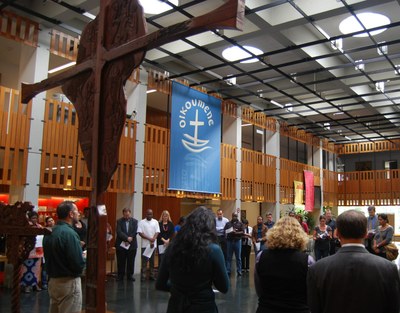
Dewan Gereja Dunia sebut Indonesia gagal menangani situasi kemanusiaan di Tanah Papua

Jubi TV – Peter Prove, Direktur Urusan Internasional Dewan Gereja Dunia, berbicara tentang Hak Asasi Manusia (HAM) dan situasi kemanusiaan di Tanah Papua. Dalam video wawancara baru-baru ini yang disiarkan Dewan Gereja Dunia (WCC), Peter Prove, mengatakan pemerintah Indonesia gagal menangani dan pemperbaiki situasi kemanusiaan dan HAM di Tanah Papua.

Tanah Papua – dua provinsi Indonesia yang terdiri berada di bagian barat pulau New Guinea – telah menjadi fokus perhatian WCC sejak lama. Dalam wawancara baru-baru ini, Prove menunjukkan bahwa kepedulian terhadap penduduk asli Papua meningkat sebagai akibat dari situasi hak asasi manusia dan kemanusiaan yang terus-menerus dan cukup serius di wilayah tersebut, yang terus terang gagal ditangani dan diperbaiki oleh pemerintah Indonesia.

Mengingat sejarah yang disebut – dan masih diperdebatkan – “Act of Free Choice” dimana West Papua diintegrasikan ke Indonesia pada tahun 1969, Prove mencatat bahwa kegagalan Jakarta untuk memenuhi janjinya kepada rakyat Papua telah mengakibatkan peningkatan oposisi lokal terhadap Indonesia.

“Apa yang telah kita lihat selama beberapa dekade adalah tingkat pelanggaran hak asasi manusia yang sangat tinggi. Termasuk pembunuhan di luar proses hukum, penolakan kebebasan berekspresi dan berkumpul dan banyak pelanggaran lainnya,” kata Prove.

Prove juga menegaskan bahwa selama pandemi COVID-19, insiden pelanggaran hak asasi manusia yang serius justru meningkat.

Dewan gereja dunia dan mitranya bekerja sama untuk memantau hak-hak sipil dan politik serta hak-hak ekonomi, sosial dan budaya di wilayah tersebut.

Meningkatnya militerisasi respon pemerintah Indonesia telah memperburuk situasi, meskipun ada janji-janji dialog dengan masyarakat asli Papua. Menurut Prove, ini adalah janji yang telah dibuat di tingkat politik tetapi tidak dipenuhi.

Prove mengamati dan menggambarkan tindakan militer dan polisi di Tanah Papua. Ia menyimpulkan, kekerasan terhadap pengunjuk rasa damai telah meningkat. Banyak pembunuhan, banyak pemukulan, banyak penghilangan paksa terjadi sebagai bentuk respons terhadap aksi protes damai yang dilakukan orang Papua.

Selain itu, orang-orang yang mengungsi dari daerah yang terkena dampak konflik tidak menerima bantuan yang mereka butuhkan dari otoritas nasional, dan badan-badan kemanusiaan internasional hanya diberi sedikit akses atau bahkan tidak diberi akses ke wilayah tersebut.

“Pihak berwenang Indonesia tentu saja perlu mengatasi krisis hak asasi manusia yang sudah berlangsung lama, berkelanjutan, dan meningkat di kawasan ini,” kata Prove. (*)

News Desk

Call for more access to West Papua

RadioNZ – A church-backed coalition has called on Indonesia to open greater access to West Papua for international journalists, independent observers, human rights organizations and the International Red Cross.

International consultation on West Papua 22-24 February 2017 in Geneva, hosted by the World Council of Churches.
International consultation on West Papua 22-24 February 2017 in Geneva, hosted by the World Council of Churches. Photo: Victor Mambor

The call came at an international consultation hosted by the World Council of Churches with the International Coalition on Papua in Geneva.

Also in Geneva this week, at the 34th session of the UN Human Rights Council, seven Pacific Island countries delivered a statement about their concern over rights abuses in West Papua.

The WCC general secretary, Rev. Dr Olav Fykse Tveit, who visited Papua in 2012 said the organisation supports the struggle for West Papuan human rights, and urges an end to ongoing violence and impunity.

He said the WCC backed the call for social and economic justice through serious dialogue and a concrete political process that seeks to address root causes of the present problems.

The round-table gathering included civil society proponents, human rights experts and diplomats who examined current patterns of human rights abuses in West Papua.

The gathering coincides with the 34th session of the UN Human Rights Council in Geneva, where seven Pacific nations this week raised concern about a lack of justice over serious and prolonged rights abuses in West Papua.

Indonesia denied allegation that it failed to address rights abuses in Papua, saying it always endeavoured to address violations, takes preventative measures and delivers justice.

Protesters are resisting police using water cannons during a protest by mostly university students from Free Papua Organization and the Papua Student Alliance in Jakarta on December 1, 2016.
Protests in West Papua in 2016. Photo: AFP

However, the WCC website reported that this week’s consultation in Geneva had shown growing level of international concern about Papua.

Victor Mambor of the Papua Coalition for Law Enforcement and Human Rights said that the civil society group made a number of recommendation to the government of Indonesia.

As well as demanding open access to Papua for international journalists and human rights groups they called for ensuring

“that perpetrators of the police and military responsible for past and present human rights violations in West Papua are prosecuted in public and fair trials, resulting in the appropriate sentences for perpetrators and the restitution, compensation and rehabilitation of victims”.

Meanwhile, the general secretary of the Pacific Conference of Churches based in Fiji, Rev. Francois Pihaate, said churches in the region were very concerned about violence in Papua.

West Papuan journalist Victor Mambor.
West Papuan journalist Victor Mambor. Photo: RNZI / Johnny Blades

“How can we as churches be ignorant of what is going on outside our own world? That is why we as churches are concerned,” he said.

A member of the Indonesian mission to the United Nations in Geneva, Denny Abdi, disputed the veracity of claims that nearly 5000 Papuans were arrested last year for peacefully demonstrating their independence aspirations.

However, the WCC’s West Papuans representatives have said there is no trust between the people of West Papua and the government in Jakarta, rendering it “not possible to talk heart to heart about what is going on”.

“We have to talk, ” said one member of the WCC’s Papua chapter. “As a church the prophetic voice needs to go beyond boundaries.”

Demonstrators march in Timika in West Papua.

Demonstrators march in Timika in West Papua. Photo: Supplied

Veronica Koman of the Papua Itu Kita based in Jakarta said the government of Indonesia has failed to address the root problem, which stems from Papua’s controversial incorporation into Indonesia in the 1960s.

“The West Papuan people will not stop screaming for independence until the root cause is addressed,” she said.

Tepat tanggal 1 Mei 2015, Gereja Kristen Injili di Tanah Papua (GKITP) hadir dalam konferensi World Council of Churches (WCC) dan menyampaikan berbagai laporan tentang pelanggaran HAM di Tanah Papua.

Artikel berjudul “Churches in Tanah Papua seek justice, peace and stability” ini menjelaskan berbagai permasalahan yang dialami di tanah Papua, terkait dengan pelanggaran HAM, dan pembunuhan yang terjadi secara terus-menerus.

Up ↑

Wantok COFFEE

Organic Arabica - Papua Single Origins

MAMA Minimart

MAMA Stap, na Yumi Stap!

PT Kimarek Aruwam Agorik

Just another WordPress.com site

Wantok Coffee News

Melanesia Foods and Beverages News

Perempuan Papua

Melahirkan, Merawat dan Menyambut

UUDS ULMWP

for a Free and Independent West Papua

UUDS ULMWP 2020

Memagari untuk Membebaskan Tanah dan Bangsa Papua!

Melanesia Spirit & Nature News

Promoting the Melanesian Way Conservation

Kotokay

The Roof of the Melanesian Elders

Eight Plus One Ministry

To Spread the Gospel, from Melanesia to Indonesia!

Koteka

This is My Origin and My Destiny