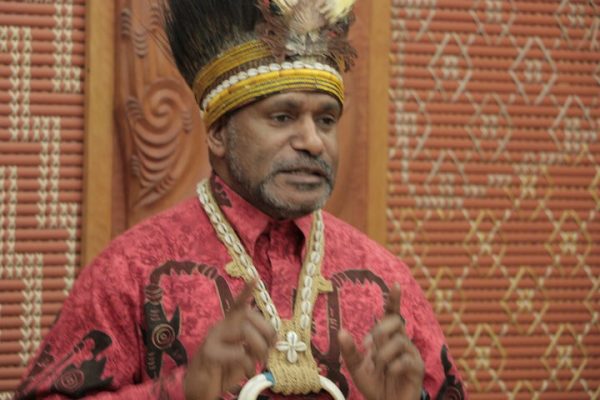
‘We’ll not be safe with Indonesia,’ says West Papua’s Benny Wenda

By Kendall Hutt in Auckland

A lifelong campaigner for a free and independent West Papua has issued a stark warning to New Zealand politicians as he visits the country this week.

Benny Wenda with wantok students at the Auckland University of Technology this week. Image: Del Abcede/PMC

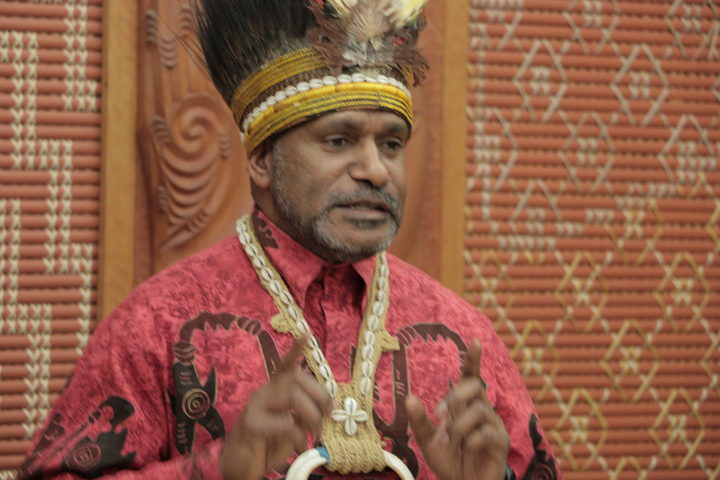
Benny Wenda, a tribal chief of West Papua exiled to the United Kingdom by Indonesia, told Asia Pacific Report that time was running out for West Papua if governments such as New Zealand do not act.

“If we live with Indonesia for another 50 years, we will not be safe. We will not be safe with Indonesia.”

He said the purpose of his visit to New Zealand was to highlight the importance of West Papua returning to its Melanesian family.

“We really need Pacific Islanders, our sisters and brothers across the Pacific – particularly New Zealand and Australia – to bring West Papua back to its Pacific family. Then we can survive. Otherwise, it will be very difficult to survive with Indonesia,” he said.

Since Indonesia took over West Papua following a controversial Act of Free Choice – dubbed by critics as an “Act of no choice” – in 1969, Wenda said his people had suffered.

“Everyday someone is dead, or has been killed, and someone has been stabbed, but no one is brought to justice.”


Human rights violations

In its rush to claim former Dutch colonies in the Asia-Pacific region following West Papua’s self-declared independence from the Netherlands in late 1961, Indonesia has subjected West Papua to continued human rights violations.

Many West Papuans have been imprisoned for non-violent expressions of their political views and widespread allegations of torture have been consistently made against Indonesian authorities.

Raising West Papua’s flag – the Morning Star – can incur 15 years in prison.

Wenda, the 42-year-old founder of the Free West Papua Campaign, has himself been imprisoned, accused of inciting an attack on a police station — despite the fact he was not even in the country at the time.

With foreign media all but denied access to West Papua – despite apparent lifting of restrictions by President Joko Widodo in 2015 – much of Indonesia’s atrocities remain secret, hidden.

It is for these very reasons, Wenda said, that West Papua was fighting.

“We are fighting for our independence, but we are also fighting for our land, our forest, our mountains.”

“Lifelong” Free West Papua advocate Benny Wenda says New Zealand support is integral to the global campaign. Image: Kendall Hutt/PMC

New Zealand support sought
Wenda is calling for the New Zealand government’s integral commitment to the campaign for a free West Papua.

He said this was because New Zealand had a duty, as a part of the Pacific, to raise awareness of the atrocities in West Papua.

“West Papua is a very close neighbour, so that’s why I hope the New Zealand government will speak more about the human rights situation in West Papua.”

Wenda said it was high time for New Zealand to pull away from its business, trade and investment focus with Indonesia and speak about Indonesia’s human rights abuses.

New Zealand “needs to do more” as a country, he said, because New Zealand is a country which is meant to value human rights, respect the rule of law, freedom of speech and the right to self-determination in other parts of the world.

It is therefore time for New Zealand’s foreign policy on West Papua to change.

“West Papua’s hope is Australia and New Zealand. This is a regional issue, this will never go away from your eyes and this is something you need to look at today. Review your foreign policy and look at West Papua.”


‘We are the gatekeepers’

“Australia and New Zealand need West Papua. We are the gatekeepers, and for security reasons, West Papua is very important,” Wenda said.

Catherine Delahunty, a Green Party MP who has campaigned strongly for West Papua on New Zealand’s political front, echoed Wenda’s views.

“They are insistent – the New Zealand government – that West Papua is part of the territorial integrity of Indonesia, so we can’t get past that critical issue.”

She said she therefore did not have much faith in the current government to step up and was looking for future leadership, such as through the Labour-Greens alliance, to move the campaign for West Papuan self-determination forward on the home front.

AUT doctoral student Stephanie Sageo-Tupungu of Papua New Guinea makes a presentation to Benny Wenda on behalf of the Pacific Media Centre. Image: Kendall Hutt/PMC

“I really do think we need a different government that actually has some fundamental commitment to human rights over and above trade and being part of the US military complex around the world. We have to have change to get change. It’s not going to happen through these guys.”

In her eight years in Parliament, Delahunty said the situation in West Papua was the toughest she had had to face.

“This issue, for me, has been one of the most disturbing things I’ve ever worked on. It’s been one of the most horrible and one of the most powerful examples of the cynical use of power and the way in which people can just completely close their eyes.”


Mainstream media role

Both Wenda and Delahunty said in light of the resounding silence surrounding West Papuan media freedom during Indonesia’s hosting of World Press Freedom Day last week that raising awareness of West Papua was key for the world to finding out about the atrocities there.

The mainstream media had a large role to play in this, both acknowledged.

“West Papua really needs the media in terms of the publicity. Media publicity is very important,” Wenda said.

Wenda said it was time for New Zealand’s mainstream to pick up the baton from smaller, independent news agencies and carry stories of West Papua’s atrocities themselves.

“I really hope the mainstream media here carries this. It’s very important. We need more mainstream media. They really need to pick up on this issue.”

Paris-based Reporters Without Borders (RSF) has reported that it was not unusual for both local and foreign journalists in West Papua to be threatened anonymously or by authorities. Data by the Alliance for Independent Journalists (AJI) has revealed there has been an increase in the number of assaults on journalists in the region over the past two years.

There were 78 violent attacks on journalists in 2016, up from 42 attacks in 2015 and 40 in 2014.

The AJI found only a few attackers from those 78 attacks had been brought to justice.

Only last week, independent photojournalist Yance Wenda was arrested and beaten by police while covering a peaceful demonstration, prompting condemnation from RSF that Indonesia was ‘double-dealing’ over media freedom.

‘Everything swept under the carpet’
Wenda said there was deep-seated inaction on Indonesia’s part because of its prejudice in prosecuting people who have attacked and tortured and beaten both West Papuans and also West Papuan journalists.

“Indonesia is getting away with impunity. Nobody is brought to justice. Everything is swept under the carpet.”

Delahunty reflected, however, that the world was seeing the lack of free and frank reporting play out in West Papua.

“We see the consequences of nearly fifty years of no honesty about West Papua and it’s just up the road. It breaks my heart, but it also fires me up because I really believe there are some very, very brave young people, including journalists, who are committed to this issue and I guess it’s that thing: if you have a voice, use it.”

This was Wenda’s call to an audience gathered at his talk at the Pacific Media Centre-hosted Auckland University of Technology on Tuesday evening.

“Today you are the messengers for West Papua.”

Wenda highlighted a “united” Pacific was key in raising awareness of the “Melanesian genocide” occurring in West Papua.

Benny Wendy with wantok students…representing a “united” Pacific for West Papua. Image: Del Abcede/PMC


‘United’ Pacific key

He called on his “brothers and sisters”, but was deeply thankful of the support given already by several Pacific nations for West Papua’s cause.

These nations raised grave concerns regarding human rights violations in West Papua at the 34th session of the United Nations (UN) Human Rights Council in March.

Recent declarations by both the Solomon Islands and Vanuatu were also acknowledged by Wenda.

“We cried for 50 years, but then these countries sacrificed to take on this issue.”

Wenda told the Solomon Islanders and the people of Vanuatu gathered they should “be proud” and that their action was something to “take away in your head and heart”.

Wenda also told the remainder of his audience it was “ordinary people” and “mostly young generations” who were needed to continue the fight, with social media being their greatest tool.

Delahunty added people power and the growing solidarity movement across the globe were also central.

“The only way they’ll speak and respond to this issue at all is if we have growing public pressure and that’s the job of all of us, both inside parliament and outside parliament to raise the issue and to make it something people will feel accountable for, otherwise we just ignore the plight of our neighbours and the killing, torture, environmental desecration and human rights abuses continue.”

Wenda and Delahunty both closed their interviews with a clear message for Indonesia: “Start talking, start listening, and stop thinking that you can ever brow beat people into the dust because you want their resources because in the end, the human spirit doesn’t work like that and these people will never give up. It’s up to us to support them.”

Kendall Hutt is contributing editor of Pacific Media Watch.

Free West Papua advocate Benny Wenda presents Pacific Media Centre Professor David Robie with a traditional “bilum” for his journalism about West Papuan freedom. Image: Kendall Hutt/PMC

West Papuan leader sees solidarity grow in NZ

International support for West Papuan self-determination cause is growing, according to a Papuan independence leader.

Benny Wenda is in New Zealand this week, raising awareness about the Indonesian-administered region of Papua, or West Papua, which he fled in 2003.

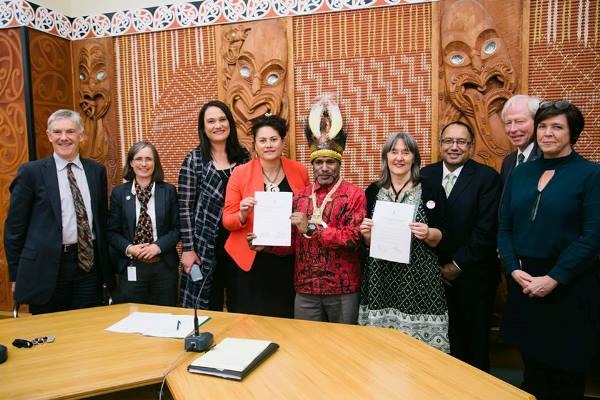
New Zealand MPs pose with the West Papua Freedom Movement's Benny Wenda after signing the International Parliamentarians for West Papua Declaration.
New Zealand MPs pose with the West Papua Freedom Movement’s Benny Wenda after signing the International Parliamentarians for West Papua Declaration.

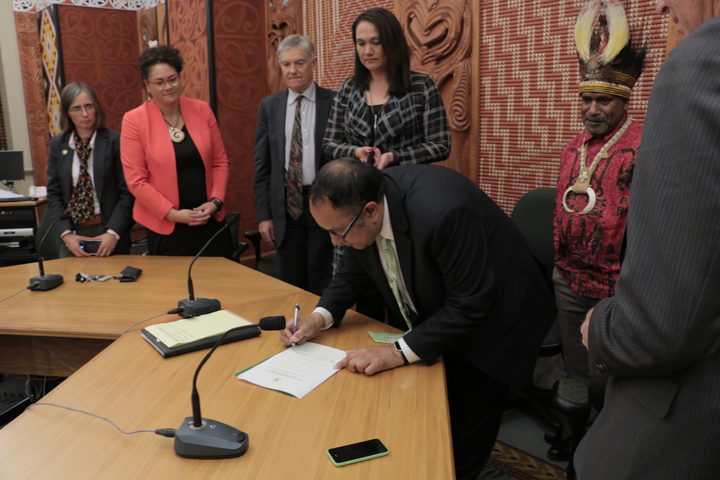
Last night in Wellington he addressed a group of MPs, after which eleven members signed a declaration by the International Parliamentarians for West Papua.

This international organisation of MPs is calling for an internationally supervised self-determination vote in Papua.

Mr Wenda said momentum was being driven by the Pacific Coalition on West Papua, chaired by the Solomon Islands prime minister Manasseh Sogavare.

 New Zealand MPs sign the International Parliamentarians for West Papua declaration as Benny Wenda the head of the West Papua Freedom Movement looks on. Wellington 10-05-2017. Photo: RNZI/ Koroi Hawkins
New Zealand MPs sign the International Parliamentarians for West Papua declaration as Benny Wenda the head of the West Papua Freedom Movement looks on. Wellington 10-05-2017. Photo: RNZI/ Koroi Hawkins

“So the Manasseh Sogavare leadership is bringing a big impact on the West Papua issue. And the seven countries (of the coalition) I joined. It is bringing the West Papua case in United Nations level,” he said.

“So this is a big thing to change now. So we also got support from African, Carribean and the Pacific. So this is a growing number and solidarity around the world.”

Mr Wenda said West Papuans as a people had been through many grave challenges in the last five decades of Indonesian rule, but that they remained ever hopeful.

A growing solidarity network in the Pacific was giving them hope.

“The parliamentarians today…. Catherine Delahunty (New Zealand Green Party MP) lead a lot of MPs, bringing them in to sign their support.

“This is the best medicine, I think, for the people of West Papua. That’s why their spirit is alive even (though) they’re suffering under the Indonesian illegal occupation.”

New Zealand MPs pose with the West Papua Freedom Movement's Benny Wenda after signing the International Parliamentarians for West Papua Declaration.
New Zealand MPs pose with the West Papua Freedom Movement’s Benny Wenda after signing the International Parliamentarians for West Papua Declaration.

According to Mr Wenda, West Papuans were united under the United Liberation Movement for West Papua.

Indonesian government officials have characterised the Liberation Movement as a group of Papuans living abroad which lacks legitimacy to represent Papuans.

Mr Wenda dismissed this, pointing out that the leadership of the Liberation Movement is based both in and, out of necessity, outside Papua.

West Papuan grassroots support for the organisation within Papua was massive, he said.

9 Anggota Parlemen NZ Teken Deklarasi Referendum Papua

Anggota parlemen Selandia Baru, Catherine Delahunty. keempat dari kanan, bersama sejumlah anggota parlemen Selandia Baru lainnya, seusai penandatanganan deklarasi mendukung penentuan nasib sendiri Papua. Tampak juga hadir Benny Wenda, juru bicara ULMWP (Foto: akun Facebook Catherine Delahunty)

WELLINGTON, SATUHARAPAN.COM – Sedikitnya sembilan anggota parlemen Selandia Baru (New Zealand) menandatangani deklarasi untuk menyerukan dan memberi dukungan bagi penentuan nasib sendiri rakyat Papua.

Penandatanganan itu dilaksanakan di Wellington, Rabu (10/05), disponsori oleh anggota parlemen dari Partai Hijau Selandia Baru, Catherine Delahunty. Penandatanganan tersebut disaksikan oleh Benny Wenda, juru bicara United Liberation Movement for West Papua (ULMWP), organisasi yang menjadi wadah berbagai elemen rakyat yang pro-referendum Papua.

“Tadi malam diam-diam sejarah terjadi di Parlemen Selandia Baru, seiring dengan sembilan anggota parlemen menandatangai Deklarasi Westminster bagi referendum Papua yang diawasi oleh PBB,”

tulis Delahunty lewat akun Facebooknya, Rabu (10/05).

Ia juga menerangkan bahwa dirinya senang Benny Wenda dapat hadir dan turut meluncurkan acara itu.

“Saya sangat bangga dengan anggota parlemen kita dari Partai Hijau, Partai Buruh, dan satu dari (partai) Nasional yang menandatanganinya tadi malam, dan juga Marama Fox dari Partai Māori dan Aupito S’ua William Sio, yang tidak dapat hadir tetapi telah menandatanganinya hari ini,”

lanjut Delahunty.

Delahunty tidak menyebut secara rinci siapa saja para anggota parlemen Selandia Baru yang menandatangani deklarasi. Namun di laman FB-nya ia menampilkan sejumlah foto acara penandatanganan itu. Belakangan berdasarkan siaran pers Green Party, diketahui nama-nama anggota parlemen yang menandatangani adalah Catherine Delahunty, Barry Coates, Mojo Mathers, Jan Logie dan Steffan Browning dari Green Party; Louisa Wall, Carmel Sepuloni dan Adrian Rurawhe dari Partai Buruh; dan  Chester Burrows dari Partai Nasional. Deklarasi juga ditanda tangani Co-leader dari Māori Party, Marama Fox, dan anggota parlemen dari Partai Buruh lainnya yang menanda tanganinya keesokan harinya, Aupito S’ua William Sio.

Deklarasi Westminster pertama kali diluncurkan di London tahun lalu. Ketika itu sejumlah anggota parlemen dari negara-negara Pasifik dan Inggris turut menandatangani deklarasi yang menyerukan dilakukannya referendum rakyat Papua.

Benny Wenda yang sedang beranda di Selandia Baru beberapa hari terakhir,  mengatakan dukungan terhadap penentuan nasib sendiri Papua terus tumbuh dari berbagai kalangan. (Berbeda dengan data Delahunty, dia menyebut ada 11 anggota parlemen NZ yang menandatangani deklarasi).

Menurut dia, salah satu pemicu pertumbuhan itu adalah upaya Pacific Coalition for West Papua yang terdiri dari tujuh negara Pasifik, yang dipimpin oleh Perdana Menteri Solomon Islands, Manasseh Sogavare.

Menurut Benny Wenda, inisiatif Sogavare telah membawa isu Papua hingga ke level PBB.

Koalisi negara-negara Pasifik itu terdiri dari Vanuatu, Solomon Islands, Tonga, Tuvalu, Nauru, Palau dan Marshall Islands.

Tahun lalu, tujuh negara ini menyampaikan pernyataan di Sidang Majelis Umum PBB yang mendesak pemerintah RI membuka pintu bagi pelapor khusus PBB ke Papua terkait pelanggaran HAM yang terjadi di pulau paling timur RI itu.

Awal bulan ini, tujuh negara tersebut juga mengeluarkan pernyataan bersama di Brussels, dalam pertemuan tingkat menteri kelompok negara yang tergabung dalam African, Carribean and Pacific (ACP). Dalam pernyataan bersama itu mereka menyatakan keprihatinan atas pelanggaran HAM di Papua serta mendukung penentuan nasib sendiri.

“Jadi terjadi perubahan besar saat ini. Kami juga telah mendapat dukungan dari African Carribean and the Pacific (ACP). Telah terjadi pertumbuhan jumlah dan solidaritas di seluruh dunia,” kata Benny Wenda, dikutip dari radionz.co.nz.

Benny Wenda mengatakan dukungan anggota parlemen Selandia Baru “adalah obat terbaik bagi rakyat PApua. Itu yang membuat semangat mereka tetap hidup….”

Ia juga menegaskan bahwa rakyat Papua bersatu dibawah ULMWP.

Di kalangan elit Papua belakangan ini juga terjadi perkembangan baru. Bila selama ini pengakuan terhadap ULMWP tidak begitu jelas dinyatakan secara resmi, kini mulai terungkap secara terbuka.

Gubernur Papua, Lukas Enembe, Rabu pekan lalu seusai bertemu dengan Dubes HAM Belanda, dikutip oleh berbagai media berkata bahwa untuk menyelesaikan masalah Papua harusnya dilakukan seperti penyelesaian konflik Aceh.

Dia menjelaskan kasus di Papua mirip dengan Aceh karena ada kelompok United Liberation Movement for West Papua New (ULMWP) maupun Komite Nasional Papua Barat (KNPB) maupun TPN/OPM yang memperjuangkan kemerdekaan Papua.

“Konflik yang terjadi di Papua sama seperti Aceh, karena ada kelompok United Liberation Movement for West Papua New (ULMWP) maupun Komite Nasional Papua Barat (KNPB) maupun TPN/OPM yang memperjuangkan kemerdekaan Papua sehingga sering terjadi konflik dengan TNI/Polri,” ujar Enembe.

“Jika ingin menyelesaikan persoalan di Papua, maka perlu dilakukan seperti di Aceh. Di mana, hadirkan semua kelompok-kelompok yang berseberangan dengan pemerintah Indonesia seperti ULMWP maupun KNPB,” kata Lukas Enembe.

Komentar Enembe ini merupakan sebuah tahap baru, karena tahun lalu ketika media meminta komentar Enembe tentang ULMWP, dia berkilah bahwa dirinya tidak memikirkannya. Enembe yang saat itu berada di Istana Presiden di Jakarta, mengatakan tugasnya adalah meningkatkan kesejahteraan rakyat Papua sehingga tidak mau membuang waktu memikirkan soal-soal seperti ULMWP.

Dukungan terhadap dialog Jakarta dengan ULMWP juga dikatakan oleh kalangan parlemen Papua. Anggota Komisi I DPR Papua, komisi yang membidangi pemerintahan, politik, hukum, HAM dan hubungan luar negeri, Kusmanto, mengatakan pemerintah perlu berdialog dengan ULMWP, wadah yang selama ini gencar menyuarakan berbagai masalah Papua di kancah internasional.

Ketika membacakan laporan komisinya dalam sidang paripurna ke IV DPR Papua terhadap LKPJ Gubernur Papua tahun 2016, Selasa (09/05), Kusmanto mengatakan pemerintah harus duduk berunding dengan ULWMP.

“Persoalan HAM di Papua, bukan rahasia lagi. Sudah menjadi pembahasan di dunia internasional bahkan sampai ke PBB. Pemerintah pusat, pemerintah Provinsi Papua, harus duduk bersama mencari solusi,” kata Kusmanto, sebagaimana dikutip dari Tabloid Jubi.

Komisi I, menurut dia, mendukung komitmen atau pernyataan gubernur, meminta pemerintah berdialog dengan ULMWP.

Editor : Eben E. Siadari

West Papua diplomatic cause advances in Brussels

A coalition of Pacific Island nations has called on the African, Caribbean and Pacific group of states to back West Papuan self-determination.

Vanuatu, Solomon Islands, Tonga, Tuvalu, Nauru, Palau and the Marshall Islands gave a joint statement at the group’s Council of Ministers in Brussels.

Johnny Blades has been following developments.


Transcript

JOHNNY BLADES: In Brussels the other day, this  African, Caribbean and Pacific bloc heard from a Vanuatu government MP who was representing this Pacific coalition of seven countries which also is a network of NGO, civil society and church groups as well, who are saying that the world community has to act now on human rights abuses in Papua, but specifically to push Indonesia to have a legitimate self-determination process for the West Papuans, because questions about the legitimacy of the self-determination process by which Papua was incorporated into Indonesia back in the 1960s, questions over that are really gaining momentum at the moment. This follows on from the Coalition’s two recent representations at the UN level on Papua: that is, last September at the UN General Assembly, and then in March at the UN Human Rights Council in Geneva.

BEN ROBINSON-DRAWBRIDGE: So how did the other countries in this group react to this call from their Pacific members?

JB: The Caribbean and African countries were signalling strong support for this, to have a resolution urging a proper self-determination process for the Papuans. But the Papua New Guinea ambassador at the meeting in Brussels spoke out against it. He actually said that the group shouldn;t push too hard at this. He suggested that a fact-finding mission to Papua is necessary for the African, Caribbean and Pacific group to conduct first in order to get a clearer picture of the situation. Remember PNG of course is right next door to West Papua and its proximity to this huge Asian country is a point of great sensitivity.

BRD: Have other Pacific groups like the Melanesian Spearhead Group or even the Pacific Forum, have they made similar representations on West Papua?

JB: They have attempted to, really. This issue has been brought up at both of those bodies many years ago, and particularly for the Melanesian Spearhead Group it was a huge issue because Melanesians in these countries feel strongly about West Papuan self-determination. It’s just that their leadership have not been able to find a unified position on it. And for instance since Indonesia has come in to the MSG as an observer and now an associate member, this issue has not advanced. So they haven’t been able to take it up at UN or ACP levels. And it’s much the same with the Forum: there’s not a unified stance on it. So the group of seven Pacific countries here who took up the issue in Brussels have really just thought ‘we’ll go ahead and do what we have to on our own’ because the Forum and the MSG, they seem to be saying, have failed on the West Papua issue.

BRD: Do any of the other countries in this (ACP) group, do they have significant political clout to be able to make a difference on this issue?

JB: They aren’t powerhouses on the world stage, most of these countries. But I think if there was to be this bloc of 79 countries suddenly taking it up at the UN General Assembly, that is significant in itself, and it would really add to the international pressure on Jakarta to maybe look for a new kind of solution to this simmering discontent in Papua.

Pacific nations back West Papuan self-determination

A coalition of Pacific Island nations has delivered an emphatic call to the African, Caribbean and Pacific group of states to back West Papuan self-determination.

Demonstrators march in Timika in West Papua.
Demonstrators march in Timika in West Papua supporting West Papua self-determination. Photo: Supplied


Vanuatu, Solomon Islands, Tonga, Tuvalu, Nauru, Palau and the Marshall Islands delivered a joint statement at the ACP’s Council of Ministers in Brussels.

It condemned Indonesian human rights violations in Papua, including alleged crimes against humanity and called for an eventual resolution that includes support of the right of West Papuan political self-determination.

Delivering the statement, a Vanuatu government envoy Johnny Koanapo told the Council that “apartheid-like colonial rule” was “slowly but surely” going to wipe out West Papuans as a people “while… the world stood by.”

African and Caribbean countries in the the 79-member group of mainly former colonised territories have voiced strong support for West Papuan self-determination at subcommittee and ambassadorial level during the past two months

Mr Koanapo said that the day’s discussion “now sets up the great likelihood of a resolution on the full range of West Papua issues at the next ACP ministerial council meeting”, scheduled for November.

It’s the latest in a string of high-level representations by the International Coalition for Papua since last year that have taken the issue of West Papua to a new level of diplomatic activity.

The seven Pacific nations, who are in coalition with Pacific regional church bodies and civil society networks, raised concern about West Papuan human rights at the UN Human Rights Council in Geneva two months ago, and also at the UN General Assembly last September.

Indonesia’s government has rejected criticism at the UN level, accusing the Pacific countries of interference and supporting Papuan separatism.

Jakarta says human rights abuses in Papua are largely historical, and that the incorporation of the western half of new Guinea into Indonesia is final.

However, support from other governments for resolution of ongoing human rights infringements in Papua is gaining momentum.

Criticism of the flawed plebiscite by which the former Dutch New Guinea was incorporated into the young state of Indonesia in the 1960s has effected renewed calls for a genuine self-determination process.

At yesterday’s Brussels meeting Papua New Guinea’s ambassador, whose country shares a 760km-long border with Indonesia at West Papua, was the only delegate to speak against ACP moving forward on a resolution on the matter.

Joshua Kalinoe said that “no one is denying that the human rights violations are going on” but suggested that a fact-finding mission to West Papua might be necessary for the ACP to get an accurate picture of the situation.

Guinea-Bissau’s Ambassador Alfredo Lopez Cabral spoke next, comparing the plight of West Papua to East Timor, which Indonesia occupied for 24 years before a mounting legacy of conflict gave way to an independence referendum in 1999.

Siur Mekere Announces Nomination

Former Prime Minister Sir Mekere Morauta today announced that he had nominated as a candidate for the seat of Moresby North-West.

“I nominated this morning as an independent candidate,” he said.

“My decision is based on widespread public support for me to use my experience and knowledge to help put Papua New Guinea back on track and help form a new Government that will act decisively to implement plans to rescue and rebuild the country.

“It appears to me and other like-minded people that there is a strong desire for change in Papua New Guinea and I want to be part of that change. I want my vote in Parliament to be counted. I want to be part of the rescue team to reconstruct and lay the foundation for future growth and development.”

Sir Mekere said if elected he and other independent candidates and small parties will join forces to ensure that the best Government with the best leadership is formed after the election. The characteristics of a new government should include:

  • Honest, moral and competent leadership
  • Total dedication to weeding out corruption in all its forms
  • Accountability and transparency
  • Respect for democracy, Parliament and the Office of the Prime Minister
  • Proven expertise in economic and financial management
  • A commitment to the restoration of the institutions of state
  • Reinstatement of proper systems and processes of government
  • Loyalty to the people and the nation ahead of personal self-interest
  • Compliance with the law, most importantly the Constitution

Sir Mekere said he had been urged to stand for election by many people from all walks of life who were concerned about the direction of the nation during the past five years, and its rapid fall into chaos.

“People are saying that corruption is on a scale never witnessed before,” he said. “A favored few benefit while the rest of the nation suffers.

“People are struggling with rising costs and lack of jobs. They see few opportunities for their children, either in the workforce or in further education such as universities and colleges.

“They are concerned about severe budget cuts to critical sectors such as health and education, leaving health facilities and schools across the nation in tatters.

“Teachers, doctors, health workers, policemen and many other public servants say they are not being paid properly or on time.

“Businesses report that they are not being paid for the work they have done for the Government, and are complaining about the impacts of foreign exchange shortages and the declining value of the kina.

“Many people point to systemic problems and the style of government, the weakening, destruction and politicisation of institutions of state and systems and processes, a lack of respect for the rule of law, and the crushing of dissent.”

Sir Mekere said he would do all in his power, if elected, to undo the damage of the past five years. The 2017 election is the time to act, he said. It is the time for ordinary people to use their voting power to send a clear message and make change happen:

  • To rip out the weeds of corruption
  • To replant the seeds for future growth and prosperity
  • To restore and strengthen our key oversight institutions
  • To reconstruct public finances and the economy
  • To give all people opportunities for income-earning, for justice and for equity
  • To allow people to exercise their democratic rights and freedoms
  • To rebuild Papua New Guinea

Sir Mekere appealed to the Chief Electoral Commissioner, Returning Officers and Polling Officers, the Police and other government agencies to respect voters’ rights to vote in an environment of peace and good order.  In particular he warned against the hijacking of ballot boxes and the rigging of voting and counting.

He also appealed to the Chief Electoral Commissioner not to allow and not to repeat what happened in 2012 when the incumbent Prime Minister’s seat was counted and declared before any others, even before voting had taken place in many electorates, giving him and his party an unfair advantage. “Counting should not start until all voting has finished,” he said.

Sir Mekere added that the Prime Minister should not use the government jet and other government resources to collect, ferry and house winning candidates. Those costs are not public costs:  taxpayers should not pay for them.

“Papua New Guineans want a free and fair election,” he said. “The Constitution and Electoral Acts give the Chief Electoral Commissioner the sole power to deliver that.”

-PRESS STATEMENT

2017 General elections in PNG and West Papua

General elections will be held in Papua New Guinea from 24 June to 8 July 2017.

Nominations will close on 27 April. The 111 members of the National Parliament are elected from single-member constituencies by preferential voting. West Papua has a particular interest in its “neighbour” which has long had two different and contradicting approaches towards its brothers and sisters on the other side.

While the official government stance has been that it recognizes Indonesian sovereignty, Papua New Guineans have always felt they could not betray their own “blood” and leave West Papua to its own devices.

These general elections will be a turning point, as it will be the last opportunity for Papua New Guineans to make a difference for their Melanesian “blood” in West Papua, before West Papuans become a minority in their own land. Five years from now, the demographic makeup of the other side will be very different if West Papua does not gain independence.

Indonesia will really be on PNG’s doorstep, physically, politically, militarily, financially, etc. West Papuans are the only ones who can tell the rest of Melanesia how it feels to have Indonesian on its doorstep. This is Melanesia: what you do is more important than what you say you will do or what you say you are doing. Certain candidates are seen as natural supporters of the West Papuan cause, unfortunately, Indonesia has found its way in their wallets and bank accounts…

We support all candidates that have truly stated and acted, and that continue to do so, in the interest of a Free West Papua and we wish them well in this campaign. We are two Nations under God, but one Island in Melanesia. God bless and protect this beautiful Island of ours.

Source: www.facebook.com

Awal Mei, Benny Wenda akan disambut hangat di Selandia Baru

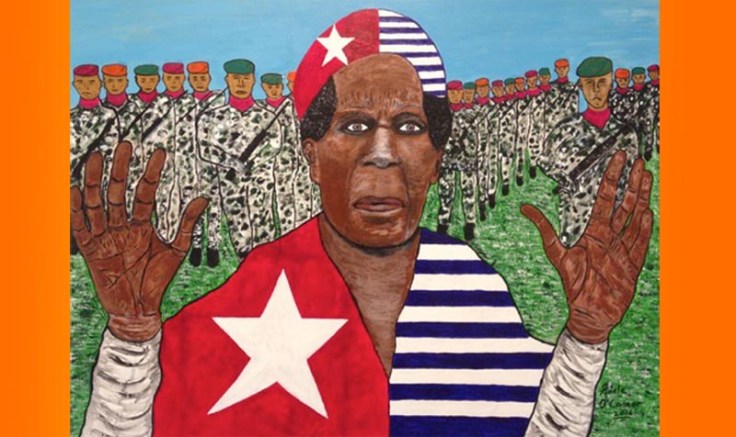
Lukisan karya Adele O’Conner berjudul Mama Yosepha versus the TNI - Katalog pameran
Lukisan karya Adele O’Conner berjudul Mama Yosepha versus the TNI – Katalog pameran

Jakarta, Jubi – Benny Wenda, juru bicara United Liberation Movement for West Papua (ULMWP) akan mengunjungi Aotearoa, Selandia Baru dari tanggal 8 hingga 16 Mei mendatang.

Dilansir voxy.co.nz (19/4) kunjungannya kali ini selain untuk tetap meminta dukungan keadilan politik dan sosial terhadap rakyat West Papua, juga secara khusus hendak meminta agar pemerintah Selandia Baru mendukung inisiatif bangsa-bangsa Pasifik yang mendorong isu West Papua di PBB.

Terakhir kunjungannya ke Selandia Baru pada tahun 2013, Wenda sempat dicekal oleh Juru Bicara Parlemen David Carter untuk tidak berbicara di hadapan parlemen negeri itu.

Namun saat ini kelompok-kelompok yang cukup beragam hingga anggota-anggota parlemen lintas partai mulai makin luas mendukung West papua dan memberikan jaminan bahkan sambutan hangat terhadap tokoh pergerakan kemerdekaan West Papua itu.

Wenda akan disambut di Orakei Marae saat ketibaannya dan diundang resmi untuk memberikan sambutan pada Ngati Whatua Orakei whanau. Sejumlah jadwal pertemuan yang cukup padat menantinya di Auckland, Wellington, Christchurch, dan menyusul Te Tai Tokerau.

Seperti diketahui, tujuh bangsa-bangsa Pasifik di negara Vanuatu, Kepulauan Solomon, Tonga, Tuvalu, Palau, Kepulauan Marshall, dan Nauru secara kolektif menyarakan situasi hak azasi manusia di West Papua di hadapan sidang umum PBB tahun lalu serta sidang Dewan HAM PBB baru-baru ini.

Hal ini telah memulai momentum baru bagi keterlibatan badan-badan tertinggi PBB untuk menetapkan kemungkinan resolusi baru bagi hak-hak rakyat West Papua.

Diharapkan pemerintah Selandia Baru tidak berdiam diri dan berada dipinggiran, melainkan member dukungan kepada bangsa-bangsa Pasifik tersebut untuk mendorong isu West Papua dan membantu perjuangan keadilan di wilayah itu.

Wenda akan bertemu gelombang aktivis peduli West Papua, Maori dan Pasifika, yang baru di berbagai wilayah Selandia Baru, termasuk anggota-anggota International Parliamentarians for West Papua (IPWP).(*)

Parlemen Uganda Terima Petisi Penentuan Nasib Sendiri Papua

KAMPALA, SATUHARAPAN.COM – Sebuah perkembangan baru dalam diplomasi yang memperjuangkan penentuan nasib sendiri Papua terungkap lewat berita kunjungan salah seorang tokoh United Liberation Movement for West Papua (ULMWP) ke Kampala, Uganda, belum lama ini.

Kunjungan ini memberi gambaran bahwa aspirasi menentukan nasib sendiri kini kian dikenal di benua Afrika setelah sebelumnya tokoh ULMWP juga telah mendekati pemerintahan Ghana.

Selain Ghana, pemenang Nobel Perdamaian, Uskup Desmond Tutu dari Afrika Selatan, juga termasuk tokoh yang bersimpati pada aspirasi penentuan nasib sendiri dan telah pernah bertemu dengan tokoh ULMWP, Benny Wenda.

Dalam laporannya hari ini (8/04), situs berita berbasis di Uganda, Saturday Vision melaporkan Jacob Rumbiak, salah seorang pemimpin ULMWP, telah bertemu dengan Wakil Ketua Parlemen Uganda, Jacob Oulanya,pada 7 April.

Situs itu juga menampilkan foto Jacob Rumbiak menyerahkan bendera bintang kejora kepada Jacob Oulanya.

Foto yang ditampilkan oleh Saturday Vision, menunjukkan Jacob Rumbiak menyerahkan bendera bintang kejora kepada wakil ketua parlemen Uganda. (Foto: Saturday Vision)

Kepada Saturday Vision, Rumbiak mengatakan parlemen Uganda berjanji untuk mendukung Papua dalam berjuang mewujudkan mimpinya untuk penentuan nasib sendiri.

Disebutkan, Rumbiak mengajukan petisi penentuan nasib sendiri itu dan membeberkan penderitaan rakyat Papua.

Dalam petisi itu, menurut Jacob Rumbiak, pihaknya ingin Uganda mempengaruhi negara-negara lain di kawasan Afrika untuk mendukung usulan mereka bagi penentuan nasib sendiri di PBB.

Rumbiak mengatakan keyakinannya akan  kekuatan Uganda di Uni Afrika dapat mengarahkan suara Afrika di sidang umum PBB untuk mewujudkan penentuan nasib sendiri pada tahun 2019.

Selain menemui parlemen, pimpinan ULMWP itu juga ingin bertemu dengan Presiden Uganda, Yoweri Museveni, untuk menyampaikan keinginan mereka.

Saturday Vision tidak memuat komentar pihak parlemen Uganda dalam laporannya.

ULMWP selama ini berjuang untuk diadakannya referendum di Papua, hal yang selama ini ditolak oleh Jakarta.

ULMWP mengklaim bahwa organisasi itu merupakan payung pemersatu dari berbagai organisasi di Papua yang menyuarakan penentuan nasib sendiri Papua.

ULMWP kini tengah berjuang menjadi anggota penuh Melanesian Spearhead Group (MSG), dimana Indonesia juga menjadi anggota associate.

Indonesia tidak mengakui ULMWP sebagai perwakilan rakyat Papua dan menggolongkannya sebagai kelompok separatis. Namun tidak sedikit tokoh masyarakat Papua berbeda pendapat dalam hal ini dan mengakui keberadaan ULMWP. Umumnya para pemerhati HAM dan pakar yang mendalami masalah Papua, menilai keberadaan ULMWP tidak boleh dinafikan.

Road Map Papua yang disusun oleh LIPI  memasukkan kelompok ini sebagai salah satu unsur yang harus duduk dalam dialog Papua, bila hal itu diselenggarakan.

Editor : Eben E. Siadari

Uganda parliament pledges support for West Papua independence

Federal Republic of West Papua’s Jacob Rumbiak (left) hands over a the country's flag to Deputy Speaker of Parliament Jacob Oulanyah , during a courtesy visit to Parliament on April 7, 2017. Photo by Kennedy Oryema
Federal Republic of West Papua’s Jacob Rumbiak (left) hands over a the country’s flag to Deputy Speaker of Parliament Jacob Oulanyah , during a courtesy visit to Parliament on April 7, 2017. Photo by Kennedy Oryema

Parliament of Uganda has pledged to support West Papua, a province of Indonesia fighting for independence to realise its dream.

This is after its leader petitioned parliament and presented heartrending accounts of sufferings under the rule of the island nation.

In a petition presented to the Parliament deputy speaker Jacob Oulanya on Friday, Jacob Rumbiak, the executive director of United Liberation Movement for West Papua (ULMWP) said they want Uganda to influence other countries in the region to support their bid for independence at the United Nations.

He told Saturday Vision that he believes Uganda’s strength at African Union (AU) can galvanize the African vote in New York and help them clinch independence by 2019.

Saturday Vision has learnt that besides Parliament, the group also wants to meet President Yoweri Museveni over their bid.

 est apua inister of oreign ffairs acob umbiak left hands over a shirt to eputy peaker of arliament acob ulanyah Formerly under Dutch rule, West Papua is fighting to shake off the firm rule of Indonesia, under which it was placed courtesy of a UN–backed treaty in 1969. West Papua maintains that Indonesia’s rule over it is illegal because the UN-sanctioned ballot — ‘the Act of Free Choice’, which legitimized West Papua as a province of Indonesia in 1969, was fraudulent. Under the act, 1022 people, who were chosen to vote on behalf of the island, were coerced by Indonesian military to vote against the independence bid.

With a land size of 162, 371 square miles, West Papua is nearly twice the size of Uganda. However, Uganda boasts of a population eighteen times bigger and has better human development indicators than West Papua’s two million people according to online sources.

Rumbiak blames the above on an orchestrated genocide and the brutal rule they have suffered under Indonesia since 1969.

He claimed there is a systemic agenda by Indonesia — a Muslim dominated country — to destroy their way of life, and exterminate the Papuans, a black people of African descent.

A request for a comment from the Indonesia’s foreign affairs ministry had not been replied by press time.

West Papua blames the West, particularly US, for turning a blind eye to the violations, which they say is a compromise with Indonesia for mining rights in the resource-rich island.

Saturday Vision has learnt that West Papua is pushing for independence via a United Nations sponsored referendum, the way East Timor did in getting independence from Indonesia in 1999.

Oulanyah said parliament was ready to support the group’s cause using its connections with parliaments in other countries. “We will do whatever our parliament and the nation can to ensure that by the end of June this year, that resolutions is heard and discussed in the UN,” he said.

he eputy peaker of arliament acob ulanyah second right posing for a picture with inister of oreign ffairs ederal epublic of est apua acob umbiak centre while lory to lory inistries  enior astor ahimbisombwe second left  imon ulongo left and  ed ryne right look on during a visit to arliament He added: “Parliament can also identify different legislators to propose the motion, support and debate it in House. We can send the resolutions to other East African Parliaments including the Intergovernmental Authority on Development (IGAD) in Eastern Africa countries.”

Deputy Foreign Affairs minister, Okello Oryem, said Uganda was ready to meet the group. “But Uganda and Indonesia enjoy good diplomatic ties and we respect the latter’s internal affairs,” Oryem said.

Oulanyah advised the group to mobilise the young people but through the diplomatic and international protocols in their country to mount pressure on the existing colonizers.

Rumbiak said his country has the largest Gold and copper deposits in world. “It is one of the reasons we are being colonized,” he said. –

Up ↑

Wantok COFFEE

Organic Arabica - Papua Single Origins

MAMA Minimart

MAMA Stap, na Yumi Stap!

PT Kimarek Aruwam Agorik

Just another WordPress.com site

Wantok Coffee News

Melanesia Foods and Beverages News

Perempuan Papua

Melahirkan, Merawat dan Menyambut

UUDS ULMWP

for a Free and Independent West Papua

UUDS ULMWP 2020

Memagari untuk Membebaskan Tanah dan Bangsa Papua!

Melanesia Spirit & Nature News

Promoting the Melanesian Way Conservation

Kotokay

The Roof of the Melanesian Elders

Eight Plus One Ministry

To Spread the Gospel, from Melanesia to Indonesia!

Koteka

This is My Origin and My Destiny