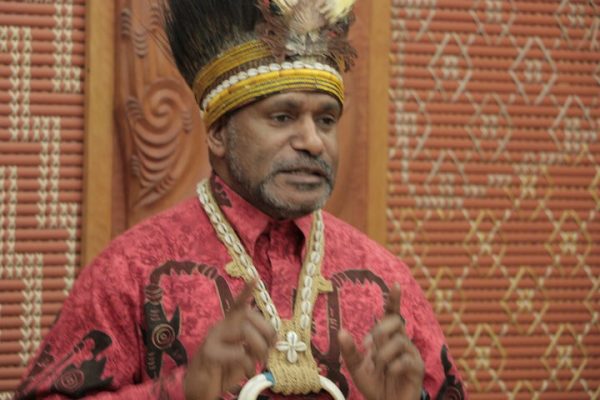
FRI West Papua Indonesia Support for West Papua Self-Determination

Support the right to self-determination for West Papua!

Greetings of National Liberation of West Papua!

Amolongo, Nimo, Koyao, Koha, Kinaonak, Nare, Yepmum, Dormum, Tabea Mufa, Walak, Foi Moi, Wainambe, Nayaklak

Wa…wa…wa…wa…wa…wa..wa..wa..wa..wa!

“Independence is truly the right of all nations and thus colonialism in the world must be abolished since it contravenes the sense of humanity and justice”

Thus says the Preamble of the Indonesian Constitution of 1945. In reality, however, West Papua shows the opposite. The West Papuan people have experienced colonialisation of the Unitary State of the Republic of Indonesia.

Although the Indonesian people were subjects to the Dutch colonialisation, the Japanese fascism and the white supremacy, the memory of the past oppression is not able to turn the government of Indonesia to be more humane. Manipulation of history, discrimination, torture, imprisonment, and extermination – all have been done systematically for more than fifty years.

What is happening in Papua?

The majority of Indonesians believe that West Papua is Indonesia. It is not true! West Papua is not Indonesia. There is no happiness for the West Papuans as long as they become part of Indonesia. It is not possible for the West Papuans to live normally if manipulation and deceit of history persist, racial discrimination has been entrenched in every aspect of lives, genocide continues in a systematic way, and extortion of natural wealth destroys the livelihood and the culture of West Papuans.

1. Manipulation and deceit of history

On 27 December 1949 when the Netherlands transferred the sovereignty to Indonesia, West Papua was a non-governing territory as the United Nations and the Netherlands, which was then the colonial administrator, recognised.

The West Papuans declared its independence on 1 December 1961. It was then the West Papuans established its national parliament of New Guinea. The Government of Soekarno, however, did not recognise the declaration and claimed it as a puppet nation by the Dutch hands. Therefore, Soekarno launched its annexation over West Papua through Trikora (three peoples’ commands) program.

In 1963, when Indonesia took over the administration of West Papua, the territory remained under the status of a non-self-governing colony, which was entitled to exercise their right to self-determination under international law. Under the 1962 New York Agreement, Indonesia recognised this situation and thus confirmed the fact that Indonesia had no legal right over Papua. Indonesia’s presence in West Papua was a colonial administration that could continue only if the West Papuans had opted for integration in accordance with international standards.

The only exercise of the right to self-determination for West Papuans thorough PEPERA in1969 was invalid. It was invalid because only 1022 individuals (4 individuals did not take part) were involved in the plebiscite, which was less than 0.2% of the Papuan population. Moreover, they had been put under pressure in order to express their consent to integrate with Indonesia.

Since the annexation was invalid, West Papua never became legitimate part of Indonesia. It remains a non-self-governing territory under a colonial administration of Indonesia.

2. Racial discrimination

The West Papuan people have experienced racial discrimination inside and outside Papua such as the Papuan students in Manado and recently in the Papuan students’ dormitory in Kamasan, Yogyakarta. They also experience racial discrimination in workplace, government and business sectors.
The racist attitude towards the West Papuans was already expressed by Ali Moertopo in 1966 long before the PEPERA. “Indonesia doesn’t need Papuans. Indonesia only needs the land and natural resources of Papua. If Papuans want to be independent, go ahead to find a new island somewhere in the Pacific or ask the Americans to give them a space in the moon for them to live.”

When a senior Indonesian official makes a racist statement, such a statement will be implemented by its lower level officials. This is what happened to Obby Kogoya, a Papuan student who was studying in Yogyakarta, when the Indonesian police stomped him on his head while calling him ‘ape’.

3. Slow motion genocide

For more than 53 years, more than 500,000 Papuans have been executed. It started during the Trikora and continues with eradication of the Fery Awom’s movement in 1967.
In the highlands of Agimuga, the Indonesian army shot at the Papuans randomly and dropped bombs in 1977 since the people raised the Morning Star flag. The location was then blocked and isolated from any contacts with outsider that caused starvation to the people. Thousands of people died of starvation.

Similarly, extrajudicial killings continued in Enarotali, Obano, Moanemani, Wamena, Waropko and Mindiptana that caused some 10,000 refugees crossed the border to Papua New Guinea between 1977-1978 until early the 1980s.

Artist and activist Arnold C. Ap who promoted the Papuan culture was arrested in 1984 by Kopasandha. His body was found in the bush nearby Jayapura.

Papua was declared under martial law in 1978 that lasted until 5 October 1998. The status caused systematic killings and forced migration of West Papuans to Papua New Guinea.

Following the 2nd Papua Congress in 2000, the killing of Papuan leaders by the Indonesian state apparatus continued. Theys Eluay, for instance, was kidnapped and his body was thrown in the bush nearby Jayapura. Kelly Kwalik was assassinated in Timika even though he was unarmed. Petrus Ayamiseba was killed in Timika during the strike of Freeport workers in 2011. Mako Tabuni, the leader of KNPB, was shot dead by the Indonesian police after being framed to leave the KNPB secretariat. Robert Jitmau who criticised Jokowi for not meeting his promise in building a market for the Papuan women in Jayapura was run over by car until he died. The killing is being disguised in hit and run accidents and suicides.

The result of slow-motion genocide is reduction of the population of the indigenous Papuans to 48,7% of the total West Papuan population.

4. Arbitrary arrests, torture and imprisonment

During the period of 2016, more than 4,000 Papuans were arbitrarily arrested. In 1998, Dr Thomas Wanggai, the founder of the Papua Independence of the 14 Stars died in the Cipinang prison. Dozens of Papuan political prisoners were jailed in dire conditions. Filep Karma, who was jailed for more than a dozen years, testified, “I was hit, tortured and stripped naked”.

The Indonesian state authorities also commit torture and rape against the Papuans. Before a victim was killed, like Yawan Wayeni, his stomach was slit so that intestines were burst out. The leader of KNPB Sorong was killed and his body was wrapped into a gunny sack and thrown to the sea. A number of academic research have revealed that more than 431 cases of torture were committed by members of the Indonesian military and police.

5. Extortion of natural wealth

From the economy point of view, the extortion of natural wealth of Papua is enormous. For instance the forest of Wasior has been exploited illegally by the military and a number of logging companies so that the customary land of the locals has been confiscated. The complaint of the locals were met with shootings by the police that killed six people. The Wasior tragedy occurred during April-October 2001.

It also covers Freeport Indonesia whose the largest shares are under the possession of the US based Freeport McMoran since the 1960s. The gold and copper mine has contributed through their tax payment between USD 700-800 millions per year and even USD 1 billion. Let alone various ethnic groups of Papua who lost their land due to the MIFEE projects, such as Mahuze clan in Merauke.

West Papua is a nation

In the course of history of 1961, 1963, 1969 and post PEPERA’s oppression, we have to acknowledge: first, the presence of Indonesia in Papua is illegal; second, colonisation has been going in the last fifty years; third, West Papua is a nation.

A nation is constituted by a stable community which shares common languages, territory, livelihood, psychological change and is manifested in a common culture.

Deceit and manipulation of history, discrimination, imprisonment, extermination and genocide as well as lip service of the Special Autonomy will not deter the struggle and commitment to independence of the West Papuans. On the contrary, the West Papuans are united and their political strength are represented in the United Liberation Movement for West Papua (ULMWP).

The experience of oppression and struggle that has been manifested in the form of ULMWP demonstrate that West Papua is a nation.

It is hypocrisy if we or the Government of Indonesia are committed to support the liberation of Palestine but remain silent to the ongoing colonisation inside the territory of Indonesia. Therefore, there is no other reason to argue that West Papua is part of Indonesia both international law and political argument.

Why is important to be in solidarity with West Papua?

First, the world will become a better and more beautiful place if every nation does not live under colonisation and could cooperate in democratic, fair and equal ways.

Second, what we see in West Papua is a systematic and inhumane oppression. When we talk about humanity but let colonisation continue in Papua, we are actually promoting inhumanity.

Third, our solidarity with the West Papuans to determine their own fate is part of democratization of the Indonesian people who struggle for the consciousness of civilized humanity of the people and nation of Indonesia.

Fourth, our solidarity with the West Papuans to determine their own fate is part of the fight against imperialism and international corporations that support colonisation of Indonesia over West Papua.

Fifth, our solidarity is part of the fight against racism towards anyone, including the West Papua nation.

Sixth, there is no other way to end the practice of colonisation and militarism in West Papua than supporting the right to self-determination.
Seventh, there is no other way to end slow motion genocide in West Papua than supporting the right to self-determination.

What should be promoted?

Taking into account of the reality of West Papua, we believe that the ways to liberate West Papua are as follows:

1. To support the West Papua nation to exercise their right to self-determination through a referendum. The participation to referendum will be decided by the West Papuans through their political representatives, ULMWP.2. To support the membership of ULMWP in the Melanesian Spearhead Group, Pacific Island Forum and struggle for a membership status to the United Nations.

3. As an inseparable condition, to withdraw organic and non-organic military from West Papua so that referendum can be held in a peaceful, fair and free from repression.

4. Freedom of information, expression, association and opinions of the West Papuans have to be guaranteed.

5. We oppose any imperialist intervention during the democratic struggle of West Papua.

6. We call on the international community to build solidarity with the struggle for the right to self-determination of West Papua.

7. We encourage the Indonesian people who live in West Papua to support the struggle of West Papuans in exercising their right to self-determination.

8. We oppose the racial politics endorsed by the Indonesian state and the Indonesian military and police in a systematic way against the West Papuans.

9. Free education, expansion of schools and universities, free health services, and cheap and mass transportation have to be provided for the West Papuans.

Finally, let us, the people of Indonesia, West Papua and the world, united to end the manipulation of history and suffering in West Papua.

Long live West Papua nations! 
Long live West Papuan people!

Jakarta, 29 November 2016

Surya Anta 
Spokesperson of FRI-West Papua

The Indonesian People’s Front for West Papua (Front Rakyat Indonesia for West Papua – FRI-West Papua) is made up of the People’s Liberation Party (PPR), the Indonesian People’s Center of Struggle (PPRI), the Student Struggle Center for National Liberation (Pembebasan), the Indonesian Cultural Society Union (SeBUMI), the Socialist Study Circle (LSS) and the Solidarity Net Association.
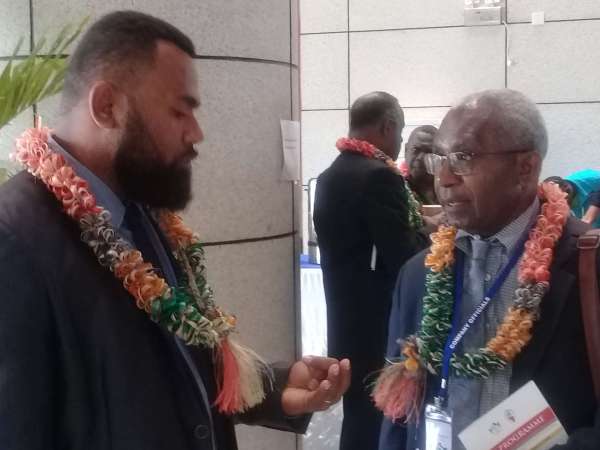
Port Vila ACP-EU heard that more 1 000 West Papuans killed

Port Vila ACP-EU heard that more 1 000 West Papuans killed

West Papuans were never allowed the proper act of self-­determination guaranteed by the inalienable right to self-­determination as expressed in UN human rights Covenants and by the 1962 New York Agreement, a treaty between the Netherlands and Indonesia handing provisional administration of the territory from one country to the other.

 Indonesia arrived in West Papua in 1963 and immediately began violently suppressing all West Papuan aspirations for independence. West Papuans have suffered horrendously under Indonesian rule, including thirty years under the Suharto dictatorship and now nearly twenty under a more democratic, but ultimately colonial, regime. More than a hundred thousand (and perhaps hundreds of thousands) have died because of Indonesia’s annexation. Human rights violations, amounting to ‘crimes against humanity’, continue with impunity.
 Indonesian state authorities, Indonesian settlers and Indonesian (as well as foreign) companies have steadily but surely assumed control over every aspect and arena of West Papuan life. Indonesian claims to have developed West Papua’ ignore the fact that development has primarily benefited Indonesians not Papuans.  Ethnically, culturally and politically, West Papua is part of the Melanesian Pacific, not Southeast Asia. Papuans are black-­skinned Melanesians like the people in neighbouring Papua New Guinea, the Solomons Islands, and Vanuatu.  Indonesia and especially its security forces treat West Papuans as sub-­human because of this racial difference. For decades, the Indonesian government has sent tens of millions of Indonesians from more densely populated regions to its outer, more sparsely populated islands, including West Papua..A parallel voluntary migration continues to this day. In the early 1960s, indigenous Papuans constituted 97% of the population. Today, Papuans are almost a minority in the territory and are already outnumbered in the towns and cities, along the coasts and in the major areas of plantation agriculture. Their culture, the very names of their places, their words and rhythms, the skills, traditions and knowledge that have served for millennia, are being discounted, wiped out, leaving them bewildered and unprepared in an alien world.
 Amnesty International has estimated that more than one hundred thousand (or about 10 percent of the population) have been killed by Indonesian security forces. Other estimates of the deaths, are in the several hundred thousands, one quarter or more of the indigenous Papuans.
 
On-­going violations of the human rights of indigenous West Papuans, including torture, extra-­judicial execution, forced disappearances and the beating and shooting of peaceful protestors, amounting in some instances to crimes against humanity,’ with estimates ranging up to a half-­million killings during Indonesias 54 year occupation of the territory
 A Yale University report is one of several defining Indonesian rule as genocidal.

 The worst period of killing occurred during the 1970s and 1980s, at the height of the Suharto military dictatorship, when West Papua was officially a “military operations area.” Although an even greater percentage of East Timorese likely died after Indonesia invaded the former Portuguese colony in 1975, the exterminationist violence employed is the same and Indonesian racist attitudes of superiority towards “subhuman” black Papuans is greater still.


CALL for ACP-EU Resolution on West Papua

·       ACP-EU Parliamentarians can voice their concern and they can support Papuan rights, including the right to self-­determination by rallying to the call from the 8 Pacific Island Countries for justice and respect for the right to self –determination.

·       They can get regional and global intergovernmental bodies such the African Union, CARICOM and other regional and sub-regional multilateral bodies to pass resolutions and restrict commercial and other relations with Indonesia.

·       As member states of the United Nations ACP –EU countries can insist on an internationally supervised referendum on independence (or at least the re-­listing of West Papua as a non-­self-­governing territory).

·       Support with one voice the proposed resolutions in the upcoming Joint ACP-EU parliament meeting in month of October and also the resolution on West Papua to be adopted at ACP Council of Ministers meeting in November 2017

·       Call on ACP-EU Parliamentarians to urge their respective governments to address the issue of West Papua at the multilateral level and assist Indonesia to resolve this 54 year crisis.

Source: https://www.gov.vu/

‘We’ll not be safe with Indonesia,’ says West Papua’s Benny Wenda

By Kendall Hutt in Auckland

A lifelong campaigner for a free and independent West Papua has issued a stark warning to New Zealand politicians as he visits the country this week.

Benny Wenda with wantok students at the Auckland University of Technology this week. Image: Del Abcede/PMC

Benny Wenda, a tribal chief of West Papua exiled to the United Kingdom by Indonesia, told Asia Pacific Report that time was running out for West Papua if governments such as New Zealand do not act.

“If we live with Indonesia for another 50 years, we will not be safe. We will not be safe with Indonesia.”

He said the purpose of his visit to New Zealand was to highlight the importance of West Papua returning to its Melanesian family.

“We really need Pacific Islanders, our sisters and brothers across the Pacific – particularly New Zealand and Australia – to bring West Papua back to its Pacific family. Then we can survive. Otherwise, it will be very difficult to survive with Indonesia,” he said.

Since Indonesia took over West Papua following a controversial Act of Free Choice – dubbed by critics as an “Act of no choice” – in 1969, Wenda said his people had suffered.

“Everyday someone is dead, or has been killed, and someone has been stabbed, but no one is brought to justice.”


Human rights violations

In its rush to claim former Dutch colonies in the Asia-Pacific region following West Papua’s self-declared independence from the Netherlands in late 1961, Indonesia has subjected West Papua to continued human rights violations.

Many West Papuans have been imprisoned for non-violent expressions of their political views and widespread allegations of torture have been consistently made against Indonesian authorities.

Raising West Papua’s flag – the Morning Star – can incur 15 years in prison.

Wenda, the 42-year-old founder of the Free West Papua Campaign, has himself been imprisoned, accused of inciting an attack on a police station — despite the fact he was not even in the country at the time.

With foreign media all but denied access to West Papua – despite apparent lifting of restrictions by President Joko Widodo in 2015 – much of Indonesia’s atrocities remain secret, hidden.

It is for these very reasons, Wenda said, that West Papua was fighting.

“We are fighting for our independence, but we are also fighting for our land, our forest, our mountains.”

“Lifelong” Free West Papua advocate Benny Wenda says New Zealand support is integral to the global campaign. Image: Kendall Hutt/PMC

New Zealand support sought
Wenda is calling for the New Zealand government’s integral commitment to the campaign for a free West Papua.

He said this was because New Zealand had a duty, as a part of the Pacific, to raise awareness of the atrocities in West Papua.

“West Papua is a very close neighbour, so that’s why I hope the New Zealand government will speak more about the human rights situation in West Papua.”

Wenda said it was high time for New Zealand to pull away from its business, trade and investment focus with Indonesia and speak about Indonesia’s human rights abuses.

New Zealand “needs to do more” as a country, he said, because New Zealand is a country which is meant to value human rights, respect the rule of law, freedom of speech and the right to self-determination in other parts of the world.

It is therefore time for New Zealand’s foreign policy on West Papua to change.

“West Papua’s hope is Australia and New Zealand. This is a regional issue, this will never go away from your eyes and this is something you need to look at today. Review your foreign policy and look at West Papua.”


‘We are the gatekeepers’

“Australia and New Zealand need West Papua. We are the gatekeepers, and for security reasons, West Papua is very important,” Wenda said.

Catherine Delahunty, a Green Party MP who has campaigned strongly for West Papua on New Zealand’s political front, echoed Wenda’s views.

“They are insistent – the New Zealand government – that West Papua is part of the territorial integrity of Indonesia, so we can’t get past that critical issue.”

She said she therefore did not have much faith in the current government to step up and was looking for future leadership, such as through the Labour-Greens alliance, to move the campaign for West Papuan self-determination forward on the home front.

AUT doctoral student Stephanie Sageo-Tupungu of Papua New Guinea makes a presentation to Benny Wenda on behalf of the Pacific Media Centre. Image: Kendall Hutt/PMC

“I really do think we need a different government that actually has some fundamental commitment to human rights over and above trade and being part of the US military complex around the world. We have to have change to get change. It’s not going to happen through these guys.”

In her eight years in Parliament, Delahunty said the situation in West Papua was the toughest she had had to face.

“This issue, for me, has been one of the most disturbing things I’ve ever worked on. It’s been one of the most horrible and one of the most powerful examples of the cynical use of power and the way in which people can just completely close their eyes.”


Mainstream media role

Both Wenda and Delahunty said in light of the resounding silence surrounding West Papuan media freedom during Indonesia’s hosting of World Press Freedom Day last week that raising awareness of West Papua was key for the world to finding out about the atrocities there.

The mainstream media had a large role to play in this, both acknowledged.

“West Papua really needs the media in terms of the publicity. Media publicity is very important,” Wenda said.

Wenda said it was time for New Zealand’s mainstream to pick up the baton from smaller, independent news agencies and carry stories of West Papua’s atrocities themselves.

“I really hope the mainstream media here carries this. It’s very important. We need more mainstream media. They really need to pick up on this issue.”

Paris-based Reporters Without Borders (RSF) has reported that it was not unusual for both local and foreign journalists in West Papua to be threatened anonymously or by authorities. Data by the Alliance for Independent Journalists (AJI) has revealed there has been an increase in the number of assaults on journalists in the region over the past two years.

There were 78 violent attacks on journalists in 2016, up from 42 attacks in 2015 and 40 in 2014.

The AJI found only a few attackers from those 78 attacks had been brought to justice.

Only last week, independent photojournalist Yance Wenda was arrested and beaten by police while covering a peaceful demonstration, prompting condemnation from RSF that Indonesia was ‘double-dealing’ over media freedom.

‘Everything swept under the carpet’
Wenda said there was deep-seated inaction on Indonesia’s part because of its prejudice in prosecuting people who have attacked and tortured and beaten both West Papuans and also West Papuan journalists.

“Indonesia is getting away with impunity. Nobody is brought to justice. Everything is swept under the carpet.”

Delahunty reflected, however, that the world was seeing the lack of free and frank reporting play out in West Papua.

“We see the consequences of nearly fifty years of no honesty about West Papua and it’s just up the road. It breaks my heart, but it also fires me up because I really believe there are some very, very brave young people, including journalists, who are committed to this issue and I guess it’s that thing: if you have a voice, use it.”

This was Wenda’s call to an audience gathered at his talk at the Pacific Media Centre-hosted Auckland University of Technology on Tuesday evening.

“Today you are the messengers for West Papua.”

Wenda highlighted a “united” Pacific was key in raising awareness of the “Melanesian genocide” occurring in West Papua.

Benny Wendy with wantok students…representing a “united” Pacific for West Papua. Image: Del Abcede/PMC


‘United’ Pacific key

He called on his “brothers and sisters”, but was deeply thankful of the support given already by several Pacific nations for West Papua’s cause.

These nations raised grave concerns regarding human rights violations in West Papua at the 34th session of the United Nations (UN) Human Rights Council in March.

Recent declarations by both the Solomon Islands and Vanuatu were also acknowledged by Wenda.

“We cried for 50 years, but then these countries sacrificed to take on this issue.”

Wenda told the Solomon Islanders and the people of Vanuatu gathered they should “be proud” and that their action was something to “take away in your head and heart”.

Wenda also told the remainder of his audience it was “ordinary people” and “mostly young generations” who were needed to continue the fight, with social media being their greatest tool.

Delahunty added people power and the growing solidarity movement across the globe were also central.

“The only way they’ll speak and respond to this issue at all is if we have growing public pressure and that’s the job of all of us, both inside parliament and outside parliament to raise the issue and to make it something people will feel accountable for, otherwise we just ignore the plight of our neighbours and the killing, torture, environmental desecration and human rights abuses continue.”

Wenda and Delahunty both closed their interviews with a clear message for Indonesia: “Start talking, start listening, and stop thinking that you can ever brow beat people into the dust because you want their resources because in the end, the human spirit doesn’t work like that and these people will never give up. It’s up to us to support them.”

Kendall Hutt is contributing editor of Pacific Media Watch.

Free West Papua advocate Benny Wenda presents Pacific Media Centre Professor David Robie with a traditional “bilum” for his journalism about West Papuan freedom. Image: Kendall Hutt/PMC

West Papuan demographics update highlights disparity

New statistics show indigenous Melanesians are not yet the minority they were thought to be in West Papua.

Indonesia’s Statistics Office has produced an ethnic breakdown of Papua region, based on the last census in 2010 which established an overall population of 3.6 million.

While the proportion of Papuan people as a percentage of the population continues to decline, this process varies widey between different regencies.

The percentage of Papuans has fallen catastrophically in some regions, particularly in urban centres, but Papuans still make up the vast majority in the Highlands.

Using the new data, Jim Elmslie of Sydney University’s West Papua Project has produced a new paper updating his previous work on Papua’s demographic transition.

He talks to Johnny Blades.

Ni-Vanuatu march in support of West Papuan self-determination aspirations.

Ni-Vanuatu march in support of West Papuan self-determination aspirations. Photo: Vanuatu government

Papuans in West Papua Only Have One Killer: The Malay Indos

PMNews asked the West Papua Revolutionary Army on recent killings happening in West Papua, who are the killers? Or Who is causing troubles in West Papua despite tens of visits to West Papua by the colonial president Joko Widodo. Lt. Gen. Amunggut Tabi says,

Papuans in West Papua Only Have One Killer: The Malay Indos. No one should be confused about it. Since its military invasion Indonesia has been here for gold, copper, timber, gas, oil, fish, you name it. And the human beings, native inhabitants, of an inferior and backward Melanesian race are seen as troublesome, as hindrance to the original purpose of invading, occupying and extracting the natural resources.

Amunggut Tabi continues,

Many Indnnesians use this expression, “New Guinea is a big Island, very big fo host all Indonesians, even still have more rooms to host all Malays from Java to Thailand, its natural resources terribly rich, it will take thousands of years to complete extract the natural resources, it is ripe, it is ready, however, it is a pity, it is disturbing, it is discouraging, that this island also has human beings, called Melanesian Papuan.

It is clear, that Melanesians in West Papua are seen as a “pity”, an obstacle, hinderance to the great Pan-Indonesia, Great Malay Republic as inspired by the first Malay-Indos President Sukarno.

Now, what is the solution that normal human being take when you see something or somebody is a “hindrance”? You solve it. You take the hindrance away. In this case, if Papuan as human beings are the problems, then Malay-Indos have to deal with them, and the only way is to kill-them-off.

Amunggut Tabi also stated,

I mean, wiping out Melanesians, not just Papuans, is on the agenda of Pan-Indonesia or Great Indonesia nation-state that was already designed by Sukarno. The mission is not yet complete until the Isle of New Guinea is fully occupied, and exploited, and the Papuans in this Island is completely wiped out.

I can guarantee this because I have read all secret-documents from Indonesian intelligence. Of course, we must purchase the information, but in the future time, they will take over Papua New Guinea, and later on Solomon Islands. It is just a matter of time, the plan is already in place and already in hands.

The most feasible approach to occupying the whole Melanesia starting from Raja Ampat Islands of West Papua westernmost ends is by wiping out the human beings who inhabit the Island. There is no other way ahead. They will never occupy already independent Papua New Guinea and other Melanesian nation-states just by killing the inhabitants but at least they already starting from West Papua. Once they wipe out and occupy West Papua, they will occupy Papua New Guinea in social, culture, technology, infrastructure, military, police.

Amunggut Tabi furthermore warned,

Of all human race in the world, Malay-Indos as Malay race is the most corrupt in their moral standard. They will always use women as the front-page, their window, their entry-point, their leading story. The most obvious example is the last UNGA interventions made by seven South Pacific countries was responded by Indonesia by presented what they called, “beautiful young Indonesian diplomat” and it then because spiral all over Indonesia. They do not care human beings are killed, and threatened to be wiped out from their own inherited land. Their focus was on that “one lady” that they regarded beautiful. What is the meaning of beauty when she tells lies in public speech? Beauty must rests in the heart, not in the skin.

Amunggut Tabi also mentioned the names, as examples, of Melanesian leaders who have been morally and politically defeated by Indonesia after giving them Indonesian ladies as their wives, or as their maids. Women is always in their forehead when they talk about dealing with other people, to defeat them:

They have, and they will offer ladies to many Melanesian politicians and key figures, and they will use all their powers to control Melanesian politics though back-doors, not front-doors. They have done so successfully with Papua New Guinea key figures. They will soon do it all over Melanesia. They will occupy Melanesia though back-doors. They are occupying West Papua though front-door. Melanesian leaders must read this reality rationally, and respond to it rationally, strategically, and wisely.

With all these background information, Amunggut Tabi said that Malay-Indos are the ones who want to see West Papua unstable, to see West Papuans wiped out from their homeland, to exploit and extract as many natural resources as possible in short time as possible.

He continues,

When you see any Melanesians die, mysteriously, openly, caused by illness or a sudden death, in remote villages or in crowded city, anywhere in Indonesia, hit by car or shot randomly, Melanesians must keep in mind, that surely, Malay-Indos are on their way wiping out Melanesian race. They are our killers. Any aid and development funds offer from Indonesia should be rejected, because their aid and money are full of Papuans’ blod.

Many West Papuans Are Marrying Indonesians While Blaming NKRI for Genocide

Many West Papuans are beings sent out from West Papua, while many Indonesians are being brought in to West Papua to study at the universities. West Papua has two major universities, the first one is Cenderawasih University in Papua Province and the second one is University of Papua in Papua Barat Province. There are also many private universities, run by church organisations and Papuan foundations. These universities are already enough, and even more than enough for Papuan students.

All high school graduates, of course the native Papuans only, can be easily enter universities in West Papua.

This policy can avoid many young Papuan generations meeting Indonesian youths in their Islands, and finally become friends, close friends and marrying them.

To date, we can note easily, many government officials in Papua and Papua Barat provinces have married Indonesian ladies. Vice Governor of Papua, Klemen Tinal dan the Governor of Papua Barat Abraham Atururi are both married to Indonesian ladies.Our famous and first highlander Doctoral degree holder, the Rev. Dr. Benny Giay is married to Indonesian woman, the first one passed away, and then married again to another Indonesian woman. The ULMWP Secretary-Genaral Octo Motte is not married to a Melanesian lady, but an Indonesian.

The are two types of Genocide is happening here in West Papua. The first one is the clever way Indonesian in carrying out genocide. I want to call this systematically and strategically planned genocide. The second one is what I call “self-genocidal act”. We cannot blamce anybody for this type of genocide, because we make our own rational choice to wipe out our own race. And the impact of both types of genocides are forever. We cannot undo this type of genocide, i.e., genocide by wiping out a race by marrying cross-race or generally called mixed marriages.

Right now we have “Special Autonomy Law”, which clearly defines “Orang Asli Papua” (Papuan Natives) non-natives. The term “orang Asli” clearly means those Papuans who are born from a mother and a father from Papuan ancestry, a Melanesian race. However, recently, we have read articles from various so-called intellectuals from West Papua defining “Orang Asli Papua” including Carmel Budiardjo from England and George J. Aditjondro from Indonesia. It becomes confusing when academics try to define something, because they have their bains working in their head defining what is “Orang Asli Papua” and what is non-native Papuans based on their own interests. The worse thing is those Papuans who are married to and bear children with non-Papuans are now trying to re-define the definition of “Orang Asli Papua or shortly called OAP”.

In a long term, we will come up with OAP, half-Papuan and non-Papuan.

There is still debate on whether or not a Papuan father and an Indonesian mother is also called “native Papuan”. What about a Papuan mother and an Indonesian mother? Are they native Papuan or OAP? What about an Australian father and a Papuan mother? What about a Dutch mother and a Papuan father? What about a Papuan father and an American mother?

We Melanesians in West Papua should now from now on think about marrying our own man and woman. If we West Papuans find there is no man or woman suitable for us, then let us not go to Indonesia to find one, but let us go to Melanesia instead. We have our own race here, start from Sorong all the way to Suva, Fiji. Let us find out man and woman from our own race. Our Melanesian race is decreasing, the first one because Indonesians are wiping out Melanesan race systematically and structurally, openly and undercover operations. But we Melanesians ourselves are also carrying out self-genocide. Both genocides rapidly reduces the number of “OAP” in West Papua. Let us now wake up! Let us do!, not only talk about Papua and Melanesia. Let us be truthful about who we love and who we fight for. What about those who love the Indonesians and marry them, but speak for Papuans?

Franz Magnis: Peristiwa Pelanggaran HAM 1965-1966 Genosida

Penulis: Dewasasri M Wardani 09:56 WIB | Sabtu, 23 Juli 2016

JAKARTA, SATUHARAPAN.COM – Budayawan Franz Magnis Suseno mengatakan peristiwa pelanggaran HAM yang terjadi di Indonesia dalam kurun waktu 1965—1966, dapat digolongkan sebagai genosida.

Sebab, kata dia, ketika itu berlangsung usaha pemusnahan terhadap golongan tertentu yang berlangsung secara terorganisasi.

“Peristiwa itu adalah kejahatan terbesar terhadap umat manusia di dunia dalam kurun waktu lima puluh tahun terakhir,” kata pria yang akrab disapa Romo Magnis itu di Jakarta, Jumat (22/7).

Menurut pria yang lahir di Polandia itu, kejadian pada tahun 1965–1966 yang diduga menelan korban hingga setengah juta jiwa, merupakan sesuatu yang direncanakan dan dimulai dari Jakarta.

Dari Ibu Kota, pelanggaran HAM kemudian menyebar ke Jawa Tengah, Bali, dan wilayah lain di Indonesia.

“Saya kira ada unsur balas dendam dalam peristiwa itu,” kata Romo Magnis.

Tragedi 1965 merupakan salah satu pelanggaran HAM yang dijanjikan Presiden Joko Widodo akan tuntas di masa kepemimpinannya, selain kerusuhan Mei, Trisakti-Semanggi 1 dan 2, Penghilangan Paksa, Talang Sari-Lampung, Tanjung Priok, yang masuk dalam visi-misi dan program aksi berjudul Jalan Perubahan Untuk Indonesia yang Berdaulat, Mandiri dan Berkepribadian, yang berisi penjabaran dari Nawa Cita.

Sebelumnya, Pengadilan Rakyat Internasional atau International People’s Tribunal (IPT), untuk kasus pelanggaran HAM di Indonesia pada tahun 1965 (IPT 1965) dalam keputusan akhirnya yang dikeluarkan pada Rabu (20/7), juga memvonis Indonesia telah melakukan genosida pada tahun 1965-1966, dengan maksud khusus untuk menghancurkan atau membinasakan kelompok tersebut sebagian atau keseluruhan.

Genosida, disebut sebagai salah satu dari 10 tindakan kejahatan kemanusiaan yang dilakukan Indonesia pada tahun 1965-1966, terhadap anggota Partai Komunis Indonesia (PKI), terduga PKI, pendukung Presiden Soekarno, anggota radikal Partai Nasional Indonesia (PNI), beserta keluarga mereka.

Sidang IPT 1965, yang dipimpin oleh Hakim Ketua Zak Yacoob yang pernah menjadi hakim di Mahkamah Konstitusi Afrika Selatan, juga menyatakan pembunuhan terhadap sekitar 400.000 hingga 500.000 orang, melanggar UU KUHP Pasal 138 dan 140 dan UU No 26 Tahun 2000 tentang Pengadilan HAM.

Selain genosida, Indonesia juga diputuskan telah melakukan hukuman penjara tanpa proses hukum terhadap sekitar 600.000 orang, perbudakan, penyiksaan dalam skala besar, penghilangan secara paksa, kekerasan seksual secara sistemik, pengasingan, propaganda tidak benar, keterlibatan negara lain seperti Amerika Serikat, Inggris, dan Australia.

Koordinator IPT 1965 Nursyahbani Katjasungkana mengatakan, hasil akhir keputusan tersebut akan diserahkan kepada Presiden Joko Widodo, saat pertemuan dengan korban pelanggaran HAM berat seperti pernah dijanjikan Presiden melalui Juru Bicara Presiden Johan Budi. (Ant)

Editor : Sotyati

Vanuatu Deputy PM: Melanesians Being “Killed By Asians”

Vanuaty Daily Post – Vanuatu’s Deputy Prime Minister has hit out at Indonesia saying Melanesians must speak up for the people of West Papua.

Joe Natuman believes the Melanesian Spearhead Group (MSG) is being swayed by outside interests after it deferred making a decision on awarding full membership to the United Liberation Movement for West Papua (ULMWP).

“West Papua was forcibly annexed by Indonesia and brutally overthrown. They were in the process of getting their independence in the early 1960s,” he told Vanuatu’s Buzz FM 96. “Now they say we cannot interfere, no, we must interfere. Melanesians are being killed by Asians, we have to interfere.”

He says the MSG is failing to meet its charter.

“The MSG, I must repeat, the MSG, which I was a pioneer in setting up was established for the protection of the identity of the Melanesian people, the promotion of their culture and to defend their rights,” he said. “Now it appears other people are trying to use the MSG to drive their own agendas and I am sorry but I will insist that MSG is being bought by others.”

Vanuatu has been a strong supporter of the ULMWP getting full membership but Papua New Guinea and Fiji say it would undermine Indonesia’s sovereignty. Jakarta has confirmed it has been lobbying Melanesian countries intensely.

“If our friends in Fiji and Papua New Guinea have a different agenda, we need to sit down and talk very seriously about what is happening within the organisation,” said Mr Natuman.

NZ Govt urged to recognise West Papua ‘genocide’

The New Zealand Government is being urged to stop turning a blind eye to the atrocities playing out in West Papua.

Since May this year, at least 3000 young people have been arrested and tortured for peacefully protesting large-scale human rights abuses.

Indonesia took control of the province in 1963, and it has been under military occupation ever since.

The struggle for independence has seen around 500,000 Papuans killed, with watchdogs referring to it as a ‘mass genocide’.

Maire Leadbeater from West Papua Action Auckland says they’re launching a petition aimed at our Government, and its inability to acknowledge the horror.

“It’s a repeat of East Timor… it always seems more important to our Government to have a bilateral relationship with Indonesia, rather than speak up for the pacific people who live in West Papua,” said Ms Leadbeater.

Human rights groups have long been campaigning for countries to acknowledge the abuse, saying people are being subjected to killings, torture, beatings and neglect.

Ms Leadbeater says people remain blissfully unaware of the horror, because of strict restrictions Indonesia imposes on the media.

“The situation remains hidden as very few journalists are able to get there. It’s very out of sight.”

But she hopes that’s all about to change, as neighbouring countries begin to voice concerns about, what’s often referred to as the genocide of West Papuans.

“The Solomon Islands and Vanuatu are standing out on the issue at the likes of the United Nations… they’re really doing a great job and we need to follow their lead.”

And New Zealanders are being told it’s time to do their part, with the launch of a petition this afternoon.

Ms Leadbeater says it simply asks for the Government to speak out about the atrocities at international forums.

Newshub

Read more: http://www.newshub.co.nz/politics/nz-govt-urged-to-recognise-west-papua-genocide-2016070712#ixzz4FPbvancX

Indonesia: West Papua’s minority youth are being removed to Islamic religious schools in Java for “re-education”

ndonesia correspondent for Fairfax Media

View more articles from Michael Bachelard

West Papua’s youth are being removed to Islamic religious schools in Java for “re-education”, writes Michael Bachelard.
Captive audience … Papuan boys at the Daarur Rasul Islamic boarding school, outside Jakarta, behind locked gates.
Captive audience … Papuan boys at the Daarur Rasul Islamic boarding school, outside Jakarta, behind locked gates. Photo: Michael Bachelard

Johanes Lokobal sits on the grass that cushions the wooden floor of his little, one-room house. He warms his hands at a fire set in the centre. From time to time a pig, out of sight in an annex, squeals and slams itself thunderously against the adjoining wall.

The village of Megapura in the central highlands of Indonesia’s far-eastern province of West Papua is so remote that supplies arrive by air or by foot only. Johanes Lokobal has lived here all his life. He does not know his exact age: “Just old,” he croaks. He’s also poor. “I help in the fields. I earn about 20,000 rupiah [$2] per day. I clean the school garden.” But in a hard life, one hardship particularly offends him. In 2005, his only son, Yope, was taken to faraway Jakarta. Lokobal did not want Yope to go. The boy was perhaps 14, but big and strong, a good worker. The men responsible took him anyway. A few years later, Yope died. Nobody can tell Lokobal how, nor exactly when, and he has no idea where his son is buried. All he knows, fiercely, is that this was not supposed to happen.

“If he was still alive, he would be the one to look after the family,” Lokobal says. “He would go to the forest to collect the firewood for the family. So I am sad.”

Heavy learning … boys and girls at Daarur Rasul.
Heavy learning … boys and girls at Daarur Rasul. Photo: Michael Bachelard

The men who took Yope were part of an organised traffic in West Papuan youth. A six-month Good Weekend investigation has confirmed that children, possibly in their thousands, have been enticed away over the past decade or more with the promise of a free education. In a province where the schools are poor and the families poorer still, no-cost schooling can be an irresistible offer.

But for some of these children, who may be as young as five, it’s only when they arrive that they find out they have been recruited by “pesantren”, Islamic boarding schools, where time to study maths, science or language is dwarfed by the hours spent in the mosque. There, in the words of one pesantren leader, “They learn to honour God, which is the main thing.” These schools have one aim: to send their graduates back to Christian-majority Papua to spread their muscular form of Islam.

Ask the 100 Papuan boys and girls at the Daarur Rasul school outside Jakarta what they want to be when they grow up and they shout, “Ustad! Ustad! [religious teacher].”

Up ↑

Wantok Coffee

Melanesia Single Origin Coffee

MAMA Minimart

MAMA Stap, na Yumi Stap!

PT Kimarek Aruwam Agorik

Just another WordPress.com site

Wantok Coffee News

Melanesia Foods and Beverages News

Perempuan Papua

Melahirkan, Merawat dan Menyambut

UUDS ULMWP

for a Free and Independent West Papua

UUDS ULMWP 2020

Memagari untuk Membebaskan Tanah dan Bangsa Papua!

Melanesia Spirit & Nature News

Promoting the Melanesian Way Conservation

Kotokay

The Roof of the Melanesian Elders

Eight Plus One Ministry

To Spread the Gospel, from Melanesia to Indonesia!

Koteka

This is My Origin and My Destiny