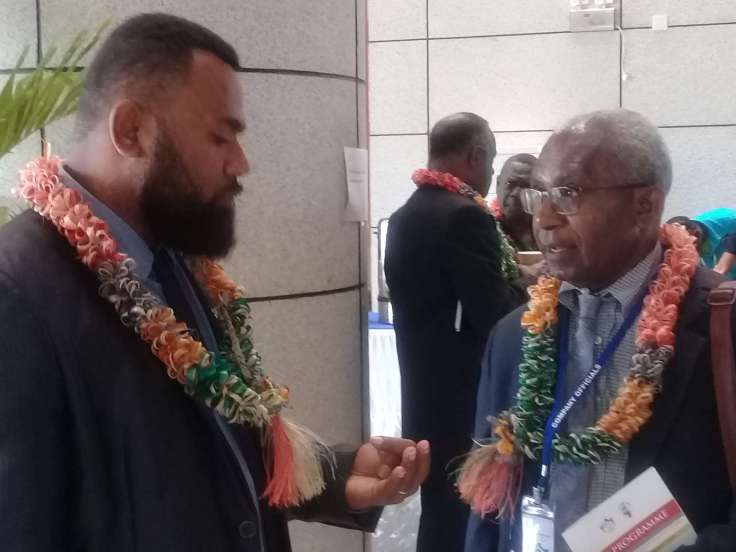
West Papuan liberation movement focussed on UN plans

From , 4:03 am on 18 September 2017

The West Papua National Coalition for Liberation says its decolonisation aspirations are focussed on action at the United Nations.

The Coalition is one of the key groups within the United Liberation Movement for West Papua, which is pushing for internationally-facilitated negotiation with Indonesia over Papua’s political status.

Various Papuan civil society, church and customary leaders met with Indonesia’s president Joko Widodo last month about establishing dialogue over problems in Papua.

However self-determination is not expected to be on the agenda in the dialogue, in which the Liberation Movement is not involved.

The Coalition’s chairman Andy Ayamiseba says the Movement rejects direct dialogue with Jakarta because it considers Indonesia an illegal occupier in Papua.


FRI West Papua Indonesia Support for West Papua Self-Determination

Support the right to self-determination for West Papua!

Greetings of National Liberation of West Papua!

Amolongo, Nimo, Koyao, Koha, Kinaonak, Nare, Yepmum, Dormum, Tabea Mufa, Walak, Foi Moi, Wainambe, Nayaklak

Wa…wa…wa…wa…wa…wa..wa..wa..wa..wa!

“Independence is truly the right of all nations and thus colonialism in the world must be abolished since it contravenes the sense of humanity and justice”

Thus says the Preamble of the Indonesian Constitution of 1945. In reality, however, West Papua shows the opposite. The West Papuan people have experienced colonialisation of the Unitary State of the Republic of Indonesia.

Although the Indonesian people were subjects to the Dutch colonialisation, the Japanese fascism and the white supremacy, the memory of the past oppression is not able to turn the government of Indonesia to be more humane. Manipulation of history, discrimination, torture, imprisonment, and extermination – all have been done systematically for more than fifty years.

What is happening in Papua?

The majority of Indonesians believe that West Papua is Indonesia. It is not true! West Papua is not Indonesia. There is no happiness for the West Papuans as long as they become part of Indonesia. It is not possible for the West Papuans to live normally if manipulation and deceit of history persist, racial discrimination has been entrenched in every aspect of lives, genocide continues in a systematic way, and extortion of natural wealth destroys the livelihood and the culture of West Papuans.

1. Manipulation and deceit of history

On 27 December 1949 when the Netherlands transferred the sovereignty to Indonesia, West Papua was a non-governing territory as the United Nations and the Netherlands, which was then the colonial administrator, recognised.

The West Papuans declared its independence on 1 December 1961. It was then the West Papuans established its national parliament of New Guinea. The Government of Soekarno, however, did not recognise the declaration and claimed it as a puppet nation by the Dutch hands. Therefore, Soekarno launched its annexation over West Papua through Trikora (three peoples’ commands) program.

In 1963, when Indonesia took over the administration of West Papua, the territory remained under the status of a non-self-governing colony, which was entitled to exercise their right to self-determination under international law. Under the 1962 New York Agreement, Indonesia recognised this situation and thus confirmed the fact that Indonesia had no legal right over Papua. Indonesia’s presence in West Papua was a colonial administration that could continue only if the West Papuans had opted for integration in accordance with international standards.

The only exercise of the right to self-determination for West Papuans thorough PEPERA in1969 was invalid. It was invalid because only 1022 individuals (4 individuals did not take part) were involved in the plebiscite, which was less than 0.2% of the Papuan population. Moreover, they had been put under pressure in order to express their consent to integrate with Indonesia.

Since the annexation was invalid, West Papua never became legitimate part of Indonesia. It remains a non-self-governing territory under a colonial administration of Indonesia.

2. Racial discrimination

The West Papuan people have experienced racial discrimination inside and outside Papua such as the Papuan students in Manado and recently in the Papuan students’ dormitory in Kamasan, Yogyakarta. They also experience racial discrimination in workplace, government and business sectors.
The racist attitude towards the West Papuans was already expressed by Ali Moertopo in 1966 long before the PEPERA. “Indonesia doesn’t need Papuans. Indonesia only needs the land and natural resources of Papua. If Papuans want to be independent, go ahead to find a new island somewhere in the Pacific or ask the Americans to give them a space in the moon for them to live.”

When a senior Indonesian official makes a racist statement, such a statement will be implemented by its lower level officials. This is what happened to Obby Kogoya, a Papuan student who was studying in Yogyakarta, when the Indonesian police stomped him on his head while calling him ‘ape’.

3. Slow motion genocide

For more than 53 years, more than 500,000 Papuans have been executed. It started during the Trikora and continues with eradication of the Fery Awom’s movement in 1967.
In the highlands of Agimuga, the Indonesian army shot at the Papuans randomly and dropped bombs in 1977 since the people raised the Morning Star flag. The location was then blocked and isolated from any contacts with outsider that caused starvation to the people. Thousands of people died of starvation.

Similarly, extrajudicial killings continued in Enarotali, Obano, Moanemani, Wamena, Waropko and Mindiptana that caused some 10,000 refugees crossed the border to Papua New Guinea between 1977-1978 until early the 1980s.

Artist and activist Arnold C. Ap who promoted the Papuan culture was arrested in 1984 by Kopasandha. His body was found in the bush nearby Jayapura.

Papua was declared under martial law in 1978 that lasted until 5 October 1998. The status caused systematic killings and forced migration of West Papuans to Papua New Guinea.

Following the 2nd Papua Congress in 2000, the killing of Papuan leaders by the Indonesian state apparatus continued. Theys Eluay, for instance, was kidnapped and his body was thrown in the bush nearby Jayapura. Kelly Kwalik was assassinated in Timika even though he was unarmed. Petrus Ayamiseba was killed in Timika during the strike of Freeport workers in 2011. Mako Tabuni, the leader of KNPB, was shot dead by the Indonesian police after being framed to leave the KNPB secretariat. Robert Jitmau who criticised Jokowi for not meeting his promise in building a market for the Papuan women in Jayapura was run over by car until he died. The killing is being disguised in hit and run accidents and suicides.

The result of slow-motion genocide is reduction of the population of the indigenous Papuans to 48,7% of the total West Papuan population.

4. Arbitrary arrests, torture and imprisonment

During the period of 2016, more than 4,000 Papuans were arbitrarily arrested. In 1998, Dr Thomas Wanggai, the founder of the Papua Independence of the 14 Stars died in the Cipinang prison. Dozens of Papuan political prisoners were jailed in dire conditions. Filep Karma, who was jailed for more than a dozen years, testified, “I was hit, tortured and stripped naked”.

The Indonesian state authorities also commit torture and rape against the Papuans. Before a victim was killed, like Yawan Wayeni, his stomach was slit so that intestines were burst out. The leader of KNPB Sorong was killed and his body was wrapped into a gunny sack and thrown to the sea. A number of academic research have revealed that more than 431 cases of torture were committed by members of the Indonesian military and police.

5. Extortion of natural wealth

From the economy point of view, the extortion of natural wealth of Papua is enormous. For instance the forest of Wasior has been exploited illegally by the military and a number of logging companies so that the customary land of the locals has been confiscated. The complaint of the locals were met with shootings by the police that killed six people. The Wasior tragedy occurred during April-October 2001.

It also covers Freeport Indonesia whose the largest shares are under the possession of the US based Freeport McMoran since the 1960s. The gold and copper mine has contributed through their tax payment between USD 700-800 millions per year and even USD 1 billion. Let alone various ethnic groups of Papua who lost their land due to the MIFEE projects, such as Mahuze clan in Merauke.

West Papua is a nation

In the course of history of 1961, 1963, 1969 and post PEPERA’s oppression, we have to acknowledge: first, the presence of Indonesia in Papua is illegal; second, colonisation has been going in the last fifty years; third, West Papua is a nation.

A nation is constituted by a stable community which shares common languages, territory, livelihood, psychological change and is manifested in a common culture.

Deceit and manipulation of history, discrimination, imprisonment, extermination and genocide as well as lip service of the Special Autonomy will not deter the struggle and commitment to independence of the West Papuans. On the contrary, the West Papuans are united and their political strength are represented in the United Liberation Movement for West Papua (ULMWP).

The experience of oppression and struggle that has been manifested in the form of ULMWP demonstrate that West Papua is a nation.

It is hypocrisy if we or the Government of Indonesia are committed to support the liberation of Palestine but remain silent to the ongoing colonisation inside the territory of Indonesia. Therefore, there is no other reason to argue that West Papua is part of Indonesia both international law and political argument.

Why is important to be in solidarity with West Papua?

First, the world will become a better and more beautiful place if every nation does not live under colonisation and could cooperate in democratic, fair and equal ways.

Second, what we see in West Papua is a systematic and inhumane oppression. When we talk about humanity but let colonisation continue in Papua, we are actually promoting inhumanity.

Third, our solidarity with the West Papuans to determine their own fate is part of democratization of the Indonesian people who struggle for the consciousness of civilized humanity of the people and nation of Indonesia.

Fourth, our solidarity with the West Papuans to determine their own fate is part of the fight against imperialism and international corporations that support colonisation of Indonesia over West Papua.

Fifth, our solidarity is part of the fight against racism towards anyone, including the West Papua nation.

Sixth, there is no other way to end the practice of colonisation and militarism in West Papua than supporting the right to self-determination.
Seventh, there is no other way to end slow motion genocide in West Papua than supporting the right to self-determination.

What should be promoted?

Taking into account of the reality of West Papua, we believe that the ways to liberate West Papua are as follows:

1. To support the West Papua nation to exercise their right to self-determination through a referendum. The participation to referendum will be decided by the West Papuans through their political representatives, ULMWP.2. To support the membership of ULMWP in the Melanesian Spearhead Group, Pacific Island Forum and struggle for a membership status to the United Nations.

3. As an inseparable condition, to withdraw organic and non-organic military from West Papua so that referendum can be held in a peaceful, fair and free from repression.

4. Freedom of information, expression, association and opinions of the West Papuans have to be guaranteed.

5. We oppose any imperialist intervention during the democratic struggle of West Papua.

6. We call on the international community to build solidarity with the struggle for the right to self-determination of West Papua.

7. We encourage the Indonesian people who live in West Papua to support the struggle of West Papuans in exercising their right to self-determination.

8. We oppose the racial politics endorsed by the Indonesian state and the Indonesian military and police in a systematic way against the West Papuans.

9. Free education, expansion of schools and universities, free health services, and cheap and mass transportation have to be provided for the West Papuans.

Finally, let us, the people of Indonesia, West Papua and the world, united to end the manipulation of history and suffering in West Papua.

Long live West Papua nations! 
Long live West Papuan people!

Jakarta, 29 November 2016

Surya Anta 
Spokesperson of FRI-West Papua

The Indonesian People’s Front for West Papua (Front Rakyat Indonesia for West Papua – FRI-West Papua) is made up of the People’s Liberation Party (PPR), the Indonesian People’s Center of Struggle (PPRI), the Student Struggle Center for National Liberation (Pembebasan), the Indonesian Cultural Society Union (SeBUMI), the Socialist Study Circle (LSS) and the Solidarity Net Association.
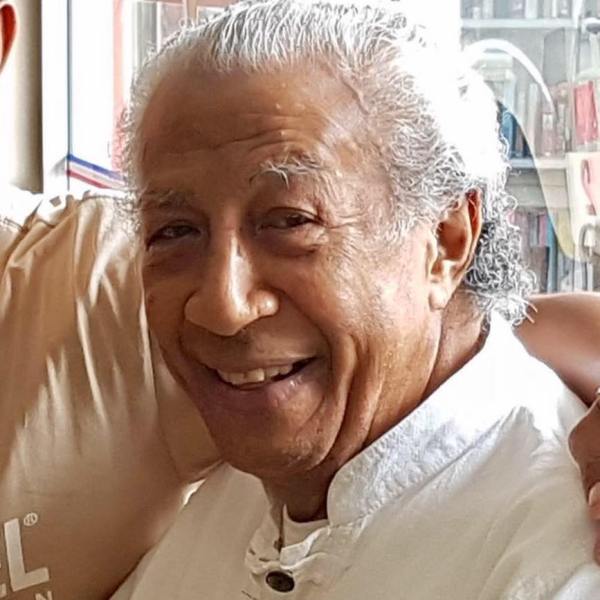
Port Vila ACP-EU heard that more 1 000 West Papuans killed

Port Vila ACP-EU heard that more 1 000 West Papuans killed

West Papuans were never allowed the proper act of self-­determination guaranteed by the inalienable right to self-­determination as expressed in UN human rights Covenants and by the 1962 New York Agreement, a treaty between the Netherlands and Indonesia handing provisional administration of the territory from one country to the other.

 Indonesia arrived in West Papua in 1963 and immediately began violently suppressing all West Papuan aspirations for independence. West Papuans have suffered horrendously under Indonesian rule, including thirty years under the Suharto dictatorship and now nearly twenty under a more democratic, but ultimately colonial, regime. More than a hundred thousand (and perhaps hundreds of thousands) have died because of Indonesia’s annexation. Human rights violations, amounting to ‘crimes against humanity’, continue with impunity.
 Indonesian state authorities, Indonesian settlers and Indonesian (as well as foreign) companies have steadily but surely assumed control over every aspect and arena of West Papuan life. Indonesian claims to have developed West Papua’ ignore the fact that development has primarily benefited Indonesians not Papuans.  Ethnically, culturally and politically, West Papua is part of the Melanesian Pacific, not Southeast Asia. Papuans are black-­skinned Melanesians like the people in neighbouring Papua New Guinea, the Solomons Islands, and Vanuatu.  Indonesia and especially its security forces treat West Papuans as sub-­human because of this racial difference. For decades, the Indonesian government has sent tens of millions of Indonesians from more densely populated regions to its outer, more sparsely populated islands, including West Papua..A parallel voluntary migration continues to this day. In the early 1960s, indigenous Papuans constituted 97% of the population. Today, Papuans are almost a minority in the territory and are already outnumbered in the towns and cities, along the coasts and in the major areas of plantation agriculture. Their culture, the very names of their places, their words and rhythms, the skills, traditions and knowledge that have served for millennia, are being discounted, wiped out, leaving them bewildered and unprepared in an alien world.
 Amnesty International has estimated that more than one hundred thousand (or about 10 percent of the population) have been killed by Indonesian security forces. Other estimates of the deaths, are in the several hundred thousands, one quarter or more of the indigenous Papuans.
 
On-­going violations of the human rights of indigenous West Papuans, including torture, extra-­judicial execution, forced disappearances and the beating and shooting of peaceful protestors, amounting in some instances to crimes against humanity,’ with estimates ranging up to a half-­million killings during Indonesias 54 year occupation of the territory
 A Yale University report is one of several defining Indonesian rule as genocidal.

 The worst period of killing occurred during the 1970s and 1980s, at the height of the Suharto military dictatorship, when West Papua was officially a “military operations area.” Although an even greater percentage of East Timorese likely died after Indonesia invaded the former Portuguese colony in 1975, the exterminationist violence employed is the same and Indonesian racist attitudes of superiority towards “subhuman” black Papuans is greater still.


CALL for ACP-EU Resolution on West Papua

·       ACP-EU Parliamentarians can voice their concern and they can support Papuan rights, including the right to self-­determination by rallying to the call from the 8 Pacific Island Countries for justice and respect for the right to self –determination.

·       They can get regional and global intergovernmental bodies such the African Union, CARICOM and other regional and sub-regional multilateral bodies to pass resolutions and restrict commercial and other relations with Indonesia.

·       As member states of the United Nations ACP –EU countries can insist on an internationally supervised referendum on independence (or at least the re-­listing of West Papua as a non-­self-­governing territory).

·       Support with one voice the proposed resolutions in the upcoming Joint ACP-EU parliament meeting in month of October and also the resolution on West Papua to be adopted at ACP Council of Ministers meeting in November 2017

·       Call on ACP-EU Parliamentarians to urge their respective governments to address the issue of West Papua at the multilateral level and assist Indonesia to resolve this 54 year crisis.

Source: https://www.gov.vu/

Pacific nations back West Papuan self-determination

A coalition of Pacific Island nations has delivered an emphatic call to the African, Caribbean and Pacific group of states to back West Papuan self-determination.

Demonstrators march in Timika in West Papua.
Demonstrators march in Timika in West Papua supporting West Papua self-determination. Photo: Supplied


Vanuatu, Solomon Islands, Tonga, Tuvalu, Nauru, Palau and the Marshall Islands delivered a joint statement at the ACP’s Council of Ministers in Brussels.

It condemned Indonesian human rights violations in Papua, including alleged crimes against humanity and called for an eventual resolution that includes support of the right of West Papuan political self-determination.

Delivering the statement, a Vanuatu government envoy Johnny Koanapo told the Council that “apartheid-like colonial rule” was “slowly but surely” going to wipe out West Papuans as a people “while… the world stood by.”

African and Caribbean countries in the the 79-member group of mainly former colonised territories have voiced strong support for West Papuan self-determination at subcommittee and ambassadorial level during the past two months

Mr Koanapo said that the day’s discussion “now sets up the great likelihood of a resolution on the full range of West Papua issues at the next ACP ministerial council meeting”, scheduled for November.

It’s the latest in a string of high-level representations by the International Coalition for Papua since last year that have taken the issue of West Papua to a new level of diplomatic activity.

The seven Pacific nations, who are in coalition with Pacific regional church bodies and civil society networks, raised concern about West Papuan human rights at the UN Human Rights Council in Geneva two months ago, and also at the UN General Assembly last September.

Indonesia’s government has rejected criticism at the UN level, accusing the Pacific countries of interference and supporting Papuan separatism.

Jakarta says human rights abuses in Papua are largely historical, and that the incorporation of the western half of new Guinea into Indonesia is final.

However, support from other governments for resolution of ongoing human rights infringements in Papua is gaining momentum.

Criticism of the flawed plebiscite by which the former Dutch New Guinea was incorporated into the young state of Indonesia in the 1960s has effected renewed calls for a genuine self-determination process.

At yesterday’s Brussels meeting Papua New Guinea’s ambassador, whose country shares a 760km-long border with Indonesia at West Papua, was the only delegate to speak against ACP moving forward on a resolution on the matter.

Joshua Kalinoe said that “no one is denying that the human rights violations are going on” but suggested that a fact-finding mission to West Papua might be necessary for the ACP to get an accurate picture of the situation.

Guinea-Bissau’s Ambassador Alfredo Lopez Cabral spoke next, comparing the plight of West Papua to East Timor, which Indonesia occupied for 24 years before a mounting legacy of conflict gave way to an independence referendum in 1999.

Rakyat Aborigin Australia Ingin Miliki Negara Sendiri

 Michael Mansell, pengacara dan aktivis hak-hak rakyat Aborigin, mengusulkan kepada pemerintah Australia agar membentuk negara bagian tersendiri bagi rakyat Aborigin. (Foto: abc.net.au)
Michael Mansell, pengacara dan aktivis hak-hak rakyat Aborigin, mengusulkan kepada pemerintah Australia agar membentuk negara bagian tersendiri bagi rakyat Aborigin. (Foto: abc.net.au)

CANBERRA, SATUHARAPAN.COM –  Pemerintah Australia diminta membentuk negara bagian ketujuh yang dikelola oleh warga Aborigin, yang merupakan penduduk asli Australia. Negara bagian itu harus sama dengan negara bagian lainnya di Australia, yang memiliki pemerintahan, parlemen dan sistem pengadilan sendiri.

Usulan ini dikemukakan aktivis dan pengacara Aborigin, Michael Mansell dari Tasmania, sebagaimana dilansir dari abc.net.au.

Menurut Mansell, pembentukan negara bagian ketujuh untuk Aborigin, akan menjadi sebuah hadiah berharga menuju penentuan nasib sendiri bagi rakyat Aborigin.

Ia mengatakan, negara bagian ketujuh itu harus dijalankan seperti negara-negara bagian yang sudah ada.

“Ini akan memiliki wewenang untuk memungut pajak, mengelola jalan, kelistrikan, pendidikan, kesehatan, perumahan dan sebagainya,” kata dia.

“Dengan kata lain, ini akan memberikan rakyat Aborigin secara penuh tanggung jawab di dalam federasi Australia untuk melakukan yang terbaik di dalam sistem federasi itu sendiri,” kata dia.

Pria beretnis Palawa ini baru saja menerbitkan buku berjudul Treaty and Statehood, dan ia mengatakan negara bagian ketujuh itu dapat didirikan di tanah yang saat ini dikuasai oleh rakyat Aborigin, tanpa mengubah konstitusi Australia.

Kendati demikian, ia mengakui bahwa apa yang dia usulkan ini tidak bisa terwujud dalam waktu dekat. Menurut dia, setidaknya diperlukan satu atau dua dekade lagi agar kesepakatan ini diperoleh.

“Anda harus melihat ke 20 atau 30 tahun ke depan untuk model yang kita tuju secara bertahap,” katanya.

“Jika kita mencoba untuk membawa orang-orang Aborigin ke posisi kedaualatan secara politik seperti sebelum invasi tahun 1788, maka anugerah besar yang bisa diberikan (oleh Australia) adalah sebagai negara bagian ketujuh.”

Seruan bagi adanya negara bagian ketujuh ini muncul setelah pemerintah negara bagian South Australia mengumumkan rencananya untuk mencapai kesepakatan dengan kelompok-kelompok Aborigin di dalam negara bagian itu.

South Australia telah menyiapkan dana  4 juta dolar AS dalam anggaran pemerintah untuk mencapai kesepakatan.

Menteri Negara Urusan Aborigin, Kyam Maher, mengatakan ia ingin pembahasan terkait dengan itu dimulai hari Rabu mendatang dan berharap perjanjian pertama akan selesai dalam waktu 12 bulan.

UN makes call on Tahiti’s self-determination

RNZ  – 7:24 am on 12 December 2016

The United Nations has adopted a resolution asking France to put in place a self-determination process for French Polynesia.

The resolution said the people of French Polynesia should freely choose its political status, noting that over 30 years France carried out nuclear weapons tests which have had an impact on health and the environment.

It called on France to intensify the dialogue despite French Polynesia’s government in October calling for the territory to be removed from the United Nations decolonisation list.

France has refused to organise a referendum in Tahiti despite being asked by the territorial assembly three years ago.

France pulled the so-called French Establishments in Oceania off the UN decolonisation list in 1947 – 67 years after it annexed the erstwhile Kingdom of Tahiti.

However, in 2013 the UN General Assembly returned French Polynesia to the list.

The move angered Paris which labelled it as glaring interference by the UN and it has shunned co-operation with the UN on the matter.

France does however recognise the UN in the decolonisation process of its other Pacific territory, New Caledonia, which is due for a referendum on independence within two years.

Kenya backs Saharawi self-determination

Foreign Affairs and International Trade cabinet secretary Amina Mohamed. PHOTO | DIANA NGILA

Kenya has expressed support for the Saharawi Arab Democratic Republic’s (SADR) self-determination as part of the campaign by Foreign Affairs Cabinet Secretary Amina Mohamed for the chairperson of the African Union Commission.

Speaking when she made a historic visit to the Western Sahara country, Ms Mohamed said that Kenya supports the SADR quest for full self-determination and its membership to the African Union (AU).

“Kenya fought for its self-determination and supports the people of Saharawi whose land is still occupied. The suffering the people of this country have undergone should come to an end,” she said.

Morocco considers Saharawi as part of its territory.

Ms Mohamed met and held discussions with SADR Prime Minister Abdelkader Taleb.

She also presented a special message from President Uhuru Kenyatta, on her nomination for the AU Commission seat and requested for support.

Drum up support

The development could go against the rapport Kenya recently struck with Morocco that saw President Kenyatta travel to Rabat to drum up support for Ms Mohammed.

Morocco—that is seeking a comeback to AU since withdrawing from the continental body in 1981—has been lobbying for the expulsion of the SADR from AU before it is reinstated.

It is going to be one of the major issues to be discussed at the sidelines of the January 2017 AU heads of state summit in Addis Ababa.

Morocco withdraw from the then Organisation of African Unity (OAU) in 1981 because of the admission of SADR, which it believes it part of its territory.

Most of the citizens of SADR live in camps administered by Algeria and UNHCR.

Flag day in Papua takes form of prayer events, petition

Events held in the cities of West Papua to mark the anniversary of the Papuan nationalist day mainly took the form of prayer events.

Morning Star Flag
Morning Star Flag Photo: Copyright: chelovek / 123RF Stock Photo

Yesterday was the 55th anniversary of a declaration of independence by the indigenous people of the former Dutch New Guinea declared independence.

The Papuan nationlist Morning Star was subsequently banned when Indonesia took over, but each year global rallies mark this anniversary in support of Papuans.

In Papua, the biggest of yesterday’s events was in the Highlands town of Wamena where 3000 people converged for a large prayer event at the Traditional Council headquarters.

West Papuans show solidarity at a prayer event at Sinapuk Stadium in Wamena.
West Papuans show solidarity at a prayer event at Sinapuk Stadium in Wamena. Photo: Supplied

Benar News reported that organisers of the event thanked the Indonesian authorities for permitting the opportunity to worship.

Among the speakers at another peaceful event, across in Papua’s provincial capital, was Filep Karma.

Papuan pro-independence activist Filep Karma (C) asks police for a permit to hold a convoy with his supporters after being released from prison in Abepura, Papua province, on November 19, 2015.
Papuan pro-independence activist Filep Karma (C) asks police for a permit to hold a convoy with his supporters after being released from prison in Abepura, Papua province, on November 19, 2015. Photo: AFP

Mr Karma was released from prison a year ago after serving eleven years for raising the Morning Star in 2004.

At the Jayapura event, hundreds signed a petition in support of the United Liberation Movement for West Papua with its growing representative role in the Pacific region.

Thousands sign petition message in support of the United Liberation Movement for West Papua movement in the Pacific and at the UN.
Thousands sign petition message in support of the United Liberation Movement for West Papua movement in the Pacific and at the UN. Photo: Supplied


‘Political maturity’

Unlike December 1st demos in global centres such as London, Sydney, the Papua events were not allowed to feature raising of the Morning Star.

“Papuans are already aware and do not want to be provoked by violence and conflict,” Mr Karma was reported as saying.

“Prayers and speeches such as these show political maturity and a dignified struggle.”

West Papuan independence campaigner Filep Karma.
West Papuan independence campaigner Filep Karma. Photo: RNZI / Koroi Hawkins

The event also heard a speech written by the Liberation Movement secretary-general Octo Mote.

He said Indonesians “are starting to acknowledge that crimes have been committed by the government and military of Indonesia in Papua”.

In Jakarta police arrested over two hundred people for participating in a demonstration in support of West Papuans’ right to self-determination.

14 were arrested in the other Indonesian city of Yogyakarta.

Indonesian police turn water canons on protestors who were mostly university students from Free Papua Organization and the Papua Student Alliance in Jakarta on December 1, 2016.
Indonesian police turn water canons on protestors who were mostly university students from Free Papua Organization and the Papua Student Alliance in Jakarta on December 1, 2016. Photo: Supplied


UN adopts resolution reaffirming Western Sahara people’s right to self-determination

SPS 10/10/2016 – 21:04

New York (United Nations), October 10, 2016 (SPS) – UN General Assembly Special Political and Decolonization Committee (Fourth Committee) adopted Monday in New York a resolution reaffirming Saharawi people’s right to self-determination.

The resolution, adopted at the end of a several-day general debate on decolonization, reiterated UN general Assembly’s support of the negotiation process initiated by the Security Council to reach a just, lasting and mutually acceptable political solution ensuring Western Sahara people’s right to self-determination.

Presented by 25 countries, including Algeria, the resolution, greeted the efforts made by the UN secretary general and his personal envoy to Western Sahara, Christopher Ross, for the relaunch of the talks suspended in 2012.

The resolution adopted, by consensus, invites the parties to the conflict (Polisario Front and Morocco) and the States of the region to fully cooperate with the United Nations envoy.

The resolution has taken up UN clear and major ideas on the settlement of Western Sahara conflict, which consist in backing the relaunch of negotiations between the Polisario Front and Morocco, as well as the mediation efforts undertaken by Christopher Ross.

The delegations of the countries taking part in the Fourth Committee debate on decolonization expressed a large support to Saharawi people’s right to self-determination, calling for resumption of negotiations between the parties to the conflict. (SPS)

062/090/700

Benny Wenda documentary to screen on TV Down Under

The Road to Home, an award-winning feature length documentary about British-based West Papuan human rights campaigner Benny Wenda will be screening on Australian television from this November.

An agreement has been reached with SBS’s NITV channel for the film to screen 80 times over the next 3 years, starting from November 1.

Produced and directed by British filmmaker Dominic Brown, the film includes footage from Wenda’s first official overseas tour to the US, Australia, New Zealand and Papua New Guinea in 2013, and provides a rare insight into his campaigning work and family life.

Wenda was denied the opportunity to speak at New Zealand’s Parliament on that visit, but he is due back in New Zealand later this month.

He is expected to get a much warmer welcome this time as the West Papuan self-determination issue has had greater international exposure in the media in the past two years.

Up ↑

Wantok COFFEE

Organic Arabica - Papua Single Origins

MAMA Minimart

MAMA Stap, na Yumi Stap!

PT Kimarek Aruwam Agorik

Just another WordPress.com site

Wantok Coffee News

Melanesia Foods and Beverages News

Perempuan Papua

Melahirkan, Merawat dan Menyambut

UUDS ULMWP

for a Free and Independent West Papua

UUDS ULMWP 2020

Memagari untuk Membebaskan Tanah dan Bangsa Papua!

Melanesia Spirit & Nature News

Promoting the Melanesian Way Conservation

Kotokay

The Roof of the Melanesian Elders

Eight Plus One Ministry

To Spread the Gospel, from Melanesia to Indonesia!

Koteka

This is My Origin and My Destiny