Good-bye, Indonesia: West Papua is fighting for independence from Indonesia

www.jacobinmag.com – by

On July 13, Indonesian delegates — angry because the Morning Star Flag, emblem of the United Liberation Movement of West Papua (ULMWP), was flown alongside other members’ flags — walked out of the first day of the Melanesian Spearhead Group (MSG) leaders’ summit.

The ULMWP is a coalition of Papuan freedom fighters demanding independence from Indonesian control. It and Indonesia have both applied for full membership status in the MSG, but for very different reasons. ULMWP hopes the MSG can bring international attention to their struggle for self-determination, while Indonesia wants to shore up its economic position in the region.

The Indonesian diplomats demanded the flag be taken down, but the organizers ignored them, and the opening ceremony proceeded without the Indonesian delegation.

The summit resulted in a split decision over the ULMWP’s membership status. Vanuatu, the Solomon Islands, and the Kanak and Socialist National Liberation Front (FLNKS) of New Caledonia strongly support ULMWP, while Fiji and Papua New Guinea (PNG) — nations Indonesia has courted with sweetheart economic deals and financial support — oppose it.

The Indonesian delegations’ dramatic exit and the ensuing vote over ULMWP’s membership can help us understand long-standing political fault lines in the region that date back to the 1970s anti-colonization wave.

The MSG and Freedom

For fifty-two years, different political groups have been fighting for West Papuan independence from Indonesia. Although their ideologies differ, each has pursued a common strategy: trying to build diplomatic connections by joining the MSG.

On December 7, 2014, a historic meeting of these independence groups took place in Vanuatu. Papuan leaders from different factions of the movement came together and formed the United Liberation Movement for West Papua.

This new organization consists of the three main groups — the Federal Republic State of West Papua (NRFPB), the West Papua National Coalition for Liberation (WPNCL), and the National Parliament of West Papua (NPWP) — that had until then waged separate struggles for Papuan self-determination. Once they joined forces, they were able to resubmit an MSG application as well as counter Indonesian claims of West Papuan division.

Since it was established, the ULMWP has enjoyed full support from the Solomon Islands and Vanuatu, which, along with Papua New Guinea, originally founded the MSG.

The MSG began in 1986 as a political gathering of these three independent Melanesian states. In 1989 FNLKS joined, followed by Fiji in 1996. Since then, the MSG has developed into a regional bloc with its own trade agreement. On March 23, 2007, the five members signed the Agreement Establishing the Melanesian Spearhead Group and formalized their coalition under international law.

The MSG differs from the other political grouping in the region — the Association of Southeast Asian Nations (ASEAN) — in important ways. For one, it takes a more radical approach to human rights violations than ASEAN.

While ASEAN was founded by pro–United States countries, the MSG developed in the spirit of anticolonialism that spread throughout the region in the 1970s. American interests drive ASEAN, but the MSG’s geopolitical identity — especially its claim to represent Melanesia — was forged in its member nations’ struggle against colonial occupation.

The FNKLS’s MSG membership bears this out. The New Caledonian group doesn’t represent a nation, but a political party that has long called for its nation’s political independence from France. The MSG has played an important role in raising FNKLS’s profile globally and making the Kanak Independence Movement an international topic of discussion. The MSG’s history with FNKLS makes the group especially attractive to the West Papuan freedom fighters.

Who Are Melanesians?

An important aspect of the MSG comes from its self-identification as Melanesian, a term that describes a specific group of South Pacific residents, distinct from both the Polynesian and the Micronesian people.

Melanesia literally means “islands of the black-skinned people” and refers geographically to a subregion of Oceania that extends from the western side of the Pacific Ocean to the Arafura Sea, north and northeast of Australia. Jules Dumont d’Urville first used the term in 1832, but his classification is now considered inaccurate because it ignores the area’s broad cultural, linguistic, social, and genetic diversity.

The original inhabitants of the Melanesian islands were likely the ancestors of the present-day Papuan-speaking people. They are thought to have occupied New Guinea — now divided between independent Papua New Guinea and West Papua under Indonesian control — and reached the other Melanesian islands around thirty-five thousand years ago. They appear to have settled islands as far east as the Solomons, and perhaps even farther.

Around four thousand years ago, the Austronesian people came into contact with the Melanesians along New Guinea’s north coast. A long period of interaction produced many complex changes in genetics, languages, and culture, which are mistakenly used to condense Melanesian, Polynesian, and Micronesian people into one category.

A study published by Temple University, which found that Polynesians and Micronesians have little genetic relation to Melanesians, contests this belief. In fact, it found significant diversity between the groups who live within the Melanesian islands.

Melanesians share a common bond based on identity and a growing consensus against non-Melanesian control. Vanuatu leads what can be called the Pan-Melanesian movement. In an address to the United Nations General Assembly on October 11, 1984, Vanuatu foreign minister Sela Molisa condemned the United Nations for constantly ignoring apartheid in West Papua and closing their eyes to Indonesia’s annexation of East Timor.

Even beyond the region, Indonesian control of West Papua has become a contentious issue. At a UN hearing this June, Vanuatu and the Solomon Islands condemned Indonesian security forces for human rights violations in West Papua. Both countries argued that any future visits by the UN Special Reporter on Freedom of Expression should include West Papua.

The Vanuatu statement expressed its “deepest concerns on the deteriorating human rights situation,” citing regular reports of gross human rights violations in West Papua.

The Solomon Islands, meanwhile, strongly endorsed the International Parliamentarians for West Papua (IPWP) forum, held in London this May. The gathering called for an internationally supervised vote on West Papua’s independence, a declaration cosigned by cross-regional parliamentarians from fifteen UN member states.

Unsurprisingly, the Indonesian representative reacted strongly, accusing both Vanuatu and the Solomon Islands of their own human rights violations.

Indonesia and Melanesia

Indonesia applied for MSG membership for the first time in 2010. It claimed that, because of its population of at least eleven million Melanesians — spreading throughout the provinces of Papua, West Papua, Maluku, North Maluku, and East Nusa Tenggara — it belonged in the regional bloc. But the country’s overtures were met with skepticism.

Most damningly, Indonesia failed to address the cultural differences between Melanesians and Polynesians. For instance, in October of last year, it organized a Melanesian Cultural Festival aiming to promote cultural pluralism and demonstrate how integral Melanesians are to the country. But the event was held in Kupang, East Nusa Tenggara, a Polynesian — not Melanesian — region.

Prior to the event, Indonesia brought a team to lobby the Melanesian countries, but one of the spokespeople was a Polynesian priest from East Nusa Tenggara. Vanuatu and the Solomon Islands both highlighted Indonesia’s confusion over the difference between Polynesian and Melanesian people, arguing that the people outside Papua who Indonesia likes to refer to as Melanesian are in fact Polynesian.

The confusion didn’t stop there. Indonesia invited East Timor — a Polynesian country — to participate in the cultural festival. The event opened with a dance performance billed as Papuan, but the dancers all came from Malay and Polynesia. The director of a documentary that was supposed screen at the festival pulled out, explaining that she would not let Indonesia use her movie to support its claims on Melanesia.

Indonesia quickly realized that it could not make a credible cultural claim, so the country devised a new strategy: positioning itself as an ideal economic partner for MSG countries.

It targeted Papua New Guinea first. Since their partnership, PNG’s GDP has increased 16 percent. The growing trade links and budding economic ties between the two nations are a match made in free-market heaven. They share land and water borders as well as impressive portfolios of vast natural resources and accessible transportation routes into commercial Asian markets.

Papua New Guinea’s quickly expanding middle class provides Indonesian products and services with a massive new market. And both countries have growing populations, making new labor pools available to globally competitive industries such as manufacturing and textiles. Also, thanks to improvements in information and communications technology, they benefit from newfound access to otherwise inaccessible markets and to geographically remote — yet commercially viable — sectors like agriculture and forestry.

At the invitation of PNG prime minister Peter O’Neill, Indonesian president Joko Widodo visited Port Moresby in May 2015 to negotiate cooperative economic, trade, investment, and infrastructure projects. The two leaders also agreed to increase the value of their current bilateral trade agreement beyond current trading activities in the border areas, which already reach $4.5 million a year.

The two countries have signed eleven memoranda of understanding and three agreements to strengthen their partnership based on mutual respect, O’Neill said. Papua New Guinean elites cite their willingness “to learn from Indonesia’s rich experiences in democracy.”

Next, Indonesia turned to Fiji. In April, an Indonesian delegation — led by Luhut Binsar Pandjaitan, the coordinating minister for political, legal, and security affairs — traveled to the country. Pandjaitan met with Prime Minister Voreqe Bainimarama, extending $5 million in financial assistance to help the victims of Tropical Cyclone Winston, which hit Fiji in late February. Indonesia sent an additional $3 million worth of goods to aid recovery, and promised to deploy engineer troops to help reconstruct Queen Victoria School on Lawaki Island.

The engagement was welcomed by Fijian elites. Ina Seriaritu, Fiji’s minister of agriculture, rural, maritime affairs, and national disaster management openly praised Indonesia as a key player in the Asia-Pacific region, and called the country’s success in disaster management and mitigation a model. Seriaritu also hailed the two countries’ plans to intensify educational, agricultural, and economic cooperation.

Indonesia moved fast, sending Husni Kamil Manik — chairman of the Indonesian general election commission — to sign a memorandum on cooperation for election management with his Fijian counterpart.

As Indonesia’s public face in Fiji, Pandjaitan expressed his country’s keenness to become a full member of the MSG and listed Fiji as one of its strategic allies. In exchange, Fiji’s foreign minister Inoke Kubuabola remarked that the Fijian government had proposed upgrading Indonesia’s membership status to strengthen the nation’s position in the group of Melanesian countries.

These economic investments later paid off: both PNG and Fiji supported Indonesia at the MSG meeting this July. They not only endorsed Indonesia’s proposal to become a full member — the nation was granted associate member status in 2015 — but also took Indonesia’s side in debates over the criteria for membership in the regional alliance.

But Indonesia’s desire to prevent ULMWP from obtaining full membership has an important side effect: it endangers the FLNKS’s status as co-founding member. Because the FLNKS is a pro-independence political organization, its status is in many ways dependent on that of the ULMWP.

The Repression

The response to MSG in Indonesia and West Papua is telling. When Indonesia achieved associate membership status, Jakarta newspapers ignored the country’s failure to get full membership and instead focused on its successful block of ULMWP’s application.

The anticolonial party was granted observer status thanks to support from Vanuatu and the Solomon Islands at the same meeting. In stark contrast to how it was reported in the capital, ULMWP supporters in Port Numbay celebrated their new status as an internationally significant step in their lengthy diplomatic campaign.

During this year’s MSG meeting, the West Papua National Committee (KNPB) welcomed the summit by holding mass rallies. KNPB chairperson Victor Yeimo called for protesters to present a united front to the international community to increase political pressure on Indonesia. More than five hundred people were arrested over the course of the day.

These protests were not the first time Indonesia shut down a nonviolent KNPB rally. Indonesian repression against West Papua has only increased since June 2015. The Jakarta Legal Aid Foundation (LBH Jakarta) frequently criticizes the police for their violence. According to Papua Itu Kita (“Papua Are Us”), an Indonesian solidarity network, police have arrested more than six thousand KNPB members and supporters since last summer. Mass KNPB rallies are outlawed, which grants the police and army license for repression.

Recently in Yogyakarta, pro-Indonesia militias stormed the university, harassed Papuan students, and chanted racist epithets while blockading the Kamasan dormitory. The militia group tried to break into the dorm to attack, but the students defended themselves by locking the main gate.

About one hundred students were inside without sufficient food or water. But the police were no help: when two students ventured outside to buy cassava, sweet potatoes, and vegetables for lunch, they were detained and had their food confiscated. In total, seven activists were arrested and charged with treason.

When the news spread across social media, many Indonesians showed their solidarity by collecting food, water, and other basic needs for the Papuans. The country’s Red Cross attempted to deliver aid, but police ordered it to stay away from the location. The next day, in a clear attempt at intimidation, the police held their morning muster outside the dorm.

At the same time, students in Manado and North Sulawesi were not allowed to march, and two activists were arrested and charged with treason as well. Naturally, Indonesia’s restrictions and censorship, its denial of access to international bodies, and its ban on journalists entering Papua have all failed to convince these Melanesians that they are really Indonesians.

What’s Next?

The next special MSG summit will take place before September in Vanuatu. But there are some questions that need to be settled first.

For ULMWP, the June vote marked a delay, not a full stop. The Solomon Islands, Vanuatu, ULMWP, and FLKNS just signed an agreement demanding ULMWP’s full membership status in MSG, and connecting the Kanak independence struggle against French rule with West Papua’s fight against Indonesia. The prime ministers of the Solomon Islands and Vanuatu, the FLKNS chairperson, and the ULMWP general secretary all signed it.

Following the agreement, this new alliance met with Polynesian and Micronesian countries in the first international meeting between these nations, political groups, and regional alliances in the Pacific.

Indonesia, on the other hand, continues to tout its success in stalling the ULMWP’s diplomatic aims. Indonesian media repeats state propaganda, referring to the ULMWP as a separatist group that only represents a small part of exiled Papuans.

The majority of Indonesians believe that the problems in West Papua can be solved with more development. They praised the Widodo regime for expanding infrastructure — by grabbing hundreds of acres of indigenous land — and building schools that assimilate Papuan children into the Indo-Malay culture.

For example, they encourage Papuans to have a “more civilized way of life” by eating rice instead of sago. But this is really because sago forests are being converted into palm oil, pulp, and paper mega-plantations. This exploitative economic relationship is one reason why Indonesia will put up a vicious fight to prevent Papuan independence.

At the same time, another group of Indonesians believe that the Papuan demand for self-determination can be resolved by addressing the dozens of open human rights violation cases. They call on the Indonesian government to form separate independent bodies to address each case.

Another faction calls for a “democratic solution”: holding a “peace dialogue as one nation” between Jakarta and the Papuan people. All the extrajudicial killings, all the land grabs, and all the long-term discrimination and racism will be solved through dialogue, and the self-determination demand will be forgotten.

But with each passing day this liberal solution looks more and more far-fetched. Independence is the only solution.

 

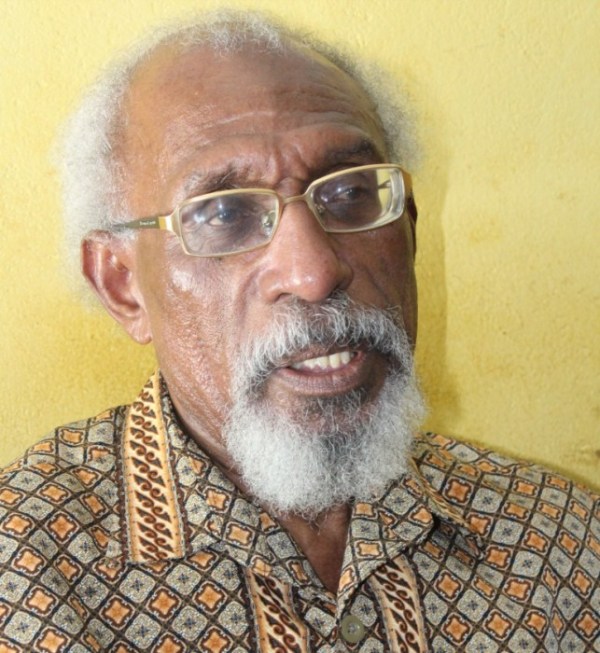
Sofyan Yoman: Biarkan Rakyat Papua Berjuang Dengan Cara Mereka

“Pertarungan” Indonesia dan ULMWP “berlanjut” di Papua Lawyer Club (PLC), Rabu malam (10/8/2016), dalam satu dialog yang disiarkan TV Swasta, di Kota Jayapura, Papua. Setidaknya itulah yang coba disajikan oleh Jaringan Damai Papua (JDP) dalam dialog yang bertema Pertarungan Pemerintah Indonesia versus United Liberation Movement West Papua (ULMWP).

Hadir dalam acara tersebut wakil-wakil dari masing-masing pihak yang “bertarung”. Wakil ULMWP, seperti Victor Yeimo dan Edison Waromi, juga tokoh gereja Pdt. Sofyan Yoman, serta pemerintah Indonesia, diwakili oleh Asisten Deputi Bidang Otonomi Khusus Menkopolhukam, Brigjen Herwin Suparjo. Wakil LIPI, Adriana Elizabeth dan JDP, Septer Manufandu, berperan sebagai jembatan dari kedua belah pihak. dilansir dilaman tabloidjubi.com.

Dalam acara lewat siaran televisi langsung Papua Lawyers Club (PLC) tersebut Sofyan Yoman mengakatan dalam pidatonya, Mentri Polhukam Luhut Binsar Panjahitan pernah berjanji didepan pemimpin gereja, Bapak Pdt. Albert Yoku, Presiden GIDI Pdt. Dorman Wandikbo, Ketua Sinode KINGMI di tanah Papua Pdt. Dr. Benny Giay dan saya sendiri Ketua Gereja Persekutuan Baptis Papua, bahwa beliau (Mentri Polhukam Luhut B. Panjahitan) sendiri bilang begini, Bapak-bapak dalam waktu singkat saya akan menyelesaikan kasus Paniai, ia sangat berbohong kepada kami, itu pemerintah sudah berbohong kepada pemimpin Gereja!, ini luar biasa dia bilang dikantor sinode GKI, dalam waktu singkat saya akan kastau kepada presiden Jokowi bahwa kami akan selesaikan kasus Paniai dalam waktu singkat bulan ini, ini satu penipuan yang besar negara lakukan terhadap umat Tuhan di tanah Papua, kami sangat menyesal Pdt-Pdt seperti itu, kebohongan seperti itu, lalu kita lihat kasus di Tolikara, Tolikara itu, kasusnya itu yang terbakar Mushola, sementara itu, itu sebenarnya terbakar bukan dibakar, itu bukan mushola, itu tempat rumah tinggal, “rumah” dijadikan tempat ibadah terbakar, sekarang Presiden diam, kasus Paniaipun diam, kepala mentrinya diam, tapi seketika kasus Tolikara mushola terbakar, Panglima TNI, Kapolri, tiga mentri langsung kunjungi kesana urus mushola.

Sementara 11 orang ditembak hari itu satunya meninggal yang lain luka-luka dibiarkan tidak diselediki, ini bagaimana, urus mushola atau urus kemanusiaan Papua? Hanya ada omong kosong, kalau pemerintah mau bangun, “bangun” itu kewajiban anda selama 54 tahun dan akan datang ” bangun”.

“Tapi perjuangan bangsa Papua untuk menentuan nasip sendiri biarkan mereka berjuang dengan cara mereka” itu bukan mereka berjuang dihutan-hutan, bukan dipingir jalan, berjuang dalam forum-forum resmi, biarkan mereka berjuang, mereka tidak membunuh orang, menculik, menangkap orang seperti pemerintah lakukan terhadap rakyat Papua, menculik, menangkap, membunuh dengan stigma separatisme.

Saya pemimpin gereja bicara, saya bukan politisi, saya bukan bagian dari pemerintah, cukup lama umat Tuhan ini mederita, jangan alasan ini alasan itu, otonomi khusus gagal, itu sudah gagal. Pemerintah Amerika juga bilang gagal, itu berbau politik seketika orang Papua mau merdeka, jangan selalu bilang nilai uang, orang Papua tidak bisa diukur dengan nilai uang.

Orang Papua punya uang, Freeport punya uang, Tipi punya uang, Sorong minyak, kayu disini ada banyak, bisa mereka bangun, mereka punya uang banyak. Saya sampaikan selama ini pemerintah selalu bilang bicara dengan siapa, oh salah sekarang sudah membentuk ULMWP, perdana bilang ULMWP untuk siapa, pemerintah segerah bicara dengan ULMWP.

Minta maaf saya ini gereja bicara, jadi saya kastau itu umat Tuhan tidak boleh menderita. Terimakasih Tuhan Memberkati, diakhiri pidatonya. (*)

Ada Pengakuan Negara Terhadap Politik Papua

LIPI dan sejumlah LSM serta individu di Jakarta selama ini bersuara bahwa di Papua itu persoalan utama adalah politik maka pendekatan harus politik, dialog atau referendum.

Tetapi, selama ini pemerintah klaim tak ada soal politik di Papua. Dan dianggap soal Papua adalah soal eknomi, pendidikan dan kesejahteraan. Juga pemerintah mengatakan di Papua itu tidak ada TPN-OPM, yang ada adalah kelompok kriminal bersenjata, kelompok pengacau keamanan dan lainnya. Intinya tak ada pengakuan bahwa ada TPN- OPM di Papua.

Namun tak sadar, apa yang pemerintah klaim itu, bahwa kini, pengakuan itu datang tanpa disadari, secara logika pemerintah sudah mengakui ada tiga peristiwa pengakuan akan eksisnya TPN-OPM dan persoalan Papua adalah persoalan politik.

Pertama, koran Rakyat Merdeka Edisi 22 Maret 2016, Halaman 2 memberitakan, pengakuan kepala BIN, Sutiyoso atas keberadaan TPN-OPM di teritory Papua dan Papua Barat.

Kedua, waktu lalu, Menkopolhukam, Luhut B. Panjaitan datang ke Jayapura dan kunjungi makam Pemimpin Besar Bangsa Papua, Alm. Theys Hiyo Eluay. Saat ia datang, lukisan-lukisan bintang kejora (Gambar Bendera Papua) di makam tersebut ditutup dengan kain putih dan menabur bungga.

Ketiga, Jokowi saat diwawancara wartawan Aljazera mengakui bahwa ia sadar ada gerakan politik yang kini mulai pengaruhi Pasific.

Sekarang sudah ada pengakuan terbuka oleh Indonesia atas persoalan politik bangsa Papua (Melanesia). Tapi, Indonesia tetap malas tahu dan masih lihat dari kacamata kesejahteraan. Indonesia abaikan dialog dan referendum.

Tidak mengapa, yang penting pengakuan itu secara tidak langsung sudah naikan status masalah Politik Papua di Pasific, Afrika, Rusia, dan China serta Eropa.

Papua saat ini sudah terdaftar sebagai salah satu wilayah bersama 60 bangsa lain yang berjuang untuk kemerdekaan dan segera akan terdaftar di komisi dekolonisasi PBB. Setelah itu, masuk pada tahapan referendum.

Proses ini berjalan karena rakyat yang terus melawan atas mediasi KNPB dan organisasi lainnya. Ini terjadi karena rakyat terus mendukung ULMWP dengan berbagai cara, aksi, dana dan doa.

Jadi bangsa Melanesia dan lebih khususnya orang Papua sadar bahwa Indonesia atau siapapun tidak akan memberikan kemerdekaan West Papua, kalau orang Papua sendiri berdiam diri. Merdeka akan di raih hanya dengan berjuang, doa, memberi sumbangan dana pada organisasi payung ULMWP serta terlibat dalam demonstrasi-demontrasi yang dibuat oleh rakyat Papua yang dimediasi oleh gerakan-gerakan yang ada di tanah Papua, semacam KNPB, Garda, AMP, dan lainnya untuk mendapatkan simpati dunia menuju referendum Bangsa Papua yang merdeka. (*)

Komnas HAM Sebut Sikap Anti-Papua Terjadi 5 Tahun Belakangan di Yogya

Jumat, 22 Juli 2016 | 21:42 WIB

JAKARTA, KOMPAS.com – Komisioner Komisi Nasional Hak Asasi Manusia (Komnas HAM), Natalius Pigai menyebut bahwa fobia Papua oleh warga Yogyakarta sudah berlangsung lima tahun belakangan.

Hal itu disampaikan Pigai dalam konfrensi pers terkait hasil penyelidikan Komnas HAM atas peristiwa pengepungan asrama mahasiswa Papua di Yogyakarta yang terjadi beberapa waktu lalu.

“Sudah 5 tahun anti-Papua sudah berlangsung di Jawa,” kata dia di Jakarta, Jumat (22/7/2016).

Ia mencontohkan, salah satu sikap anti-Papua itu ditunjukkan ketika mahasiswa asal Papua mencari kos di kota pelajar itu. Pemilik kos biasanya menolak untuk menerima mahasiswa Papua.

(Baca: Organisasi Papua Barat Merdeka Ditolak Bergabung dengan MSG)

“Misal ada anak (mahasiswa) Papua cari kos-kosan, misal (saat bertanya) ‘ibu bapak ada kos-koasan kosong?’ ‘ada’, begitu tahu anak Papua langsung ditolak,” kata dia.

Terkait penggerebekan asrama Mahasiswa Papua dan Pernyataan Sri Sultan Hamengkubuwono X mengenai separatisme tidak boleh ada di Yogyakarta, Natalius menilai bahwa pemerintah harusnya dapat melindungi rakyat.

Adanya persoalan tersebut membuat kekhawatiran bagi orang-orang Papua, khususnya mahasiswa, yang ada di Yogyakarta.

(Baca: Komnas Temukan Pelanggaran HAM pada Penggerebekan Asrama Papua)

“Yang berbahaya adalah masa depan dan keberlangsungan hidup orang-orang papua di Jogja (Yogyakarta), itu tidak pasti,” kata dia.

Penggerebekan Asrama Mahasiswa Papua Kamasan I, di Jalan Kusumanegara, Kota Yogyakarta pada Jumat (15/07/2016) siang berawal dari rencana aksi damai mahasiswa Papua dan aktivis pro-demokrasi mendukung Persatuan Pergerakan Pembebasan untuk Papua Barat atau United Liberation Movement for West Papua (ULMWP).

Namun, kegiatan itu batal dilaksanakan lantaran lebih dahulu dibubarkan oleh ratusan personel gabungan dari Polda Daerah Istimewa Yogyakarta, Brigade Mobil, dan organisasi masyarakat.
Penulis : Fachri Fachrudin
Editor : Sabrina Asril

Papua: ULMWP Gagal Jadi Anggota MSG

Victor Mambor, Honiara, 2016-07-20

Upaya kelompok pro kemerdekaan Papua  – United Liberation Movement for West Papua (ULMWP) untuk menjadi anggota penuh organisasi Negara-Negara Melanesia yang tergabung dalam Melanesian Spearhead Group (MSG) belum terwujud.

Pertemuan pemimpin MSG di Honiara, Kepulauan Salomon pada 13-14 Juli 2016, memutuskan untuk menunda keputusan keanggotaan ULMWP.

Manaseh Sogavare, Ketua MSG yang juga adalah Perdana Menteri Solomon menjelaskan Jumat pekan lalu, bahwa tertundanya keputusan keanggotaan ULMWP karena kesalahan yang dibuat Sub Komisi Hukum MSG dalam menyusun kriteria dan panduan keanggotaan.

“Kesalahan ini sangat fatal. Kriteria baru menyebutkan yang menjadi anggota MSG adalah negara. Kata “negara” ini bukan saja menutup kemungkinan ULMWP menjadi anggota penuh tapi juga mengancam FLNKS,” kata Sogavare kepada BeritaBenar.

FLNKS atau Kanak Socialist National Liberation Front adalah gerakan separatis Kanak di Kaledonia Baru.

Salah satu tujuan pendirian MSG adalah untuk meningkatkan profil internasional suku Kanak tersebut dalam memperjuangkan kemerdekaannya dari Perancis, hal yang juga membuat MSG strategis bagi ULMWP dalam memperjuangkan cita-cita pergerakan yang juga ingin ke luar dari Indonesia ini, seperti dikutip dari situs the Interpreter. Oleh karena itulah keanggotaan di dalam MSG dinilai penting.

“Kami memberi waktu lagi pada sub komite hukum MSG untuk menyelesaikan tugas mereka. Sebelum September, para pemimpin akan bertemu lagi di Port Vila, Vanuatu, untuk menyelesaikan masalah keanggotaan ini,” jelas Sogavare.

Vanuatu dukung Papua

Usai pertemuan para Kepala Negara MSG, Perdana Menteri Vanuatu, Charlot Salwai menegaskan pertemuan di Port Vila tidak akan tertunda lagi seperti sebelumnya. Di Vanuatu, para pemimpin hanya akan membahas masalah kriteria dan keanggotaan ULMWP.

“Vanuatu adalah pendukung tradisional pembebasan Papua. Platform negara kami menegaskan Melanesia belum sepenuhnya bebas sampai seluruh wilayah Melanesia bebas dari penjajahan,” ujarnya.

Pertemuan di Honiara, kata Salwai, mengecewakan. Hasil pertemuan menunjukkan dengan jelas ketidakmampuan Sekretariat MSG dalam memahami tujuan pendirian MSG dan aspirasi politik bangsa Melanesia.

Fiji ancam keluar

Usai pertemuan para pemimpin MSG, seorang pejabat senior Kepulauan Solomon mengungkapkan konsensus yang dilakukan para kepala negara berlangsung tegang.

Vanuatu, Kepulauan Solomon dan FLNKS yang mendukung ULMWP jadi perwakilan bangsa dan rakyat Papua, harus berhadapan dengan Fiji yang mengancam akan keluar dari MSG jika ULMWP diterima sebagai anggota penuh.

“Fiji bersikap keras. Fiji akan keluar dari MSG jika ULMWP diterima dan kemungkinan Indonesia juga akan keluar. Sedangkan Papua New Guinea meski menentang aplikasi keanggotaan ULMWP, bersikap lebih lunak,” jelas pejabat senior Kepulauan Solomon yang menolak disebutkan namanya.

Kriteria baru yang “cacat” itu, menurut pejabat senior ini, digunakan pula oleh Papua New Guinea dan Fiji untuk menentang keanggotaan ULMWP.

Perdana Menteri Fiji, Frank Bainimarama terlihat meninggalkan lokasi acara sebelum pertemuan para pemimpin usai. Selanjutnya, delegasi Fiji dipimpin oleh Menteri Luar Negeri Fiji, Ratu Inoke Kubuabola.

“Perdana Menteri pulang lebih dulu untuk meresmikan tim rugby Fiji yang berangkat ke olimpiade Rio di Brazil,” jelas Kubuabola.

Galang dukungan

Pimpinan ULMWP mengaku dapat menerima dengan lapang datang meskipun batal menjadi anggota MSG dan masih dalam status observer. Octovianus Mote (Sekretaris Jenderal ULMWP) dan Benny Wenda (Juru Bicara ULMWP), menyatakan bisa menerima keputusan MSG.

“Kami orang Melanesia. Tapi kami adalah tamu di sini. Apapun keputusannya, tetap kami terima,” kata Mote.

Sedangkan Wenda mengatakan keputusan MSG tersebut mendorong ULMWP untuk menggalang dukungan lebih besar lagi dari negara-negara Pasifik, terutama wilayah Polinesia dan Mikronesia.

Tawarkan kerjasama ekonomi

Sementara itu, Indonesia menawarkan kerjasama ekonomi dengan negara-negara anggota MSG. Tetapi menurut pimpinan Delegasi Indonesia, rencana kerjasama itu terhambat dengan kehadiran delegasi ULMWP.

“Indonesia siap membantu MSG dalam berbagai kerjasama ekonomi di masa akan datang. 622 juta penduduk ASEAN bisa menjadi pasar potensial buat MSG. Kehadiran ULMWP hanya akan menghambat rencana kerjasama ini,” ungkap Desra Percaya, ketua delegasi Indonesia.

Dia menambahkan bahwa MSG seharusnya tegas menyatakan tidak ada tempat bagi kelompok separatis dalam organisasi itu.

Indonesia yang mengklaim memiliki sekitar 11 juta orang Melanesia yang tersebar di beberapa propinsi di bagian timur, melamar sebagai anggota MSG pada tahun 2010 dan mendapatkan status observer pada 2011. Dalam pertemuan di Honiara Juni 2015, MSG menaikkan posisi Indonesia sebagai anggota associate dan ULMWP sebagai observer, seperti dilaporkan di situs abc.

Vanuatu Deputy PM: MSG Members Have Their Own Agendas On West Papua

Natuman claims ‘MSG is being bought by others’

Compiled by Jane Joshua

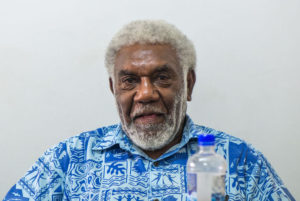
Joe Natuman, Deputy PM Vanuatu

PORT VILA, Vanuatu (Vanuatu Daily Post, July 20, 2016) – Deputy Prime Minister and Minister of Trades, Joe Natuman, believes other people are trying to use the Melanesian Spearhead Group (MSG) to drive their own agendas, saying it is similar to Jesus who was betrayed and sold for 30 pieces of silver.

The United Liberation Movement for West Papua (ULMWP) was not admitted as full member of the Melanesian Spearhead Group during the Special MSG summit in Honiara, Solomon Islands on July 14, 2016.

[PIR editor’s note: On July 20, 2016 Vanuatu Daily Post reported that ‘The Chairman of the Vanuatu Committee for Free West Papua, Pastor Allen Nafuki, has said he strongly believes that the Melanesian Spearhead Group (MSG) meeting to be held in Port Vila in September, will grant West Papua full membership into the Melanesian Spearhead Group.’]

“Our Prime Minister was the only one talking in support of full membership for West Papua in the MSG, the Solomon Islands Prime Minister couldn’t say very much because he is the chairman,” the veteran politician told Buzz FM 96’s Coffee and Controversy host Mark O’Brien yesterday morning.

“Prime minister Charlot Salwai was the only one defending Melanesians and the history of Melanesian people in the recent MSG meeting in Honiara.

“The MSG, I must repeat, the MSG, which I was a pioneer in setting up was established for the protection of the identity of the Melanesian people, the promotion of their culture and defend their rights. Right to self determination, right to land and right to their resources.

“Now it appears other people are trying to use the MSG to drive their own agendas and I am sorry but I will insist that MSG is being bought by others.

“It is just like Jesus Christ who was bought for 30 pieces of silver. This is what is happening in MSG. I am very upset about this and we need to correct this issue.

“Because if our friends in Fiji and Papua New Guinea have a different agenda, we need to sit down and talk very seriously about what is happening within the organization.

“And I am sorry but I will insist that MSG is being bought by others.”

Asked what transpired at the Honiara Summit, DPM Natuman said according to the Prime minister’s briefing on his return, there were some misunderstanding on what happened in the Officials’ Meeting and the Foreign Ministers meeting.

“What happened was that they presented to the Summit Leaders something which apparently was not discussed at the officers level so this was the problem,” he explained.

“The issue of Membership was supposed to be presented to the Leaders.

“Instead they present the leaders with a list of criteria for membership.

“This criteria was whether or not organisations or liberation movements should be considered for full membership.

“Finally, our Prime minister was the only one talking in support of West Papua membership, the Solomon Islands Prime Minister couldn’t say very much because he is the chairman.”

On the issue of New Caledonia, DPM Natuman said, “People are now saying we should not be interfering with Indonesia’s sovereignty. But what about New Caledonia? France has held onto New Caledonia.

“In the 1990s, we insisted that New Caledonia was a colonial possession of France, therefore we have the right to intervene .

“And we intervened, firstly we asked the people of New Caledonia to form an umbrella grouping, or political parties to support their cause. So they established the FLNKS at Vanuatu’s request.

“Through that means we promote their issues to the Forum and eventually they were listed in the UN’s listing of colonial territories.

“We have to assist them to get Independence, same as West Papua.

“West Papua was forcibly annexed by Indonesia and brutally overthrown. They were in the process of getting their independence in the early 1960s.

“West Papua is very rich in resources, gold, copper and forests thus a lot of western capitalists were interested in that.

“Now they say we cannot interfere, no, we must interfere. Melanesians are being killed by Asians, we have to interfere.”

The Deputy Prime Minister was part of the panel in yesterday’s 96Buzz FM’s Coffee and Controversy show at the Lava Lounge, which also features Glen Craig from Pacific Advisory and Job Dalesa who is on the West Papua Reunification Committee.

When asked on his opinion on whether MSG in itself has ‘lost its way’ as implied by the DPM, Dalsesa replied,” I certainly think so, West Papua has a lot of enemies. A lot of people are fighting over this area because of its resources, and by fighting you can do a lot of things including buying another country and I think this is what they are doing.

“The divide and rule tactic is a common tactic that has been used for a long time.”

Yesterday’s show revolved around Foreign Policy, MSG and the South China Sea dispute.

Don’t miss out on the next Coffee & Controversy Show, 9am next Tuesday.

Vanuatu Daily Post
Copyright © 2016 Trading Post Limited. All Rights Reserved

Nafuki believes ULMWP membership in MSG will be made in Septembe

DailyPost.vu, By Godwin Ligo |  Posted: Wednesday, July 20, 2016 8:00 am

The Chairman of the Vanuatu Committee for Free West Papua, Pastor Allen Nafuki, has said he strongly believes that the Melanesian Spearhead Group (MSG) meeting to be held in Port Vila in September, will grant West Papua full membership into the Melanesian Spearhead Group.

“It was right here in Port Vila, that Vanuatu played an important role in hosting of the reconciliation ceremonies between all West Papua Leaders, and the formation, and the signing of the agreement of the United Liberation Movement for West Papua (ULMWP) between all the West Papua Leaders,” Pastor Nafuki told the Daily Post.

He went on to state that: “As a Pastor in a Christian church and occupying the Chair of the Free West Papua Association in Vanuatu, I also strongly believe that it is God’s plan that the West Papua admission as a full member to the MSG will take place here in Vanuatu.

“In this regard I am calling on every Christian Leaders in all Christian denominations and all Christians across Vanuatu to rise in Pray in one accord for this dream for West Papua brothers and sisters to be fully realized in September 2016 here in Port Vila, Vanuatu,” he appealed.

“After the news was received from Honiara that West Papua full admission into the MSG did not happen, I gave a lot of thought about why the MSG Leaders had once again did not grant full admission to the Melanesian brothers and sisters in West Papua full MSG membership.

“What came across my mind is that we humans make plans but God’s will according to His plan and time is what we have to seek and accept.

“So, as of today as I am talking to the Daily Post, I wish to state that my Committee is reviewing plans and preparing an even stronger application which will be submitted in good time ahead of the MSG Leaders’ Summit here in Port Vila in September, 2016,”

said Pastor Nafuki.

“Let me reiterate my call on all Christian Leaders and all Christians across Vanuatu to place West Papua Melanesian brothers and sisters for a full membership into the MSG, in the hands of the Almighty God to grant this request in the MSG Leaders’ Summit in September 2016,”

Nafuki reiterated.

ligo@dailypost.vu

Vanuatu Deputy PM: Melanesians Being Killed By Asians

Pasifik.News – By Adam Boland – July 20, 2016

Vanuatu’s Deputy Prime Minister has hit out at Indonesia saying Melanesians must speak up for the people of West Papua.

Joe Natuman believes the Melanesian Spearhead Group (MSG) is being swayed by outside interests after it deferred making a decision on awarding full membership to the United Liberation Movement for West Papua (ULMWP).

“West Papua was forcibly annexed by Indonesia and brutally overthrown. They were in the process of getting their independence in the early 1960s,” he told Vanuatu’s Buzz FM 96. “Now they say we cannot interfere, no, we must interfere. Melanesians are being killed by Asians, we have to interfere.”

He says the MSG is failing to meet its charter.

“The MSG, I must repeat, the MSG, which I was a pioneer in setting up was established for the protection of the identity of the Melanesian people, the promotion of their culture and to defend their rights,” he said. “Now it appears other people are trying to use the MSG to drive their own agendas and I am sorry but I will insist that MSG is being bought by others.”

Vanuatu has been a strong supporter of the ULMWP getting full membership but Papua New Guinea and Fiji say it would undermine Indonesia’s sovereignty. Jakarta has confirmed it has been lobbying Melanesian countries intensely.

“If our friends in Fiji and Papua New Guinea have a different agenda, we need to sit down and talk very seriously about what is happening within the organisation,” said Mr Natuman.

Sikap NRFPB Merespon Hasil KTT MSG Di Honiara, Kepulauan Solomon

JAYAPURA – Gagalnya ULMWP (United Liberation Movement for West Papua) untuk menjadi anggota penuh pada Forum Melanesia Sparehead Group (MSG), nampaknya turut menjadi perhatian serius Forkorus Yobosembut, yang mengklaim diri sebagai Presiden Negara Federal Republik Papua Barat (NFRPB).

Forkorus Yoboisembut malah mempertanyakan bahwa kapan ULMWP dibentuk, mengapa dibentuk, dan dimana selama ini menggelar rapat-rapat di luar negeri dan dalam negeri, serta ULMWP bekerja dengan siapa, dirinya tahu dengan benar.

Kehadiran ULMWP tersebut juga disebabkan oleh dirinya, dimana ada dua stafnya yang memilih memisahkan diri dari NFRPB dan berjuang sendiri. Ibarat seperti ada dua anak yang kawin lari dan melahirkan, salah satunya melahirkan/mendirikan ULMWP.

“Kelompok ULMWP ini dulunya berada dalam perjuangan bersama NFRPB, tapi memilih memisahkan diri, dan menyampaikan kepada saya bahwa saya jangan menyesal, karena mereka mau bentuk sesuatu yang lain,” ungkapnya kepada Bintang Papua, usai doa syukur di Pendopo Masyarakat Adat Tabi di Kampung Sabronsari, Selasa, (19/7).

Dijelaskan, pada 19 Desember 2014, dirinya mengutus Edison Waromi, Markus Haluk dan Yakob Rumbiak ke pertemuan MSG untuk membacakan kriteria NFRPB menjadi anggota MSG di Port Moresby ketika itu, tapi hasilnya untuk Papua Barat akan membentuk suatu organisasi payung yang inklusif dengan Indonesia. Nah kesempatan yang digunakan oleh mereka yang dulunya bergabung dengan NFRB tersebut untuk membentuk ULMWP.

Disamping itu, dirinya menyampaikan agar ULMWP ini jangan dibentuk dulu, dan pihaknya melihat kriterianya dulu untuk membentuk ULMWP karena organisasi perjuangan kemerdekaan Papua sudah banyak, sehingga sebaiknya diserahkan saja nama-nama organisasi-organisasi tersebut kepada MSG untuk melihat mana organisasi yang memenuhi kriteria dan layak menjadi organisasi payung dalam memperjuangkan kemerdekaan Papua di luar negeri. Tetapi sarannya itu ditolak mentah-mentah oleh mereka yang membentuk ULMWP, yang dulunya dirinya menampung mereka di Sentani. Termasuk dirinya juga membentuk Komite Nasional Papua Barat (KNPB), tapi di tengah jalan, KNPB memilih untuk memisahkan diri dengan NFRPB.

Lanjutnya, sebelumnya ada utusan empat orang dari ULMWP datang bertemu dengan dirinya meminta restu untuk ke pertemuan forum MSG di Honiara, dan dirinya menyampaikan kepada mereka bahwa silakan jalan dan menghadang NFRPB di MSG, karena membantu Indonesia.

“Edison Waromi, Markus Haluk dan Yakob Rumbiak sekembali mereka dari Port Moresby, saya sampaikan kepada mereka bahwa untuk sementara putus hubungan kerja dengan Saya. Khusus Markus Haluk, saya pecat karena saya angkat dia dengan SK. Saya putuskan kerja dengan mereka karena mereka inkonsistensi dengan yang sudah saya tetapkan, khususnya inkonsisten terhadap deklarasi,” tandasnya.

Atas dasar itu, maka NFRPB tidak ada di dalam ULMWP, dan ULMWP sendiri dalam perjuangan hanya mengatasnamakan rakyat Papua saja, karena mereka tidak konsisten terhadap deklarasi, Itu harusnya ULMWP malu, karena tidak konsisten terhadap deklarasi, masih saja bawa nama NFRPB dan rakyat Papua.

Sehingga kemarin di MSG menunda keanggotaan ULMWP, karena MSG sendiri tidak mencapai konsensus bersama para anggota MSG. Berikutnya MSG akan mengadakan pertemuan khusus pada September 2016 untuk menyusun kriteria dan pedoman siapa yang berhak menjadi forum Full Member Only State, siapa yang berhak menjadi Asiciaty Member State, dan siapa yang berhak menjadi Observe Status.

Jadi kemungkinan kecil kalau sampai fundamental kriterianya itu Full Member Only State, maka ULMWP tidak menjadi anggota MSG, sebab kriterianya sangat ketat. Kalau MSG meniru kriteria seperti yang organisasi VIP punya, maka kemungkinan kecil ULMWP bisa menjadi anggota MSG. Itu berita yang benar, karena dirinya memperoleh informasi resmi dari rekan-rekannya di Australia dan Belanda.

“Jadi istilah kasarnya, ULMWP ditolak secara halus oleh MSG, sehingga kita tidak usah menipu rakyat, kita kasih tau saja kepada rakyat secara lurus saja supaya rakyat tidak menunggu sesuatu yang tidak benar atau tidak pasti. Masa kita mau membohongi rakyat kita, dan jangan Papua tipu Papua sebab di MSG dalam pengambilan keputusan tidak mengenal system votting, tetapi sistem suara bulat, dengan demikian jika satu anggota MSG tidak setuju, maka semua tidak setuju. Salomom Island pernah usulkan ULMWP boleh bergabung tapi tidak boleh bicara politik, hanya bicara ekonomi dan budaya, tetapi itupun tidak disetujui,” jelasnya.

Sementara itu, masyarakat Papua selama ini sangat menghormati tatanan adat yang ada di Tanah Papua karena hal tersebut adalah dasar dari sikap saling menghargai. Namun demikian, saat ini terdapat kelompok yang masih seumuran jagung kemudian mendeklarasikan diri dengan nama ULMWP atau Kelompok Persatuan Pembebasan Papua Barat dan mengklaim sebagai representasi masyarakat asli Papua. Melalui kampanye propaganda agar masyarakat mendukung perjuangan luar negeri yang dilakukan di MSG, mereka mengabaikan tatanan adat yang berlaku selama ini di Papua dan masyarakat juga sepertinya menjadi terjebak oleh konspirasi dalam kelompok tersebut. Jadi tidak ada tempat bagi ULMWP dalam masa depan MSG.

Demikian ditegaskan oleh Dubes Desra, Direktur Jenderal Asia Pasifik dan Afrika Kementerian Luar Negeri Republik Indonesia, dalam press releasenya ke Kantor Redaksi Bintang Papua, Selasa, (19/7).

ULMWP pada dasarnya bukan merupakan perjuangan murni dari dalam Papua tetapi lebih banyak untuk mengakomodir kepentingan pihak luar negeri yang dibawa oleh orang Papua dimana notabenenya telah menetap secara permanen di luar negeri. ULMWP yang juga mencatut nama NRFPB sebagai kelompok pendukungnya, telah menyebarkan kebohongan kepada seluruh masyarakat Papua karena sampai saat ini, NRFPB dengan tegas menyatakan tidak berada dalam ULMWP. NFRPB sendiri pada dasarnya berprinsip bahwa pengajuan aplikasi ke MSG harus dalam bentuk negara sehingga NFRPB yang seharusnya menjadi pemimpin dalam aplikasi yang akan diajukan, bukan ULMWP.

MSG adalah organisasi kerja sama sub-kawasan Melanesia yang bertujuan mempromosikan dan memperkuat hubungan perdagangan antar anggota, pertukaran budaya Melanesia, serta kerja sama teknik untuk mencapai pertumbuhan ekonomi, pembangunan berkelanjutan, pemerintahan yang baik, dan keamanan. Dari definisi tersebut, sudah sangat jelas bahwa langkah yang dilakukan oleh ULMWP selama ini adalah kekeliruan besar karena seharusnya permasalahan Papua, juga harus diselesaikan di Papua, bukan dengan membawanya ke luar negeri yang justru mengundang campur tangan negara lain dan tentunya menyimpan seribu kepentingan yang akan membuat rakyat Papua tidak lebih menjadi penonton di atas tanahnya sendiri.(Nls/don)

West Papuans remain upbeat on MSG bid

Radio NZ, The United Liberation Movement for West Papua accepts the decision by leaders of the Melanesian Spearhead Group to defer its bid for full membership.

At their summit in Honiara last week, MSG leaders said the group’s secretariat needed to establish guidelines for membership and signalled that a decision should be reached on the bid by September.

The Liberation Movement’s spokesperson, Benny Wenda, said this could be seen as a delay tactic but his organisation acknowledged the technical issues highlighted by the MSG leaders and senior officials.

The issue of West Papua membership is increasingly divisive for the MSG’s five full members.

Since the Liberation Movement was last year granted observer status, Vanuatu, Solomon Islands and new Caledonia’s FLNKS Kanaks movement have pushed for the West Papuans to get full membership.

However, Fiji and Papua New Guinea have resisted the push, amid strong lobbying by MSG associate member Indonesia which is opposed to the Liberation Movement.

Vanuatu’s government has expressed disappointment at the outcome of last week’s summit.

However the Liberation movement is remaining upbeat, describing the MSG’s decision as progress to improving processes within the MSG.

It said there would be further discussion at the MSG meeting scheduled for Vanuatu’s capital in September.

“We want to thank our Melanesian leaders and the chair and Prime Minister of the Solomon Islands for discussing and facilitating our application for full membership. Though disappointed, we remain optimistic to see our application further discussed in September in Port Vila, Vanuatu,” said Mr Wenda.

“We the ULMWP would not come this far if it wasn’t for the grassroots and Pacific leadership support and we call for more support as we work towards establishing a political voice for our people of West Papua.”

ULMWP Secretary General, Octovianus Mote added that West Papuans are Melanesians and our issues of human rights abuse and self-determination must be rightfully addressed in the Pacific and not on Indonesia’s terms.

Meanwhile, a Papua student leader in Yogyakarta in Indonesia said police bashed and tortured students last Friday to stop a march in support of the United Liberation Movement for West Papua.

The students’ march was while the Melanesian Spearhead Group was considering whether the Movement could become a full member of the Pacific regional body.

But a spokesman for the Papuan Student Alliance, Yely Wenda, says hundreds of police burst into a West Papuan students’ dormitory in Yogyakarta and began abusing and battering the students.

He said a number were arrested and beaten, and one student was tortured in police custody.

MSG membership guidelines had “flaws”, said PNG

Papua New Guinea’s Foreign Minister Rimbink Pato said it was important that the Melanesian Spearhead Group sort out its guidelines around membership.

Mr Pato said the onus was on officials within the MSG secretariat to outline consistent guidelines around membership.

“This requires a definition as to what one must meet to be a member. That’s under review at the moment. Our technical officials are still working on it. And for example, the draft that they came up with had flaws in it. There were so many inconsistencies, so all these things need to be polished up.”
The PNG Foreign Minister Rimbink Pato

The PNG Foreign Minister Rimbink Pato Photo: Koro Vaka’uta / RNZ

Up ↑

Wantok Coffee

Melanesia Single Origin Coffee

MAMA Minimart

MAMA Stap, na Yumi Stap!

PT Kimarek Aruwam Agorik

Just another WordPress.com site

Wantok Coffee News

Melanesia Foods and Beverages News

Perempuan Papua

Melahirkan, Merawat dan Menyambut

UUDS ULMWP

for a Free and Independent West Papua

UUDS ULMWP 2020

Memagari untuk Membebaskan Tanah dan Bangsa Papua!

Melanesia Spirit & Nature News

Promoting the Melanesian Way Conservation

Kotokay

The Roof of the Melanesian Elders

Eight Plus One Ministry

To Spread the Gospel, from Melanesia to Indonesia!

Koteka

This is My Origin and My Destiny